
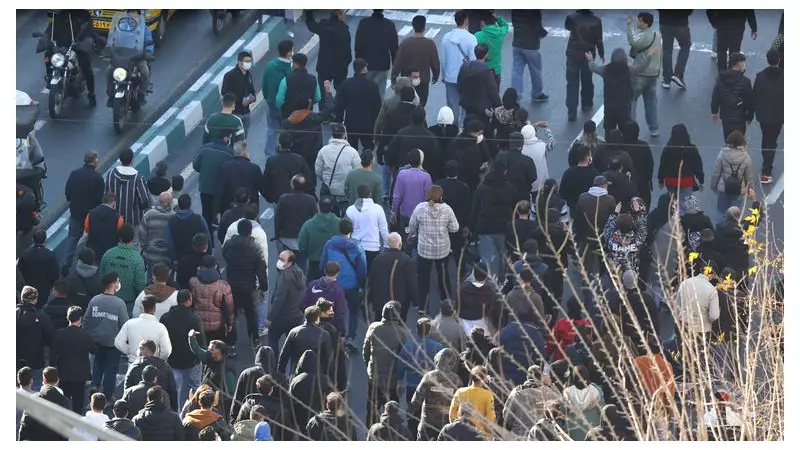
Protests triggered by a deepening economic crisis have swept across Iran for more than a week, presenting the nation's clerical rulers with their most significant challenge since the 1979 Islamic Revolution.
The Spark and Spread of Unrest
Demonstrations ignited in the capital, Tehran, on 28 December, when shopkeepers and bazaar merchants staged a strike as the Iranian currency plummeted to a record low against the US dollar. The unrest has since expanded dramatically.
According to the US-based Human Rights Activists News Agency (HRANA), protests have now spread to over 257 locations across 27 of Iran's 31 provinces. The agency reports that at least 29 people have lost their lives, including two members of the security forces, with more than 1,200 individuals detained.
Root Causes: A Perfect Economic Storm
The protests are rooted in years of economic suffering, exacerbated by a series of external pressures. The nation's troubles intensified after former US President Donald Trump reimposed sanctions in 2018 and withdrew from the international nuclear deal.
Further strain came when UN sanctions were reinstated in September 2025, followed by a 12-day war in June last year that saw Israeli and US strikes target Iranian nuclear sites. Iran maintains its nuclear programme is peaceful.
This has resulted in an annual inflation rate hovering around 40%, pushing essentials like cooking oil, meat, and rice beyond the reach of many citizens. "We are all caught up in this. I mean everyone," Shirin, a 45-year-old housewife from Kermanshah, told Sky News, describing how egg prices had nearly doubled in days.
The crisis deepened recently when President Masoud Pezeshkian announced his government would halt preferential currency rates for importers, replacing it with a direct monthly subsidy. This move is expected to cause further price hikes when implemented on 10 January.
Escalation and Government Response
While beginning as economic grievances, the protests' focus has broadened to encompass wider political dissent. Footage from 30 December showed university students chanting anti-government slogans, including references to the pre-revolution monarchy.
Clashes have been most intense in western Iran and the southern Baluchestan province. State media confirmed protesters attempted to storm a government building in Fars province on 31 December. Disturbing videos circulated online purportedly showing security forces firing on civilians and raiding a hospital in Ilam province, prompting President Pezeshkian to order an investigation.
In an unusual move, the government initially offered to set up a dialogue with protest leaders on 30 December, acknowledging their "legitimate demands." However, Supreme Leader Ayatollah Ali Khamenei later differentiated between protesters and "rioters," stating the latter should be "put in their place."
International Dimension and Historical Context
The situation gained an international edge when US President Donald Trump warned Iran on 2 January via social media that if Tehran "violently kills peaceful protesters," the United States "will come to their rescue." Iranian officials responded with threats to target American troops in the Middle East.
These protests follow a pattern of significant unrest in recent years. The clerical regime faced its boldest challenge in 2022-2023 following the death of Mahsa Amini in morality police custody, which led to over 500 deaths and 22,000 detentions.
The current wave of dissent, fueled by profound economic hardship and widening political frustration, shows no signs of abating, marking a critical moment for the Islamic Republic's future.




