
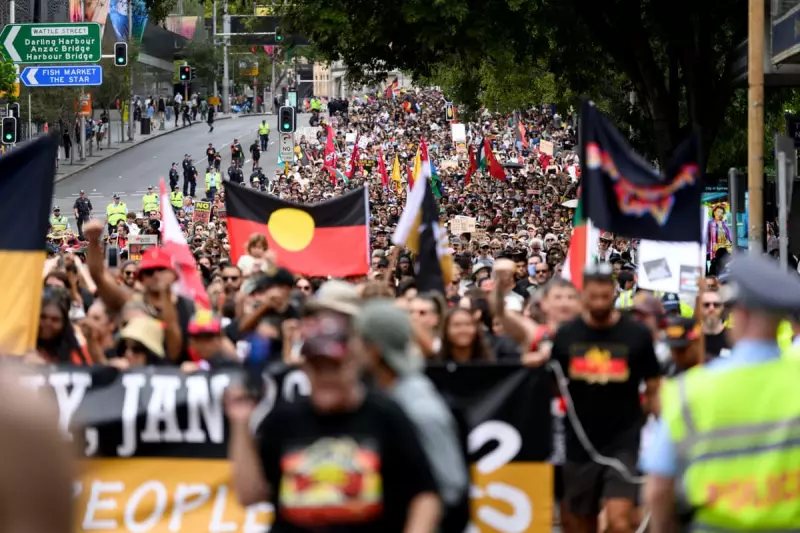
Major demonstrations planned for Invasion Day in Sydney are likely to proceed on 26 January 2025, even if a contentious police declaration restricting protests is extended. New South Wales police have confirmed they are actively working with organisers to establish contingencies for the public assemblies.
Police Declaration and Protest Contingencies
Last week, NSW Police Commissioner Mal Lanyon extended a controversial restriction on protests in the wake of the Bondi terror attack. This declaration, now in place until 20 January, effectively bans organisers from using the Form 1 system, which normally protects protesters from charges for offences like obstructing traffic or footpaths.
Assistant Commissioner Peter McKenna stated on Thursday that Commissioner Lanyon would likely decide before Tuesday whether to extend the declaration for another 14-day period. The possible extension had raised significant questions about the fate of the annual Invasion Day rallies.
However, McKenna sought to clarify the situation, stating, "At the moment, we are working with the organisers for various public assemblies on Australia Day. And we'll have different contingencies in place to work with them, regardless of whether there is a declaration." He acknowledged the legislation was "not exactly the most clear-cut" but affirmed police were operating within its framework.
Understanding the Current Protest Laws
The current declaration does not constitute an outright ban on public gatherings. Instead, it suspends the specific legal mechanism that grants immunity for certain offences during authorised protests. The law allows for such declarations to be enforced in 14-day increments for up to 90 days following a terror attack.
"It really does mean that people can still have free speech, people can still gather in a park or somewhere that they're not impeding people, and have free speech as they've always been able to do," McKenna explained.
Since the declaration was implemented, police have monitored 25 "static" protests. This includes recent rallies showing solidarity with anti-regime protesters in Iran, which McKenna described as respectful and without incident.
Weekend Ralls and Future Actions
McKenna's comments came ahead of a series of planned protests. On Friday, groups including Stop the War on Palestine and Jews Against the Occupation will hold a static rally outside Sydney Town Hall. The protest opposes the Minns government's anti-protest laws and calls for Prime Minister Anthony Albanese to cancel a planned visit by Israeli President Isaac Herzog.
Adam Adelpour, a spokesperson for Stop the War on Palestine, said the action aimed to remind people that police cannot prevent a static assembly under the current laws. The protest has been endorsed by the NSW Greens and Labor Friends of Palestine NSW.
Another protest is scheduled for Sunday in Hyde Park to mark ten years since the death in custody of Dunghutti man David Dungay Jr and to call for an end to all deaths in custody.
Meanwhile, the anti-immigration group March for Australia has also organised a demonstration in Sydney for 26 January.
When asked about the potential for arrests if pedestrians are blocked on George Street during Friday's rally, McKenna stated police possessed powers to move people on or disperse crowds if necessary, with assessments made in real-time.
"We understand it's a very volatile time at the moment, geopolitically," McKenna said. "We understand and empathise with people who this does affect and have their own feelings going on. And we're not an anti-protest organisation. We're not a political organisation."




