Fuel Price Protests Paralyze Ireland and Spread to Norway Amid Global Crisis
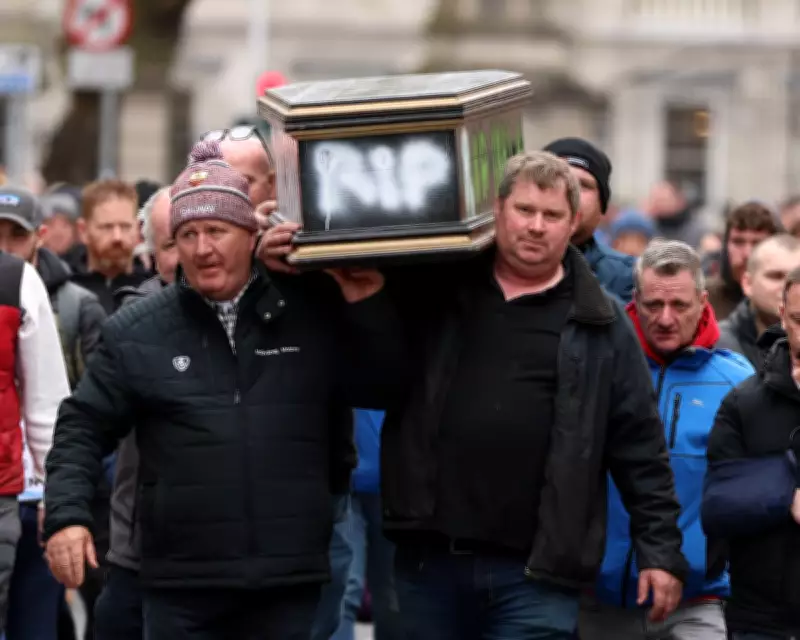
Protests over soaring fuel prices have plunged Ireland into chaos and extended to Norway, as hauliers, farmers, and other groups block motorways and bring parts of Dublin to a standstill. This marks the fourth consecutive day of action, with disruptions intensifying amid the ongoing conflict in the Middle East.
Government Response and Escalating Tensions
The Irish government has placed the army on standby to assist in removing blockades, while police have issued warnings for protesters to disperse or face arrest. Despite these measures, demonstrators remain defiant, threatening to continue the disruptions for weeks if necessary. An Garda Síochána, the Irish police force, stated that the protests are endangering critical supplies of food, fuel, clean water, and animal feed, labeling the situation as intolerable and illegal.
Government leaders, including Taoiseach Mícheál Martin, have accused protesters of holding the country to ransom. Martin emphasized that blockades of ports and the Whitegate refinery in Cork are pushing Ireland to the brink of turning away oil deliveries, risking a complete loss of supply. He described the actions as unconscionable and illogical.
Fuel Price Surges and Economic Impact
In recent weeks, diesel prices in Ireland have surged from approximately €1.70 to €2.17 per litre, while petrol has jumped from about €1.74 to €1.97. This spike is attributed to global market convulsions following attacks by the US and Israel on Iran in late February. The Irish government announced a €250 million package to mitigate costs, including temporary excise duty reductions and expanded rebate schemes for hauliers and bus operators.
However, blockades at key facilities like the Whitegate refinery and depots in Galway and Limerick have crippled fuel deliveries, leading to dozens of forecourts running dry. Motorists rushing to fill up have exacerbated shortages, with warnings that hundreds more stations could soon be affected.
Spread to Norway and International Reactions
In Norway, lorry drivers participated in a protest dubbed the diesel roar, driving a convoy of trucks to the parliament in Oslo. About 70 to 80 vehicles, some bearing banners reading enough is enough, joined the demonstration, though only a handful were permitted into the capital. Despite Norway being an oil producer, fuel prices have skyrocketed due to the effective closure of the Strait of Hormuz, with diesel prices jumping by 23.6% from February to March.
Statistics Norway reported that this represents the sharpest month-on-month increase in fuel prices since records began, surpassing even the spikes following Russia's invasion of Ukraine in 2022. The Norwegian government cut fuel taxes in April, but hauliers demand more predictable and lower prices.
Broader Global Context and Consequences
The protests have triggered international responses, with countries like the Philippines declaring a national energy emergency and France allowing fuel tankers to circulate on weekends and holidays to avert shortages. In Ireland, the crisis has led to slower emergency services response times, missed healthcare appointments, and the suspension of deliveries by courier company DPD.
Protest spokesperson John Dallon asserted that demonstrators are prepared to remain in Dublin for weeks, accusing the government of ignoring the hardship faced by citizens. He argued that it is the government, not the protesters, holding the country to ransom. In response, Taoiseach Martin postponed a trade mission to Canada to address the escalating situation.
As tensions mount, industry representatives are set to meet with ministers to convey grievances, though it remains unclear if this will satisfy protesters calling for direct talks. The justice minister has also raised concerns about outside actors, such as British far-right activist Tommy Robinson, manipulating the protests for their own agendas.