
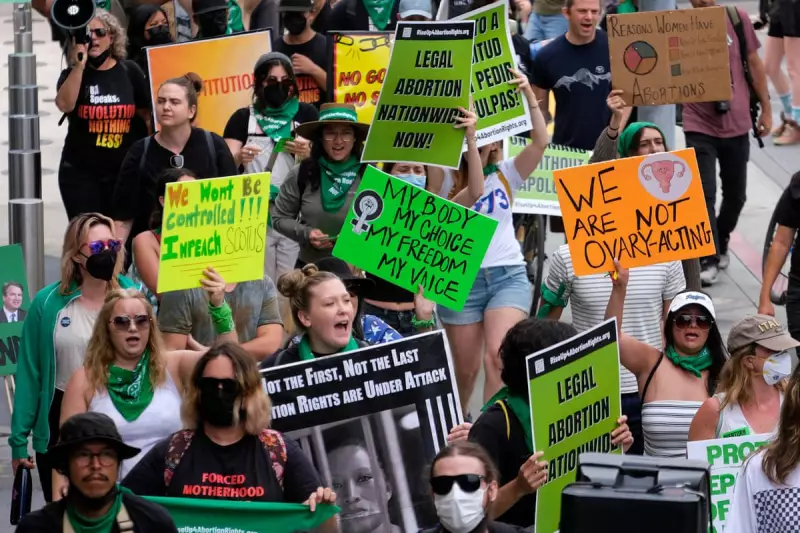
In a dramatic escalation of the national battle over reproductive rights, California Governor Gavin Newsom has publicly refused a request from Louisiana to extradite a doctor accused of mailing abortion pills into the southern state.
A Firm Rejection from the West Coast
On Wednesday, the Democratic governor issued a defiant statement, declaring "Louisiana's request is denied." Newsom framed the issue as a matter of state sovereignty and protection for medical providers, stating California would not allow "extremist politicians from other states" to punish doctors for providing legal healthcare services. His final words left no room for ambiguity: "Not today. Not ever."
The case centres on Dr Remy Coeytaux, a California-based physician. Louisiana's Republican Attorney General, Liz Murrill, announced her state was seeking his extradition over allegations he mailed abortion pills to a woman in Louisiana in October 2023. The pills were reportedly sent via Aid Access, an organisation that provides medication abortion by post across the United States.
The Legal Shield at the Heart of the Dispute
Dr Coeytaux's actions are protected by California's so-called "shield law," legislation passed after the Supreme Court overturned Roe v Wade in 2022. These laws are designed to guard healthcare professionals from extradition and prosecution by other states where abortion is restricted. Louisiana, which has a near-total ban on the procedure, has charged Coeytaux with "criminal abortion by means of abortion-inducing drugs," an offence that could carry up to 50 years of hard labour if convicted.
Attorney General Murrill condemned California's stance, accusing Governor Newsom and the state's attorney general of protecting someone from accountability for "illegal, medically unethical and dangerous conduct." She claimed it led to a woman being "coerced" into an abortion, though the documents released by her office did not contain any statement from the recipient alleging coercion.
A Growing Pattern of Interstate Conflict
This is not an isolated incident. Louisiana has previously sought the extradition of a New York-based doctor, Dr Margaret Carpenter, on similar grounds. That request was also rejected by New York's Democratic Governor, Kathy Hochul, whose state has its own protective shield law.
The conflict highlights a deepening national fracture. Anti-abortion campaigners argue that shield laws illegally obstruct justice and allow providers to flout other states' statutes. Meanwhile, states like California and New York are positioning themselves as sanctuaries for reproductive rights, setting the stage for prolonged legal and political battles over the reach of state law in a post-Roe America.
As the extradition standoff continues, it underscores the complex and increasingly bitter landscape of abortion access in the United States, where the rules—and the consequences for breaking them—drastically change at each state line.




