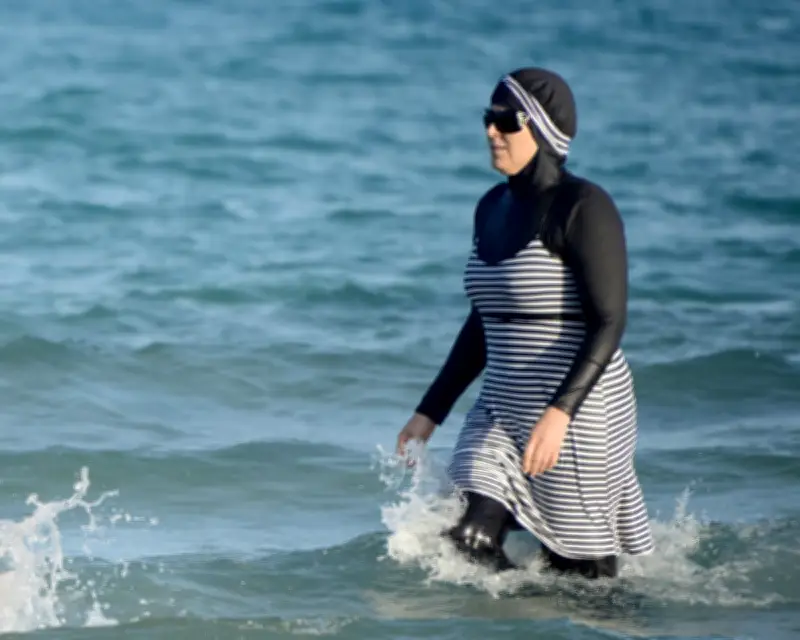
An Austrian court has ruled that a ski resort hotel's ban on burkinis was discriminatory, a decision with political implications in a country where far-right sentiment is growing. The full-body swimsuit worn by some Muslim women has become a target for European far-right groups seeking to restrict Muslim attire in public spaces.
Court Ruling and Background
The Salzburg court's ruling, made public this week, found that the hotel in Saint Johann im Pongau discriminated against two Austrian Muslim women by prohibiting them from wearing the burkini. The incident began after a heated argument with the hotel manager, who claimed the garment was unhygienic and made other guests uncomfortable. The women filed a complaint in 2023, leading to a €100 fine imposed on the hotel in February 2024.
The hotel manager appealed the fine, but the court rejected the appeal in late June, ordering the hotel to pay an additional €20 to cover procedural costs. The judge stated that the manager's hygiene argument “does not hold water, as burkinis are made from the same materials as other swimwear and routine water checks found no irregularities.”
Legal Context and Precedent
Despite the ruling, the presiding judge told Agence France-Presse that it would not set a nationwide precedent, noting that “indirect discrimination is permissible under certain conditions.” Austria does not explicitly restrict Muslim dress for women and girls over 14, but a law forbidding face coverings in public spaces effectively bans the burqa and niqab. The burkini, which covers the entire body except the face, hands, and feet, complies with this law.
Political and Social Implications
The burkini has been a politically charged issue across Europe, particularly in France, where local mayors' attempts to ban it on Mediterranean beaches in 2016 were overturned by courts. Other European countries, including the Netherlands and Denmark, have banned face-covering garments like the burqa and niqab. This ruling in Austria highlights ongoing tensions over religious dress and far-right influence in the region.