Mass Arrests at London Protest Following Court Decision on Palestine Action
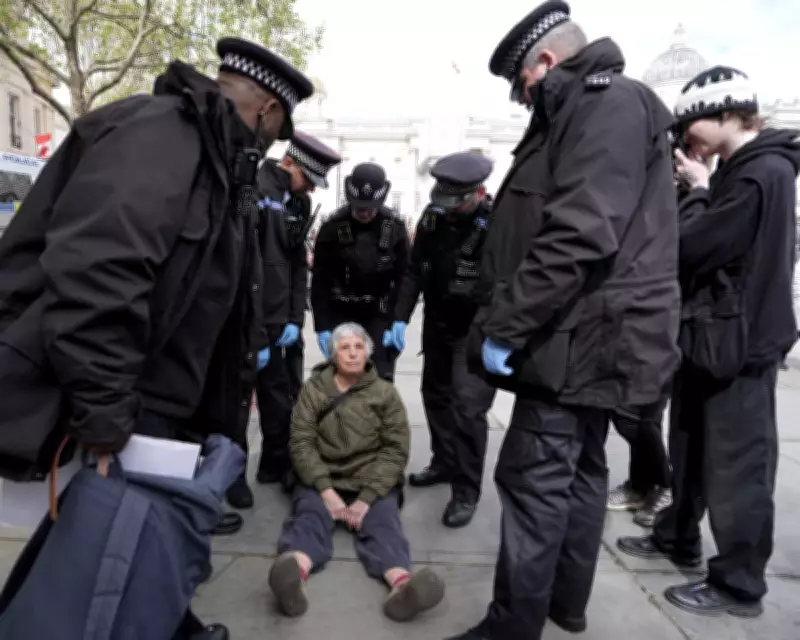
In a dramatic display of civil unrest, more than 90 individuals were arrested during a Palestine Action demonstration in London's Trafalgar Square. This marked the first large-scale protest since the high court ruled the group's ban as unlawful, sparking controversy over police enforcement and free speech rights.
Demonstrators Gather in Defiance of Government Proscription
Hundreds of protesters assembled in the iconic square, unveiling signs with messages such as "I oppose genocide. I support Palestine Action" and "Israel starves kids." Participants ranged in age from 27 to 82, with many sitting on camping chairs or the ground while holding placards. The scene included individuals dressed as suffragettes and others wearing masks depicting Keir Starmer, highlighting the diverse and symbolic nature of the gathering.
Among those present was Mike Higgins, a blind disabled man whose previous arrests have drawn public outrage, and Qesser Zuhrah, a former Palestine Action-affiliated prisoner who endured a 48-day hunger strike. Zuhrah condemned the ban, stating, "The entire world is against this proscription," and accused the British government of mislabeling activists as terrorists while ignoring weapon manufacturers.
Police Response and Legal Controversies
Shortly after 1 PM, Metropolitan police officers began making arrests on the edges of the demonstration. Eyewitnesses reported seeing several protesters, including an elderly woman using walking sticks, being escorted or carried away by officers. One woman protested her arrest, telling police, "You could be on your way catching real criminals." By 2:50 PM, the Met confirmed 92 arrests.
The protest was organized by Defend Our Juries, which criticized the police actions, arguing that arrests were unlawful given the high court's ruling. The group emphasized that their demonstrations are peaceful and nonviolent, with no prior prosecutions for obstruction or abuse. Meanwhile, Met commander Claire Smart warned beforehand that showing support for a proscribed organization is an offense under the Terrorism Act, pledging to act where laws are broken.
Broader Implications for Protest Rights and Free Speech
The high court's February decision deemed the government's proscription of Palestine Action "disproportionate and unlawful," noting that most activities did not meet terrorism thresholds. However, the home secretary has been granted permission to appeal, with a hearing scheduled for April 28-29. This legal back-and-forth has led to a revised police enforcement approach, described as an "interim position" pending further court rulings.
Protesters like Ally, a 72-year-old sculptor, expressed frustration, calling the ban "blatantly absurd" and warning of increasing restrictions on free speech. Andy Simons, a 73-year-old retired curator, wore a sign reading "Free, free speech" and stressed the importance of nonviolent expression. The event underscores ongoing tensions between government authority, police powers, and civil liberties in London.