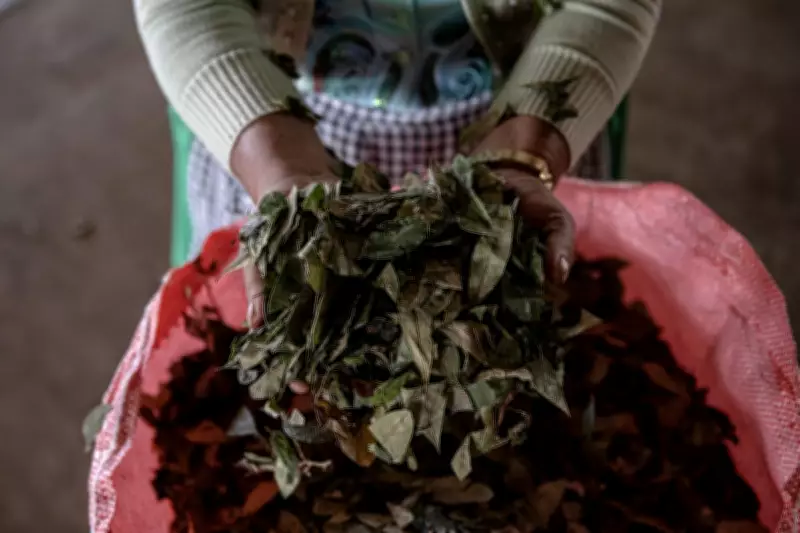
WHO Maintains Global Ban on Sacred Coca Leaf Despite Andean Cultural Heritage
In the bustling Chimoré market of Bolivia's Chapare province, Indigenous women carefully gather coca leaves, continuing a tradition that spans millennia. This humble leaf, consumed daily by approximately five million people across the Andes region as a mild stimulant comparable to coffee or tea, remains at the centre of an international controversy that pits cultural heritage against global drug policy.
A Sacred Tradition Under Threat
For thousands of years, Andean communities living in regions like Coripata, east of La Paz, have incorporated coca leaves into their daily lives and spiritual practices. The leaves serve multiple purposes: alleviating fatigue, combating hunger, relieving altitude sickness (known locally as soroche), and treating various ailments including headaches and digestive issues.
"Coca is life itself for us," declares Celestina Ticona, a coca farmer whose family has cultivated the plant for generations. This sentiment echoes throughout Indigenous communities where coca represents more than just a crop—it embodies cultural identity, spiritual connection, and ancestral wisdom.

The International Classification Controversy
Despite its cultural significance and documented therapeutic properties, the World Health Organization recently reaffirmed its position that coca leaf should remain classified alongside dangerous substances like heroin and fentanyl. This decision, made under pressure from United States authorities as part of ongoing "war on drugs" initiatives, represents a significant setback for Bolivian and Colombian advocates who had hoped for reclassification.
The controversy stems from the 1961 UN Convention on Narcotic Drugs, which originally placed coca leaf in the same restrictive category as its derivative, refined cocaine. Although a recent WHO critical review acknowledged coca leaf's antioxidant, anti-inflammatory, antimicrobial, and potential anticancer properties, the organization maintained that scientific evidence regarding long-term safety and therapeutic applications remains insufficient to justify international trade expansion.
Economic Realities and Legal Paradoxes
Daynor Choque, leader of the commercial arm of local coca producers, voices the frustration felt by many growers: "We have been using coca without any problems since the time of our ancestors. Now, producers are being pushed into the illegal cocaine market just to survive—unless we can sell our coca legally on international markets."
This economic pressure creates a troubling paradox. While the WHO's decision maintains restrictions that prevent legal international trade of coca-based products like teas, balms, and toothpaste, it simultaneously limits scientific research that could potentially justify reclassification based on therapeutic benefits.
Tom Grisaffi, an anthropologist at the University of Reading who has extensively researched coca growers, explains the economic reality: "Coca's illegality provides a comparative advantage for small farmers. Given that Andean countries participate in global markets under unfavourable terms, legal crops like tea, coffee, oranges, or pineapples simply don't generate sufficient income, whereas illegal coca does."
Political Dimensions and Future Prospects
The WHO's decision carries significant political weight, particularly following the United States' announcement that it will withdraw funding from the international health body in 2026. Historically, the US has been the strongest global advocate against modifying coca's legal status, and many observers believe this influenced the recent ruling.
David Choquehuanca, Bolivia's former vice-president who coordinated the international reclassification effort, expresses profound disappointment: "For six decades, we have suffered this violation of Indigenous sovereignty. The WHO's recent historical error has violated our legitimate rights to use our sacred coca leaf as we see fit for therapeutic, nutritional and ritual practices."

Looking forward, drug reform advocates face the challenging task of identifying a country willing to appeal to the UN Economic and Social Council, whose broader mandate might permit overriding the WHO ruling. However, with Bolivia's new conservative government and Colombian President Gustavo Petro's term ending in August, momentum toward rehabilitating the coca leaf's international status appears to be fading.
Cultural Preservation Versus Global Policy
The ongoing controversy highlights the complex intersection of cultural preservation, Indigenous rights, and international drug policy. While the WHO cites concerns about rising cocaine production and consumption worldwide—with cultivation increasing since the COVID-19 pandemic—Indigenous communities argue that their traditional use of coca leaf bears no relation to the illegal cocaine trade.
As Choquehuanca poignantly observes: "A country that doesn't respect its culture is destined to disappear." This statement underscores the profound cultural significance of the coca leaf for Andean communities and the deep sense of injustice they feel when global institutions fail to distinguish between their sacred tradition and the illegal drug trade it has become entangled with through international policy.
The path forward remains uncertain, but the debate continues to raise important questions about how global institutions balance public health concerns with respect for cultural traditions and Indigenous rights in an increasingly interconnected world.