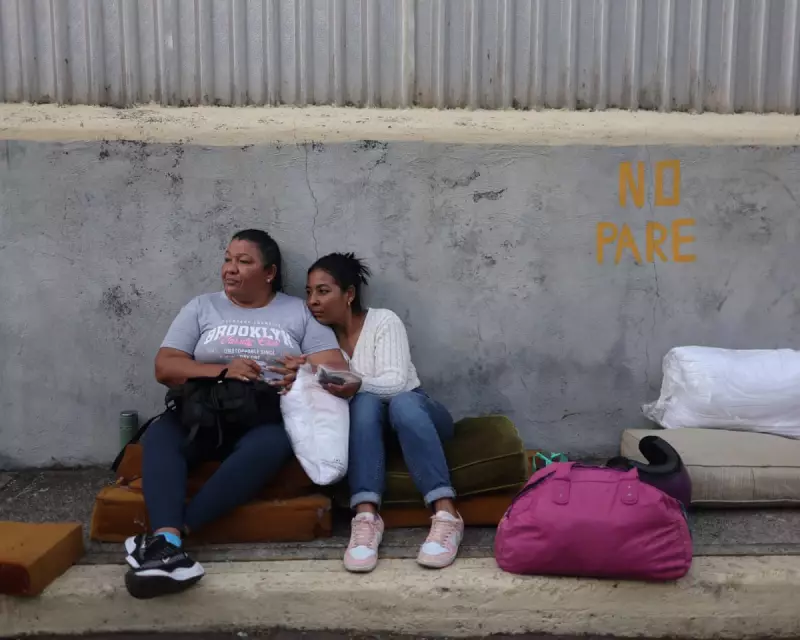
Relatives of detainees gathered outside a detention centre in Caracas on 13 January 2026, awaiting news of loved ones in a scene that underscores Venezuela's ongoing political crisis. The new leadership, which took power after the dramatic seizure of former president Nicolás Maduro, is promoting a narrative of openness, including what it calls a "mass process" of releasing political prisoners. However, human rights organisations and observers on the ground warn that state repression continues largely unabated.
Claims of Releases Clash with Independent Verification
On Tuesday, congressional president Jorge Rodríguez, brother of acting president Delcy Rodríguez, stated that the regime had carried out a "mass process of releases" amounting to more than 400 people. This figure, he claimed, included two rounds of releases before Maduro's capture on Christmas Day and New Year's Day, as well as further releases in the past week.
Non-governmental organisations monitoring the situation, however, paint a starkly different picture. The group Justicia, Encuentro y Perdón could only confirm 157 of the 186 releases announced prior to Maduro's fall. Furthermore, they have verified just 82 of the 116 releases that Rodríguez claimed occurred in the last week. This discrepancy highlights what NGOs describe as a "slow and opaque" process lacking in transparency.

Repression Persists Amidst Political Chaos
Despite the publicised releases, many Venezuelans report that the mechanisms of state control remain firmly in place. Residents in Caracas and other cities continue to have their mobile phones searched by armed militias on the streets, and fear of public protest is pervasive. The regime maintains a state of emergency declared after the unprecedented US ground attack, ordering the immediate capture of anyone involved in promoting or supporting the American operation.
This climate was illustrated on 5 January, when local media reported that 15 teenagers were detained in the city of Barcelona for "celebrating" Maduro's capture. They were released the following Tuesday after a local backlash.
"This kind of power reshuffle produces so much administrative chaos and a lack of a clear chain of command," said Zair Mundaray, a former senior Venezuelan prosecutor. "[The regime] is seeking to project a very civic image, releasing some people, while others are being jailed at the same time."
International Dimensions and Diplomatic Moves
The United States has cautiously welcomed the release of some of its citizens detained in Venezuela. A US State Department spokesperson called it "an important step in the right direction by the interim authorities," though the exact number freed is unconfirmed, estimated to be at least four.
In a significant diplomatic development, former opposition leader and Nobel peace prize winner María Corina Machado is due to meet with former US President Donald Trump at the White House on Thursday. Notably, the acting Venezuelan government plans to send its own representative, Félix Plasencia, to Washington on the same day for talks with senior US officials, as both nations discuss reopening embassies.
Concurrently, the US continues to exert economic pressure. Reuters reported that the White House has filed for court warrants to seize dozens more tankers linked to Venezuela's oil trade, building on the recent seizure of five vessels in international waters by the US military and coastguard.
NGOs estimate that close to 1,000 political prisoners remain in Venezuelan detention. They are demanding the unconditional release of all detainees. For those who have been freed, charges often remain in place, and they are frequently barred from making public statements, limiting their freedom even after release. As the new leadership attempts to craft an image of reform, the reality for many Venezuelans is one of enduring fear and uncertainty.