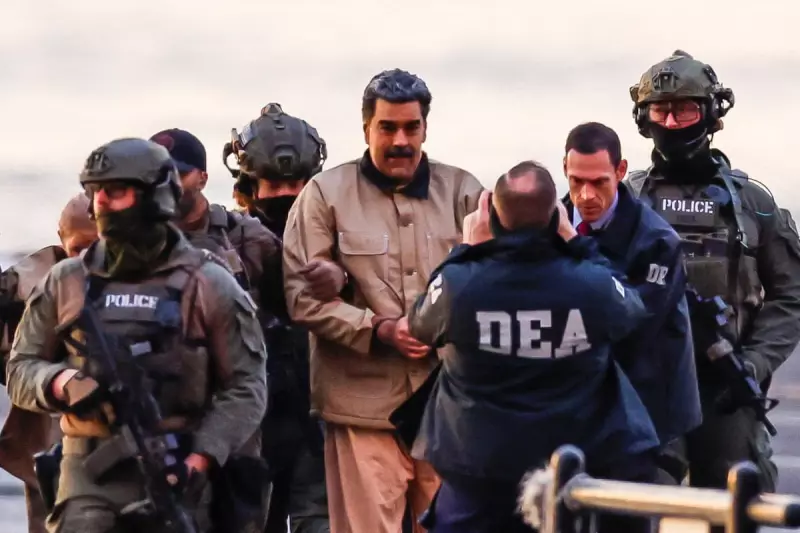
Venezuelan President Nicolás Maduro arrived at the Downtown Manhattan Heliport in New York City on Monday, 5 January 2026, to face a significant escalation in his legal battles with the United States. His appearance follows the unsealing of a new, comprehensive criminal indictment by US authorities.
The Superseding Indictment: New Charges and New Names
US Attorney General Pam Bondi unveiled the superseding indictment on Saturday morning, adding serious new charges to an existing narcotics-trafficking complaint first brought against Maduro in 2020. The core allegation is that Maduro and other senior Venezuelan officials have spent the past two decades collaborating with international drug cartels to flood the US with illicit drugs, personally enriching themselves in the process.
The document lists six defendants, including Maduro, his wife Cilia Flores, his son Nicolás Ernesto Maduro Guerra, and Héctor Rusthenford Guerrero Flores, the leader of the notorious Venezuelan gang Tren de Aragua. The charges are severe, encompassing conspiracy to commit narco-terrorism, conspiracy to import cocaine, and weapons charges related to machine guns and destructive devices.

Alleged Criminal Network and Key Differences
The indictment paints a picture of a vast alleged criminal enterprise. It accuses Maduro of maintaining ties with six distinct gangs and trafficking groups. These include two Colombian rebel factions—the Farc and the ELN—the Venezuelan Tren de Aragua, and two powerful Mexican cartels: the Sinaloa and the Zetas.
A notable addition from the 2020 indictment is Cilia Flores, Maduro's wife. She is accused of accepting hundreds of thousands of dollars in bribes to facilitate a meeting between a drug trafficker and Venezuela's national anti-drug office director. The new filing also provides granular detail, alleging a meeting brokered by Maduro's son, 'Nicolasito', where Maduro and Farc leaders traded weapons for cocaine.
However, the indictment is less specific about Maduro's purported links to the Mexican cartels. Critics of the case point out that the deadly synthetic opioid fentanyl, a current US priority, is primarily produced in Mexico using Chinese precursors and is rarely trafficked through Venezuela.
Legal Challenges and Potential Witnesses
The validity of the US case is set to be challenged in federal court in New York. Maduro's defence is likely to argue that, as a foreign head of state, he enjoys immunity from prosecution in the US. The US government, however, does not recognise Maduro as Venezuela's legitimate leader, a stance that underpins the legal action.
US prosecutors may receive assistance from a key insider. Hugo Carvajal Barrios, the former head of Venezuelan military intelligence under Hugo Chávez, is awaiting sentencing in the US after pleading guilty to narco-terrorism and related offences. In a public letter last year, Carvajal offered to help US authorities, claiming the Venezuelan state had evolved into a criminal 'Cartel of the Suns' in alliance with the military, Colombian guerrillas, and other external actors.
As the legal proceedings commence, this indictment represents a major diplomatic and judicial confrontation, alleging that the leadership of a sovereign state has been operating a transnational drug trafficking scheme for over twenty years.