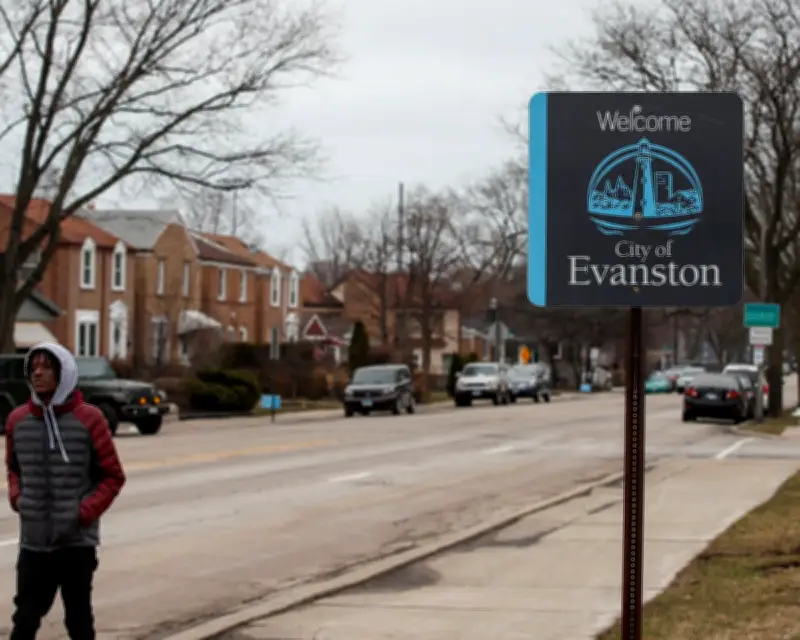
A conservative activist group has filed a lawsuit on behalf of six plaintiffs who claim their rights were violated because they were not Black. The Trump administration has joined the lawsuit to halt the first-of-its-kind reparations program in Evanston, Illinois, which compensates Black residents for past housing discrimination.
Background of the Reparations Program
The program, approved in 2021, offers Black residents and their descendants up to $25,000 for race-based housing discrimination. It was hailed as a model for reparations movements across the United States. The US Department of Justice is now involved, two years after Judicial Watch initially filed the lawsuit.
Legal Arguments
The plaintiffs argue that their rights under the equal protection clause were violated because they were excluded from receiving reparations due to not being Black. Harmeet K Dhillon, assistant attorney general for the civil rights division, stated that handing out money based on race is not the answer, though cities can remedy past discrimination in other ways.

Evanston's Democratic mayor, Daniel Biss, expressed confidence in the program's constitutionality and vowed to defend it in court.
Political Context
President Donald Trump has sought to use civil rights laws against groups they once protected and has focused on dismantling diversity, equity, and inclusion programs. Robin Rue Simmons, who spearheaded the reparations program, described the lawsuit as an attack on the hope that Black communities have felt through this hyperlocal process.
Program Details
The program is funded by local cannabis taxes and had disbursed $6.3 million to hundreds of eligible applicants by June 2024. Funds can only be used for home-related costs like down payments, repairs, or mortgage payments. Critics argue the program is limited and funnels money back to institutions that discriminated against Black homeowners.
Attorney Michael Bekesha, representing the plaintiffs, noted that applicants are not required to show specific harm caused by the city, leaving race as the only criterion. He contrasted this with past reparations programs for Japanese internees or torture victims, which were tied to specific harms.
Simmons rejected this framing, emphasizing that the program is narrowly tailored to historical housing discrimination, such as exclusionary zoning laws that disproportionately affected the predominantly Black Fifth Ward neighborhood. A 2022 study found a 13-year life expectancy gap between Evanston's Black and white neighborhoods, highlighting the legacy of discrimination.