
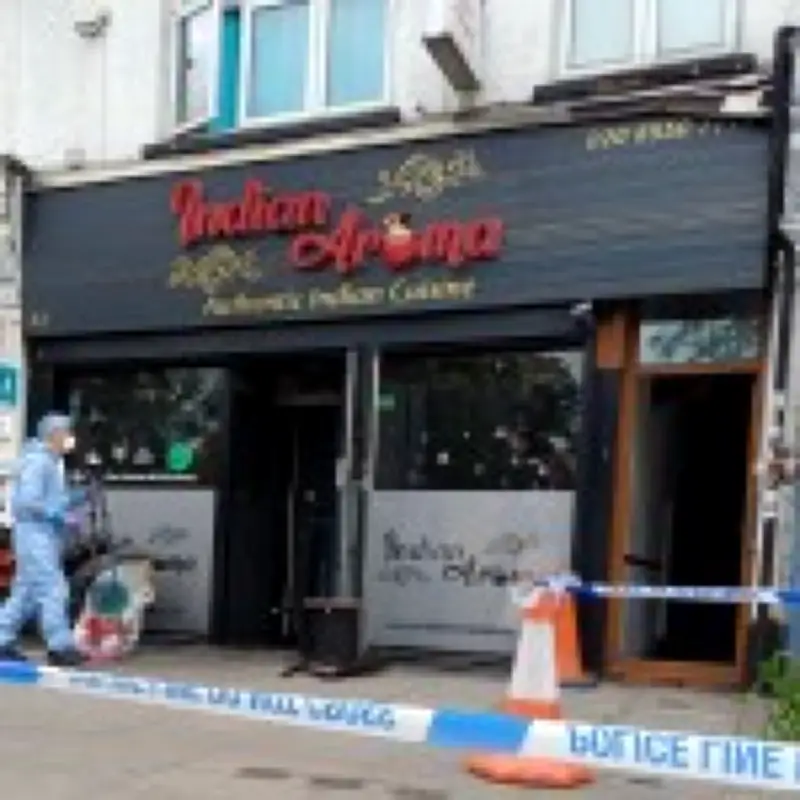
Two teenagers have been found guilty of arson after they burst into a restaurant, poured petrol on diners, and set the eatery on fire. The pair, both 17, were convicted of arson with intent to endanger life at the Old Bailey following a seven-week trial.
Attack on Indian Aroma restaurant
The teenagers stormed Indian Aroma in Ilford on August 22 last year while it was filled with customers and staff. The jury heard that one teenager taunted innocent customers with a large machete while his accomplice, also armed, poured petrol over the floor, furniture, and diners. Once the surfaces were doused, the teenagers lit a taper, which ignited a fireball that ripped through the establishment.
Two people were left with critical burn injuries, and multiple others suffered severe injuries. One witness at the time saw a man whose whole body was burnt and skin was ‘peeling off’.
Investigation and verdict
The 17-year-old defendants fled the scene and escaped in a nearby Toyota Prius. The car had driven to and from Peckham on the evening of the attack, and one of the teenagers had stolen several litres of petrol from a petrol station in Barkingside. Detectives located the Prius, which had been stolen before the attack, as well as their mobile phones, which helped identify the suspects.
The teenagers were found guilty today at the end of a seven-week trial. The motive for their attack in Gants Hill, Ilford, remains unclear. They were also found guilty of possession of an offensive weapon. They were remanded and will be sentenced at the Old Bailey on Friday, 2 October.
Police statement
Detective Inspector Emma Sharp, who led the Met Police’s investigation, said: ‘This group tried to outmanoeuvre the police and avoid the consequences of their pre-mediated violence, but today’s outcome showcases that our detectives can unravel multifaceted incidents to secure justice and take dangerous offenders off our streets. The August attack impacted dozens of innocent people, and I’d like to thank the victims and witnesses for their steadfast resilience since the incident, and throughout the trial.’




