
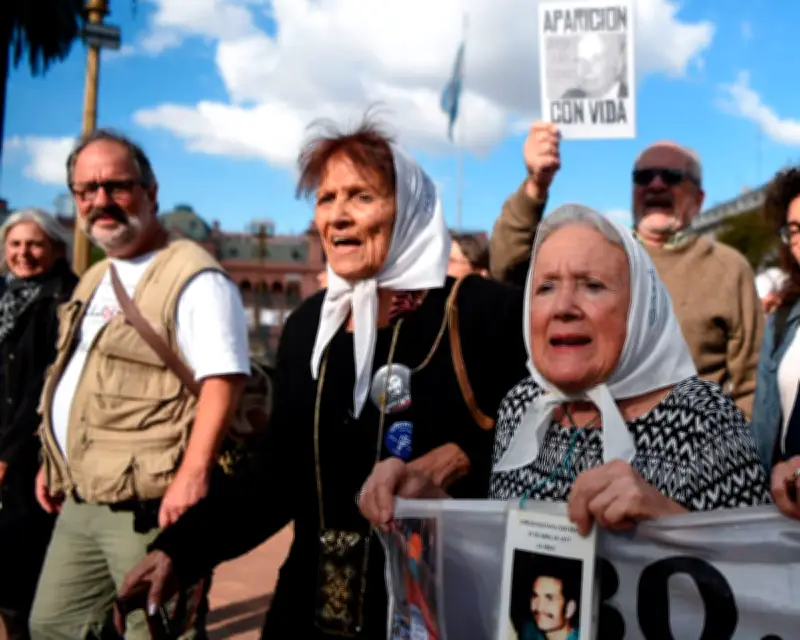
Lidia 'Taty' Almeida, a leading human rights activist who spent more than 50 years searching for her son after he was forcibly disappeared by Argentina's military junta, has died at the age of 95, prompting an outpouring of public grief.
Almeida was the president of the Mothers of Plaza de Mayo, a group of women who have marched every Thursday since 1977 around the plaza outside Argentina's presidential palace, demanding the return of children who disappeared during the country's 1976-1983 dictatorship.
A Life Dedicated to Justice
Almeida's son, Alejandro, was kidnapped by anti-communist paramilitaries in June 1975, nine months before the military coup. For five decades, she tirelessly sought the truth about his fate. Though Alejandro was never found, Almeida became a figure of moral authority and an emblem of the enduring fight for justice. She continued to demand justice for the dictatorship's atrocities and campaigned on contemporary social issues until the final year of her life.
Early Life and Transformation
Born Lidia Stella Mercedes Miy Uranga on 28 June 1930 in Buenos Aires, Almeida worked as a teacher before dedicating herself to raising her three children. Her father was a cavalry officer, and when Alejandro disappeared, she initially turned to military contacts for help. However, as she learned the truth about the dictatorship's atrocities and met other mothers searching for their disappeared children, her life transformed. She became a symbol of resistance against state terror.
Alejandro was a medical student at the University of Buenos Aires and a member of the Marxist-Leninist People's Revolutionary Army. He was also a poet, and in 2008, Almeida published a collection of his poetry found in a diary after his kidnapping.
Continued Activism and Legacy
In 2024, Almeida became president of the Mothers of Plaza de Mayo Founding Line, a branch that split from the main group in the 1980s due to political differences. Her family said she died surrounded by loved ones at a Buenos Aires hospital late on Sunday, having continued her work until falling ill in recent days.
The Mothers of Plaza de Mayo Founding Line paid tribute, writing: 'Thank you for teaching us that to love is to resist, that the only fight we lose is the fight we give up, and that there is no force greater than that of love.'
Major figures in Argentinian public life expressed their sorrow. Former President Cristina Fernández de Kirchner described her as an 'indefatigable fighter who honoured life.'




