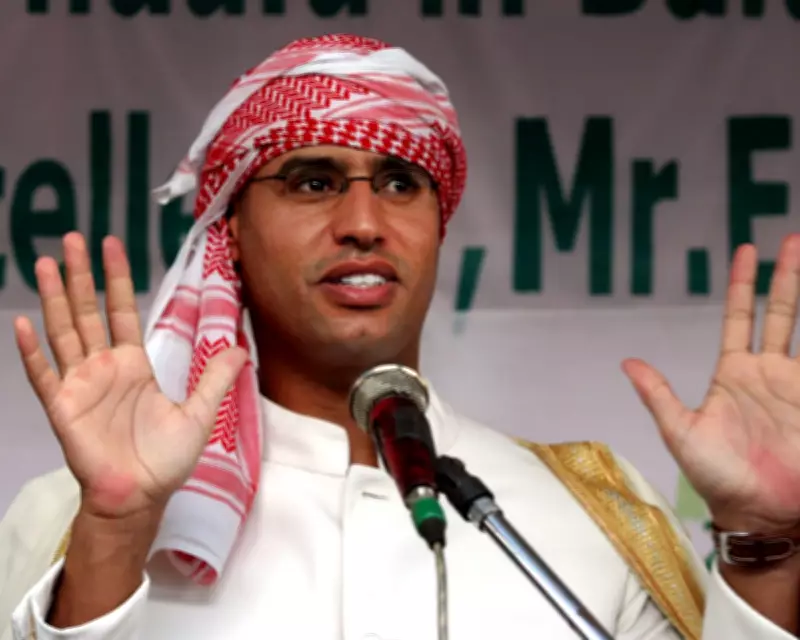
Saif al-Islam Gaddafi: The Assassinated Heir to Libya's Dictatorship
Saif al-Islam Gaddafi, the son of Libya's long-time dictator Muammar Gaddafi, has been shot dead at his home by four masked assailants at the age of 53. For many years, he was considered the heir apparent to his father's regime and remained a potential force in Libya's fractured and violent political landscape, even after years of imprisonment and international condemnation.
A Career Marked by Contradiction and Conflict
Gaddafi's life and career can be divided into three distinct phases, each reflecting the turbulent history of modern Libya. Initially, he was seen as a wealthy, western-educated reformer, fluent in English and German, who engaged with international politicians and business leaders. He studied at the London School of Economics, where his PhD and a controversial £1.5 million donation to the institution later sparked resignations and scrutiny.
During this period, he was involved in key diplomatic efforts, including negotiations for compensation to victims of the Lockerbie bombing and Libya's abandonment of its weapons of mass destruction programme. However, this reformist image shattered in February 2011 when he publicly backed his father's violent suppression of the uprising, warning rebels of "rivers of blood" in a televised speech.

From Prisoner to Presidential Hopeful
After being captured in 2011 while attempting to flee Libya following his father's death, Gaddafi spent years as a prisoner in Zintan, a city in western Libya. In 2015, he was convicted in absentia by a Libyan court for war crimes committed during the revolution, and an arrest warrant had been issued by the International Criminal Court in 2011.
Despite this, by 2021, he had announced his candidacy in presidential elections with the backing of the Gaddafist Popular Front for the Liberation of Libya. His rivals feared he might win, appealing to Libyans disillusioned by economic hardship and instability, though the elections ultimately did not take place. In a rare interview with the New York Times that year, he criticised Libya's postwar leaders, stating, "They raped the country – it's on its knees. There's no money, no security. There's no life here."
Education and Personal Life
Born in Tripoli on 25 June 1972, Gaddafi was the eldest of seven children from Muammar Gaddafi's second marriage to Safia Farkash. His education included a degree in engineering and architecture at Al-Fateh University in Tripoli, an MBA in Vienna, and his PhD at the LSE. His personal life was marked by controversy, including an affair with an Israeli model and actor, Orly Weinerman, who appealed to Tony Blair for help during his war crimes trial.
Gaddafi denied reports of marriage and having a son in 2021. He is survived by his mother, siblings Saadi, Hannibal, and Aisha, and a half-brother, Muhammad. Three other brothers predeceased him.
Legacy and Unanswered Questions
The perpetrators of his assassination remain unknown, but both Khalifa Haftar's faction in eastern Libya and the UN-recognised government in Tripoli may have feared a Gaddafi comeback due to his potential appeal to Libyans nostalgic for stability. His death marks the end of a complex figure who embodied both the hopes for reform and the brutal realities of Libya's recent history. Saif al-Islam Gaddafi's story underscores the ongoing challenges in a country still grappling with division and violence years after the fall of his father's regime.