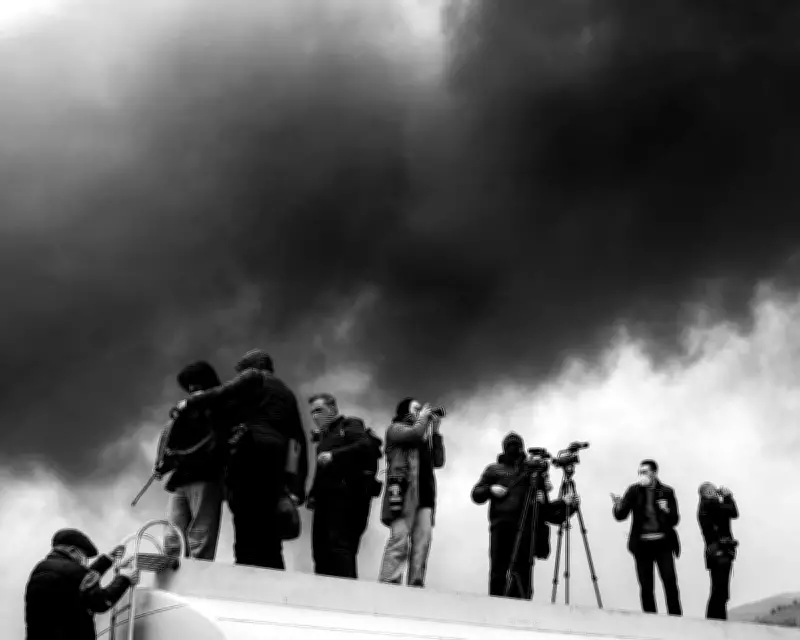
Journalists covering a fire following an overnight airstrike on an oil refinery in Iran last month face unprecedented dangers. Telling the truth about Iran is more dangerous than ever, as on-the-ground reporting becomes nearly impossible amid protests, crackdowns, and war.
The Fragile State of Reporting
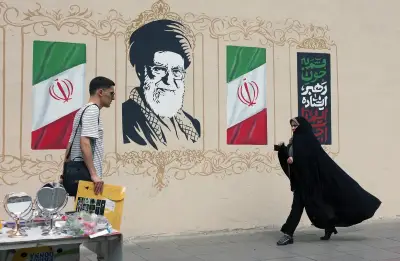
Iran is among the world's most repressive countries for press freedom. In recent months, the work of telling the truth has grown more fragile, improvised, and dangerous. Journalists have been cut off from their sources after authorities imposed a nationwide communications blackout, collapsing the already fragile reporting infrastructure.
Even when contact is possible, caution is paramount; a phone search at a checkpoint could endanger sources. Cross-checking events through local coverage or familiar verification channels is no longer feasible. Instead, reporters rely on rare moments when a reliable contact inside Iran manages to get online, navigating VPNs or risking Starlink, which authorities have criminalized.

Narrow Windows to Truth
In those brief windows, what reaches journalists can open a narrow way to truth: a voice note from a silenced journalist, sentences from one haunted by a recent prison release, or photographs smuggled out by a photojournalist whose newspaper has been shuttered. From hundreds of miles away, this is how the story of war and repression is told.
Independent journalism, such as that practiced by the Guardian, is crucial. It shows how people in Iran are trapped between bombs from Israel and the US and repression from their own government, caught in a war that leaves them vulnerable to foreign attack and state violence at home.
How Journalists Report Under Siege
Reporting on war and state violence from a country where authorities impose near-total internet shutdowns, cut international phone lines, restrict access to local news outlets, and make on-the-ground reporting nearly impossible is not an abstract challenge. It shapes every aspect of reporting on Iran, from the mass killing of protesters during peaceful demonstrations that began in December 2025 to the ongoing war involving Iran, the US, and Israel.
Reporting from Iran, especially on human rights violations, has never been easy. Journalists inside and outside the country have long worked under severe restrictions imposed by authorities, while their sources face constant risk.
The Vital Bridge of Courage
The work depends on journalists inside Iran committed to truth, citizen journalists who dare to take risks, and ordinary people who refuse to remain silent. They build a fragile but vital bridge to those reporting from afar. Without their courage, independent reporting on Iran would be impossible.
Some mainstream outlets have occasionally been allowed to send correspondents into Iran, but with restrictions and supervision that reveal only a narrow slice of the truth—never the full picture. The Guardian is committed to helping journalists inside repressive regimes worldwide share their stories.
As part of the annual support campaign promoting the defense of the free press, readers are encouraged to back the Guardian's work or another independent outlet. The goal is to get 60,000 new supporters or acts of support by 21 May.