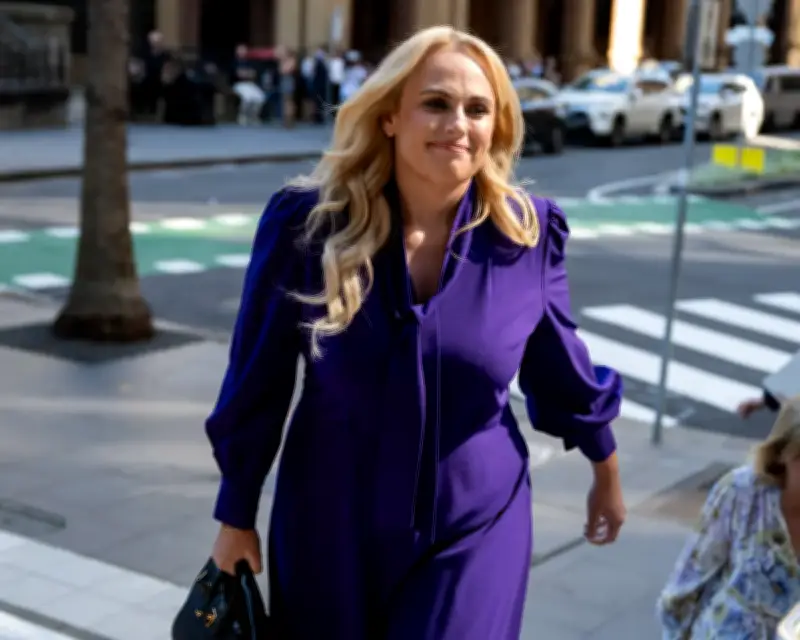
Hollywood actress Rebel Wilson appeared in the New South Wales Supreme Court in Sydney on Monday as producers of her directorial debut, The Deb, sue her over allegedly blocking the film's release. The court heard that Wilson had a "last chance" phone call with co-producers regarding a dispute over up-front costs and her $1 million fee.
Producers allege misleading conduct and defamation
Vince Holden, Gregor Cameron, and Amanda Ghost claim that Wilson and her company Camp Sugar breached consumer law concerning misleading conduct and breached various contracts when making allegedly defamatory statements about them to her 11 million Instagram followers in July 2024. The producers allege Wilson accused them of inappropriate conduct toward the lead actress, embezzling funds, and attempting to block the film's release.
Wilson is also accused of preventing the film's release by undermining negotiations with potential distributors and threatening an injunction against showing the film in Australia. In a cross-claim, Wilson and Camp Sugar allege that Ghost, Cameron, and Holden engaged in "a troubling pattern of illicit egregious behaviours, including theft, bullying and sexual misconduct." Wilson claims Ghost broke verbal agreements over writing credits and a soundtrack album deal, and that Cameron and Holden embezzled $900,000 from a joint venture company set up to make the film.

Fee dispute and budget concerns in court
Wilson sat in the back row of the small courtroom, frequently typing on her phone, as her barrister Dauid Sibtain SC questioned Holden, part of AI Film Production Limited, which brought the lawsuit. Holden was asked about a series of budget and financing emails regarding the 2024 film. He agreed he asked for a "last-chance call" in October 2023 over AI Film's requests for increased fees and Wilson's offer to reduce her acting and directing fee to $1 million.
Sibtain asked if Wilson had been "incredibly upset and angry" at AI Film's proposed fee rising from $300,000 to more than $650,000 plus finance costs without consulting her. "I would not say upset," Holden said. "She didn't like the fees being there." After he cut off further money towards the film, Holden told fellow producers: "the clock has stopped ticking and I'm waiting for the boom." He added: "AI Film had advanced considerable funds to keep the production on time and we didn't have a final agreement on fee levels."
Financial risk and potential revenue estimates
Holden agreed that $15 million was "a lot of money to risk on a first-time director" and that AI Film was "quite content to risk that money and see where it ended up." The risk increased when the budget "subsequently went up to over $20 million." AI Film company directors claimed Wilson's alleged statements breached contracts and her obligations as production company director, causing economic loss, a potential film distributor to withdraw an offer, and reputational damage.
Wilson and her company had an initial fee of six per cent of the film's budget, shared 50-50 with AI Film. The Deb, eventually released in April 2026, had multiple estimates for potential worldwide revenue, starting from a predicted loss of $4.5 million if it performed poorly. If successful, the film could "break even" or make a multimillion-dollar profit, Justice Elisabeth Peden heard. As a musical comedy with an Australian theme, The Deb's predicted revenue was based on films like Pitch Perfect, Muriel's Wedding, and Strictly Ballroom.
"They were all breakout successes but some of them came out 15 to 30 years ago," Sibtain said. "When people went to cinemas, before streaming." The hearing continues. The equity case follows a defamation trial in May involving Wilson and the star of her directorial debut, Australian actor Charlotte MacInnes, who claimed she was defamed in four social media posts by Wilson. A judge dismissed that case in July.