More than 1,500 Ukrainian children in state care remain in Europe, refusing to return home even as Kyiv pushes for repatriation, according to Ukrainian officials. The children, evacuated after Russia's 2022 invasion, cite safety concerns, limited opportunities, and fear of conscription as reasons for staying, despite official promises of support.
Evacuation and the initial reluctance
In March 2022, 15-year-old Denys* was put on an overnight bus with over 100 other children from his orphanage in Berdiansk, eastern Ukraine, one of the first areas invaded by Russian troops. He arrived in a small village in the Italian Alps, feeling homesick and confused. "Ukraine was all I knew," says Denys. "I had never left it my whole life."
However, after integrating into Italian life—going to school and making friends—Denys says he no longer wants to return. "I started to realise there was a different way of life I could be living," he says. "One that didn't involve airstrikes and poverty, and that could give me better opportunities for my future."

The relocation was intended as temporary, but even after parts of Ukraine stabilized, many children refused to go back. Ukrainian officials have repatriated most, but over 1,500 remain in Europe. Some, like Denys, have been aided by Italian courts after foster parents defied Kyiv's repatriation orders, citing concerns about the children's wellbeing in a war-torn country with damaged social welfare and infrastructure.
Kyiv's demographic crisis and legal battles
For Ukraine, already facing a plummeting birthrate and the loss of children abducted by Russia in occupied territories, the failure of some juveniles to return has become a crisis. Kateryna Rashevska, a legal expert on war crimes against children in Ukraine, says, "We are losing those who should've been the future citizens of our nation. If these children ever actually return to Ukraine, they will have limited Ukrainian language, culture, history and identity, which also poses a threat to our future heritage and demography."
The situation escalated in April after a 15-year-old boy evacuated to Italy in 2022 was legally adopted by an Italian family, despite having parents and two sisters in Ukraine who wanted him back. A court in Italy overruled Ukrainian laws; in May 2022, Ukraine had suspended international adoptions to prevent trafficking or wrongful adoptions.
Yuliya Donnichenko, a Ukrainian national in Italy who has overseen evacuations and repatriations for about 100 orphans, says many childless couples were taking advantage of the unstable situation to bypass strict international adoption laws. "I know that they meant the best for these kids, that they became attached to them and wanted the best for their future, away from a war-torn nation. But what they don't understand is that by [seeking adoption] they're putting at risk an already fragile situation," she says. "It might not seem like a lot – just a few more hundreds compared with the already 20,000 lost to Russia – but to us every child counts. It's the future of our nation."
Harrowing accounts of return
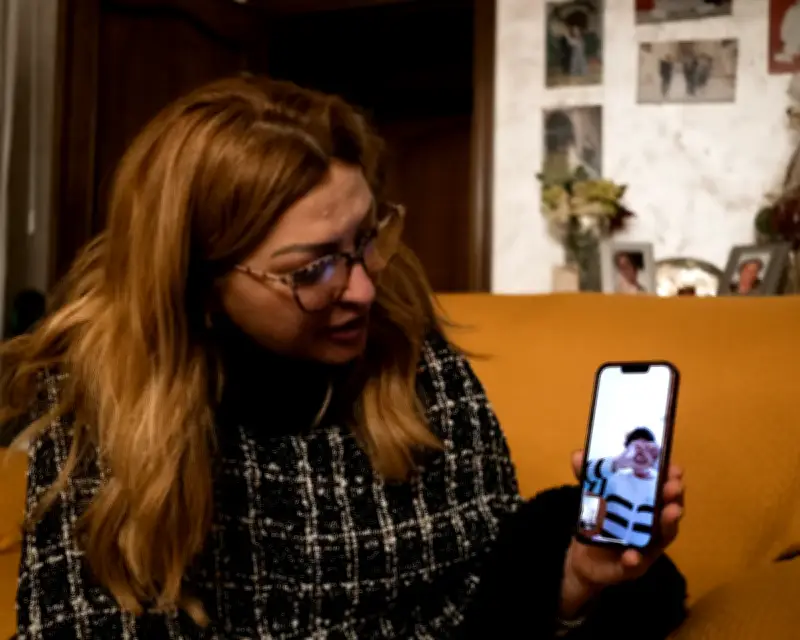
Some accuse Ukraine of not being prepared to offer stable conditions and a fair future, with the reality of return for many children different from what was promised. Evelina, now 18, was repatriated after almost two years with an Italian foster family in Sicily, and assigned to an adoptive Ukrainian family on the border with Romania. The family already had several foster children, making her living conditions "not much different from living in an orphanage," she says.
Evelina says her phone was confiscated for more than a year, preventing contact with her Italian family. "I was confined at home and didn't go to school. I would only leave my room for an English class once a week or church on Sunday," she says. "I felt very depressed; I didn't understand why they made me return to live like this." When she finally got a new phone in autumn 2024, she opened a Telegram account and spent hours talking to her Italian foster mother. "I missed her. I constantly begged her to come pick me up and bring me back to Sicily," she says.

Her new family recorded videos of her walking outside as proof of exercise, and after she shared concerns with the Italian family, her phone was confiscated again, and her WhatsApp and Telegram accounts were permanently deleted. Now 18, Evelina says she cannot wait to leave Ukraine and return to the EU: "It made no sense to force our return since most of us had planned to leave anyway after turning 18, thanks to the connections we developed in Europe. After all, it was unfair to pretend we'd just get a quick taste of freedom in Europe and then head back to a place that can't offer us as much as an EU country can right now."
Fear of conscription and coercive tactics
Denys, now 17 at the time of his repatriation order in August 2024, feared being drafted into the war. "I was utterly frightened, but the authorities didn't listen to our concerns," he says. During one-on-one meetings in Italy, Denys says Ukrainian social workers used "intimidating language and even swearwords if we showed any signs of resistance," with younger ones "promised candies and PlayStations on their arrival in Ukraine." They made "fake promises they couldn't guarantee for sure," including adoption or reunion with relatives.
With the help of Italian courts, Denys stayed in Italy, now working as a waiter. He says those who returned regret the choice, living in institutions without running water or electricity, with up to six people per room, and regularly hiding in bunkers as Russian attacks target even western provinces. "This proves that they didn't have our best interests and safety at heart," he says.
Maksym, another orphan from the Rota d'Imagna group, reluctantly accepted repatriation only to move to Germany three months later when he turned 18. "Ukraine changed too much over the past few years. There's nothing for us young people there. My future is in the EU." Diego Mosca, who supervised the group in Rota d'Imagna, says the children were "tossed around like a tennis ball between two sides" by the repatriation dispute. "This situation has traumatised them and will forever leave wounds on their psyche. Providing mental health support to those who returned should be a priority over demographic needs."