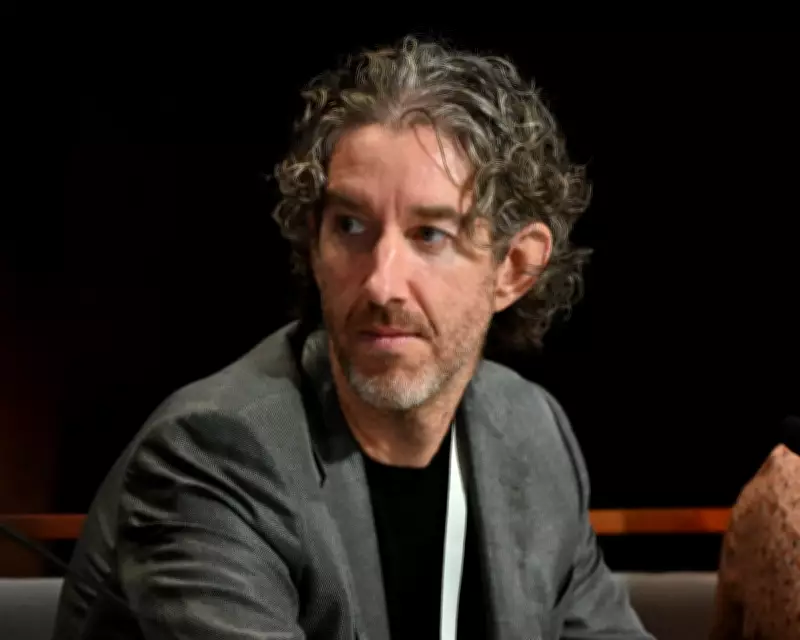
Mistaken Identity Reveals Political Donation Transparency Crisis
In a curious case of mistaken identity, a routine political donation disclosure recently caused significant confusion in Australian political circles. The billionaire co-founder of Atlassian, Scott Farquhar, was incorrectly identified as having donated $22,250 to the Queensland Greens, when in fact the contribution came from a Brisbane resident sharing the same name.
The Confusion That Sparked Concern
This mix-up occurred during the latest round of political donation disclosures, where it initially appeared that the tech mogul had made substantial contributions to both the Queensland Greens and Climate 200. The situation prompted immediate speculation about whether the prominent businessman had been influenced by the Greens' campaigning efforts.
Several media outlets initially reported the donation as coming from the Atlassian-associated Farquhar, only to later retract these claims when the truth emerged. The confusion stemmed from a significant change in how political donations are now reported in Australia, which has created substantial challenges for journalists and transparency advocates.

The Legislative Changes Behind the Confusion
Before 2025, Australia's political donation system included PDF declaration forms containing donors' names and addresses, allowing for proper identification and verification. This system enabled journalists to distinguish between individuals with similar names and conduct important investigative work by cross-referencing donation records with other databases.
However, following an incident where the Australian Electoral Commission accidentally published political candidates' addresses, the government implemented changes to the Electoral Act. These amendments removed the requirement for the AEC to publish donor addresses, effectively eliminating a crucial transparency mechanism.
The changes were made retrospective, meaning approximately 5,000 entities in the donations database now appear with only their names as identifiers. This has created significant obstacles for accurate reporting and public understanding of political funding sources.
The Impact on Political Transparency
The removal of detailed donor information has made timely and accurate reporting on political donations considerably more difficult. While journalists can still employ alternative methods to verify donor identities, these approaches are far more time-consuming and resource-intensive than the previous system allowed.
The situation is further complicated by potential changes to company director information, with reports suggesting that addresses in the ASIC company database may also be removed. This would eliminate another valuable tool for cross-referencing and verification.
Although the AEC assigns unique identifiers to each entity in their database, these identifiers only appear in web URLs and not in exported data, making them difficult for most people to access and use effectively.
Seeking a Better Balance
This case highlights the ongoing tension between protecting donor privacy and maintaining political transparency. While legitimate privacy and security concerns exist regarding the publication of personal addresses, the current system appears to have swung too far toward opacity.
Experts suggest that alternative solutions could include publishing partial information such as postcodes or dates of birth, which would allow for donor verification without exposing exact residential locations. The AEC has indicated it is considering such matters as part of broader electoral reform amendments scheduled for implementation in July 2026.
The Scott Farquhar case serves as a stark reminder that Australia's political donation system requires careful recalibration to ensure both privacy protection and meaningful transparency about who funds political parties and campaigns.