Geoffrey King, a pioneering geophysicist whose 1994 paper transformed earthquake forecasting, has died aged 82. His research has been cited more than 30,000 times, reflecting his profound impact on the field.
Early life and education
Born in Kampala, Uganda, to British geologists Peggy (nee Wells) and Basil King, Geoffrey was one of four children. His father worked with the Uganda Geological Survey mapping the Rift Valley. When Basil joined Glasgow University, the family returned to the UK. Geoffrey attended school in Glasgow and later Haberdashers’ boys’ school in Elstree, Hertfordshire. His final school report warned: “[Geoffrey] must appreciate that the future is shaped in the present: it would be a great pity if his ambitions were not realised through a want of determined application.”
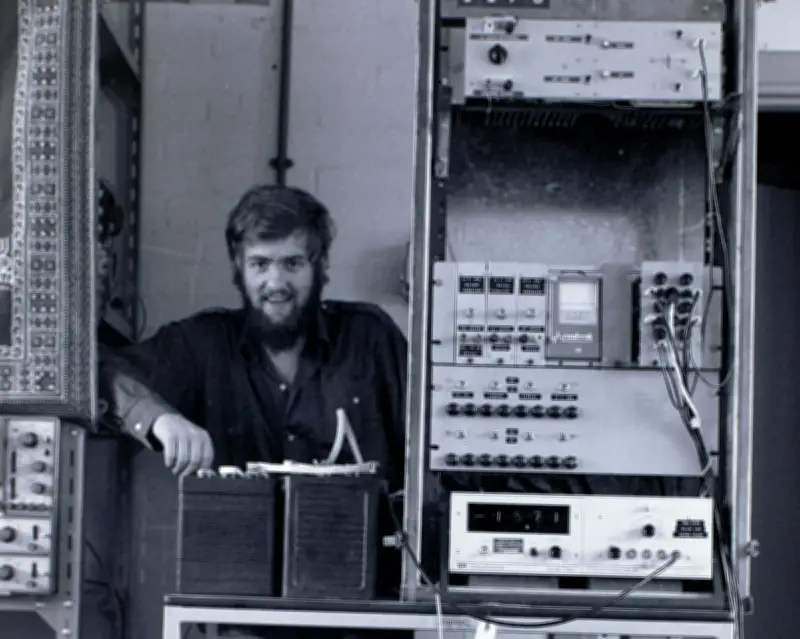
At Durham University, he thrived amid the freedoms of the 1960s, earning a first in applied physics. He then completed a Cambridge PhD, designing better earthquake-recording instruments in a disused railway tunnel in Yorkshire.

Career and key contributions
After early work at Cambridge, he moved to the US in 1987 to join the US Geological Survey in Colorado. In 1990, he became a research professor at the Institut de Physique du Globe in Paris, where he spent 20 years. He became a naturalised Frenchman and often joked about France being better than the UK.
His most influential work was a 1994 paper in the Bulletin of the Seismological Society of America that revolutionised earthquake forecasting. He also explored how seismically active landscapes gave early humans survival advantages—cliffs and rocky features provided natural places to hide, hunt, and farm.
Personal life and legacy
Geoffrey and his father remain the only people to have had a poem published in the scientific journal Nature. The 1971 poem about plate tectonics began: “They put a girdle around the Earth/And named it the Worldwide Rift/It helps explain the ocean floor/And Continental Drift.”
He left the UK in the 1980s partly due to disgust at the Thatcher government’s policies on tertiary education. Known for his mischievous personality, he loved socialising and hosting large dinner parties in his Paris flat on the right bank of the Seine, featuring wine, cheese, and rabbit stews made in an enormous slow cooker. Last year, he said: “I’ve had an amazing life.”
Geoffrey and his wife Anna separated when their child was young. He is survived by his child, three grandchildren—Esmé, Juno, and Benedict—and his younger twin siblings, Peter and Diana.