The United Nations has estimated the total cost of rebuilding Gaza to be upwards of $70bn over decades. However, more than seven months after Donald Trump brokered a ceasefire deal, Gaza remains in a grim limbo: no reconstruction is under way, the so-called Board of Peace is struggling with funding, and Palestinian technocrats chosen to run the strip are sidelined in Egypt.
Funding Shortfalls Jeopardize Reconstruction
In a 15 May submission to the UN Security Council, the Board of Peace stated that the principal obstacle to realizing Trump's plan for Gaza was Hamas's refusal to hand over its weapons and cede control of the strip. However, several people familiar with the body said funding shortfalls could jeopardize the effort. Nine countries pledged $7bn (£5bn) to a Gaza relief package at the inaugural meeting of the Board of Peace, which Trump chaired. But only the United Arab Emirates and Morocco have sent funds, according to a person familiar with its operations. The group has received $23m to fund its operations, as well as an injection of $100m to fund a future Palestinian police force. In sum, that amounts to $1.75 for every $100 pledged.
Reluctance Among Donor Countries
Several countries that initially pledged funds to the Board of Peace are now reluctant to pay, after months of stalled diplomacy and no progress on the ground, according to five people familiar with the organization. One diplomat familiar with international negotiations about Gaza said countries are hesitant to pay their portions. The Iran war has provided cover for delays to payments, another source said. A third person familiar with the group's efforts noted that nobody with money and resources wants to work with the Board of Peace, and the conflict with Iran gives those with deep pockets an excuse not to pay.

Mladenov Admits Failure to Deliver
Nickolay Mladenov, a Bulgarian diplomat tasked with delivering the US president's vision as high representative for Gaza, admitted last week that Palestinians in Gaza had been let down by the world. He stated that the door to the future of Gaza is still closed, and the impasse also jeopardizes Israel's long-term security. Mladenov's 15 May report to the UN Security Council urged donor states to contribute funds without delay, emphasizing that funds committed but not yet disbursed represent the difference between a framework that exists on paper and one that delivers on the ground for the people of Gaza.
Board of Peace's Optimistic Outlook
A senior Board of Peace official denied urgent funding challenges and said its donors remain committed. The board is confident it can collect pledges as needed to fund its programmes, which are still mostly in the planning stages. Morocco, Bahrain, and the United Arab Emirates have all transferred money to support overhead costs and fund training for a Palestinian police force, though a person familiar with the board denied Bahrain had transferred any money. Trump also pledged $10bn of US funding which has not been disbursed, but board officials have not formally requested the funds.
Administrative Costs and Salaries
Among the board's expenses are the salaries for 12 Palestinians chosen to run a planned civilian administration in Gaza, the National Committee for the Administration of Gaza, who are in Egypt waiting for security guarantees and diplomatic permissions to enter Gaza. They are being paid an average of $16,000 to $17,000 a month. Mladenov is slated to earn about $400,000 a year for his role leading the Board of Peace. A board spokesperson said the salary figures provided to the Guardian were incorrect and payments to Palestinian technocrats are modelled on the salary scale used by the Palestinian Authority.

Lack of Tangible Impact
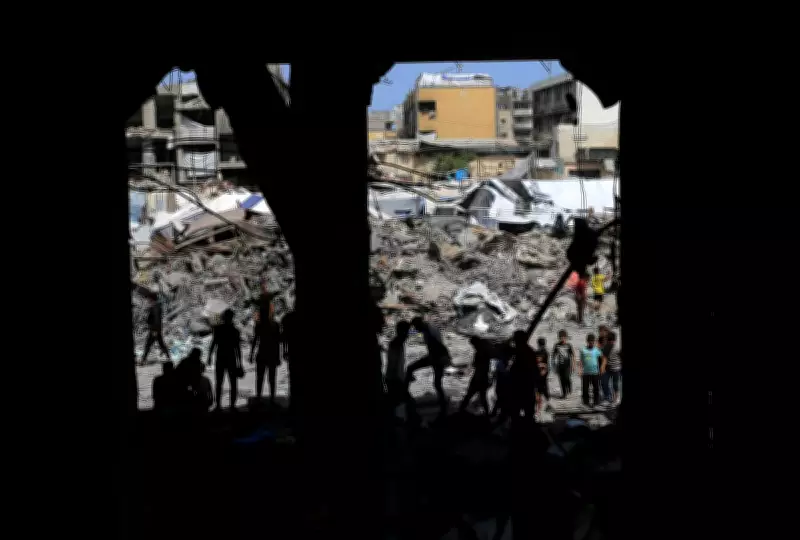
The National Committee for the Administration of Gaza has not had any tangible impact on Palestinian life inside the strip, according to sources. Not a single bottle of water has come into Gaza under the committee's flag since January 2026. When the ceasefire deal for Gaza was agreed in October last year, critics and US allies warned it was dangerously vague on the fraught details of reconstruction, governance, and security. More than half a year on, there is no international force or any actionable plans to create one. Israeli forces still control well over half of Gaza and limit critical shipments of food and other aid. Most survivors still live in makeshift, unsanitary camps; hunger is widespread; schools have not reopened; there are critical shortages of clean water; and healthcare is hobbled by damage to buildings and shortages of staff and supplies.
Plans vs. Reality
Trump and his aides have laid out plans for a future which could hardly be more removed from the current reality of ruins and humanitarian disaster. They talked about transforming the strip into a gleaming hub of tourism and trade, with airports, seaports, and AI-powered smart cities for Gazan residents. However, there has been no significant work on reconstruction, even basic projects in areas under full Israeli military control. Several contractors have submitted bids to clear rubble, provide security, and build compounds in Gaza but said they have not received contracts for work. Mladenov acknowledged both sides have violated the ceasefire but repeatedly blamed Hamas for the lack of progress, saying the group must give up its weapons to pave the way for reconstruction.
Disarmament Dilemma
In the unlikely event Hamas agreed to disarm, the Board of Peace would be unable to deliver the support on the scale needed in the war-ravaged territory, said one person familiar with the body. A senior Board of Peace official disputed that assessment, stating that they are more than prepared and would not fail.