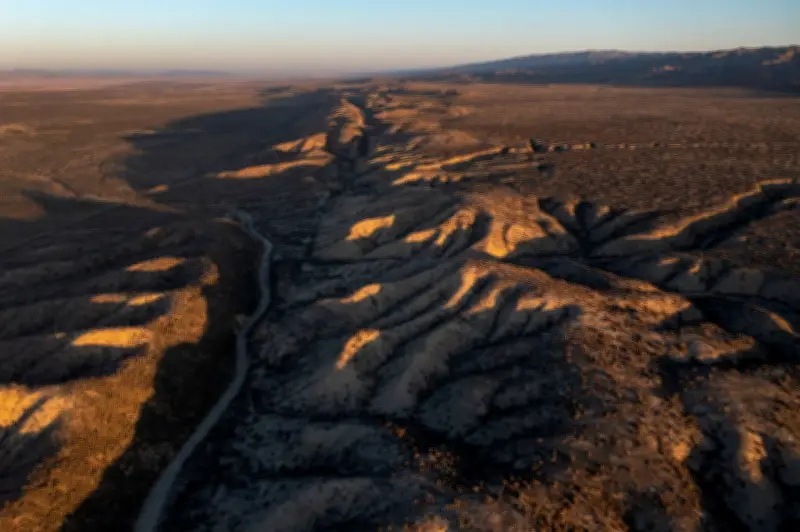
California's San Andreas and San Jacinto fault systems are experiencing the highest levels of tectonic stress in 1,000 years, according to a study published this month. Scientists describe the situation as a "critically loaded state," heightening the risk of a major earthquake in the future.
Study Details
The research, led by Liliane Burkhard of the University of Hawaii at Mānoa and published in the Journal of Geophysical Research: Solid Earth, indicates that stress on multiple fault segments has reached or exceeded the highest values observed over the past millennium. The study warns that the region may be capable of a large rupture involving both fault systems simultaneously.
Role of Cajon Pass
Cajon Pass, located at the junction of the two faults, could act as an "earthquake gate" that either blocks large ruptures or allows them to travel between faults. The study notes that over 160 years have passed since the last major event, allowing stress to accumulate to unprecedented levels.

"The conditions that determine whether the 'earthquake gate' at Cajon Pass opens or stays closed appear to be related to how closely the stress levels on the two fault systems are aligned with each other at the time of rupture," said Burkhard.
Implications
The team used a computer model simulating 1,000 years of earthquake history to assess current stress levels. Their findings suggest that Cajon Pass could facilitate a joint rupture of both faults, impacting much of Southern California. The study does not predict when such an earthquake might occur but emphasizes the need for preparedness.
"What we can say is that the system is critically stressed, and that physics-based models like this one give us a clearer picture of the range of scenarios we should be prepared for," Burkhard added.
Historical Context
Californians have long anticipated a "big one." The last major destructive quake was the 1994 Northridge earthquake in Los Angeles, which killed over 60 people and destroyed 87,000 homes and businesses.