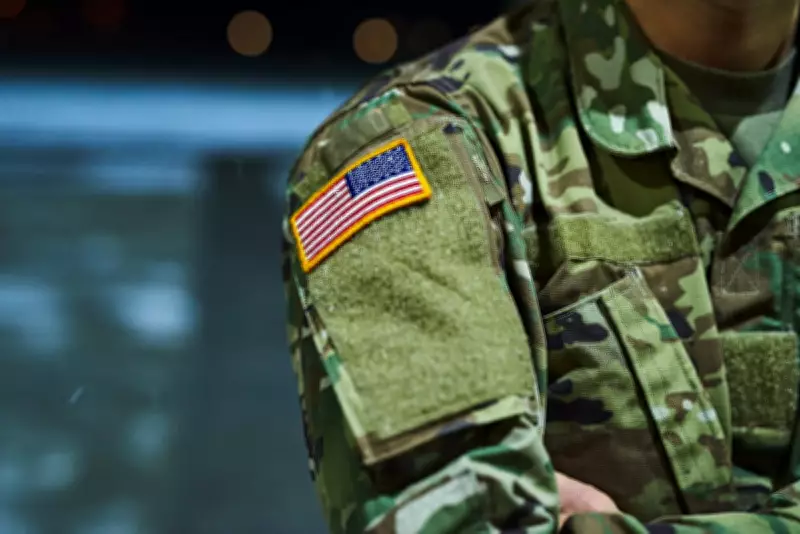
A US appeals court ruled on Monday that transgender troops can remain in the military, but the armed services can continue to block their enlistment. The split decision deals a significant blow to the Trump administration's anti-diversity agenda, with the majority opinion calling the ban 'arbitrary, and based on animus'.
Ruling Details
The divided opinion by a three-judge panel of the US Court of Appeals for Washington DC is expected to be challenged by the government. The case is likely to reach the US Supreme Court. The ruling was held from going into immediate effect, allowing the administration time to ask the full appeals court to hear the case.
The decision represents a blunt rebuke of Defense Secretary Pete Hegseth's implementation of Donald Trump's January 2025 presidential order mandating the removal of hundreds of transgender service members. Circuit Judge Robert Wilkins wrote in the majority opinion that banning transgender people from the military is illegal and 'both arbitrary, and based on animus'.

Background
Monday's decision mostly upholds a preliminary injunction issued by District Judge Ana Reyes in March 2025, preventing the dismissal of six active-duty transgender plaintiffs. Reyes had previously written that 'every person who has answered the call to serve deserves our gratitude and respect'.
Trump's order claimed that the sexual identity of transgender service members 'conflicts with a soldier's commitment to an honorable, truthful, and disciplined lifestyle'. Hegseth subsequently issued a policy presumptively disqualifying people with gender dysphoria from military service.
Court's Opinion
The appeals court judges narrowed the scope of the injunction to cover approximately 1,000 active-duty members who openly identify as transgender, but not those seeking to enlist. Wilkins noted that the government 'has not attempted to defend or provide any factual basis for these disparaging characterizations of American citizens', adding that the policy 'appears to be driven by the bare desire to harm a politically unpopular group'.
Wilkins was appointed by former President Barack Obama. The dissenting judge, Justin Walker, appointed by Trump, argued that the judiciary lacks the authority and experience to determine military composition, stating that only the executive and legislative branches are responsible for such judgments.
There was no immediate reaction from the White House or Defense Department.