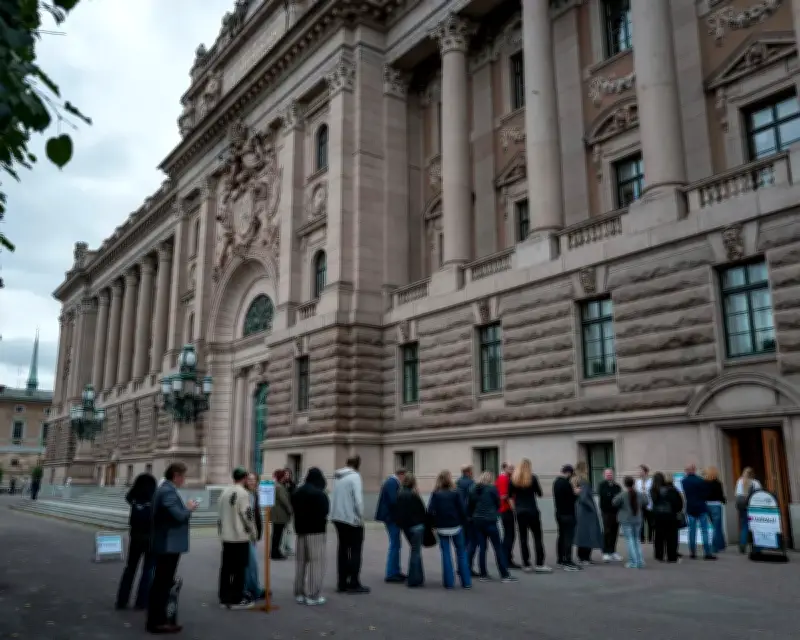
The narrow victory of Sweden's centre-left bloc in last Sunday's election has halted the far-right Sweden Democrats' (SD) ascent and prevented their entry into government, providing European progressives with a rare source of optimism in an otherwise bleak political landscape.
The outgoing prime minister, Ulf Kristersson, had stated before the poll that if his rightwing alliance won the largest number of seats, he would invite members of the Sweden Democrats to become ministers. That would have marked the formal end of the SD's pariah status in Swedish politics, after four years in which its parliamentary votes propped up his minority administration.
A narrow victory for the progressive bloc
Instead, voters handed the narrowest of victories to the Social Democratic leader, Magdalena Andersson, and the progressive bloc of parties. The SD's share of the vote fell for the first time since its origins as an openly neo-Nazi party in the late 1980s, and it slipped from second to third place behind the conservative Moderates.

The result comes amid worrying trends elsewhere in Europe. In Germany, the rise of the Alternative für Deutschland party threatens liberal values, while in France, polls point to a likely Marine Le Pen victory in the upcoming presidential election. Across mainland Europe, centre-left parties are struggling to respond to nativist movements that have captured much of the working-class support they once relied on.
Far-right influence persists despite defeat
As in Germany and France, the Swedish far right has not needed to win power for its agenda to become normalised and partially implemented. Mr Kristersson's reliance on the SD resulted in a government that behaved with performative cruelty towards migrants and enacted much of its draconian programme on deportations and citizenship restrictions.
Ms Andersson has responded by offering a milder version of the same approach to immigration and asylum. As it leaked support on the left accordingly, her party recorded its lowest vote share for over a century.
The urgent task for progressives
The SD's campaign slogan was "Make Sweden Sweden again", a variation on the usual Maga trope stressing its core ethnocentric message. From the sidelines, its rhetoric will become still more extreme, and the defeat of the rightwing bloc is already being invidiously attributed to foreign-born voters.
Should Ms Andersson eventually succeed in forming a centre-left coalition government, she should counter the forces of division by channelling the best of her own party's traditions. The Social Democratic party historically dominated Swedish politics through the idea of the Folkhemmet, or People's Home, which encapsulated the inclusive ethos of a welfare society admired around the world. Locating the resources and ambition to develop a similarly attractive politics of the common good for the 21st century is the urgent task for progressives, in Sweden and beyond.