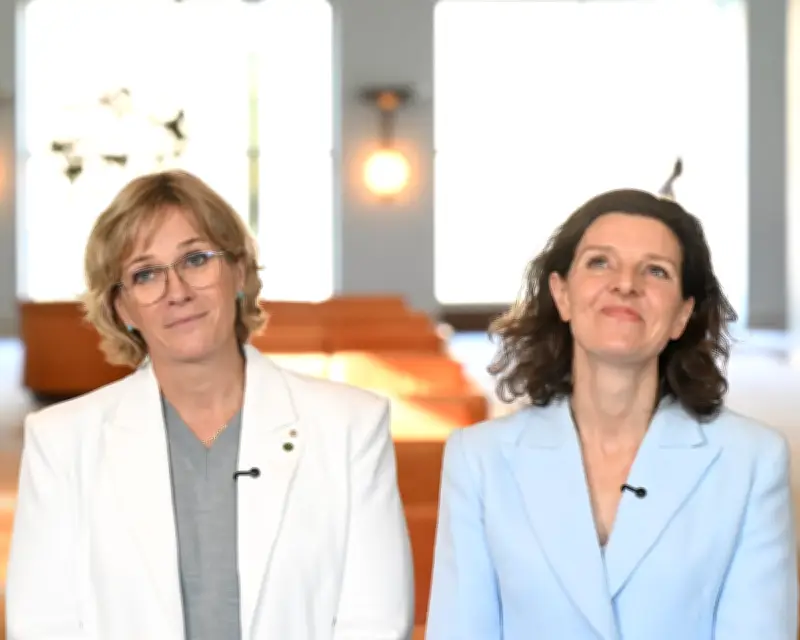
Two prominent teal independent MPs, Zali Steggall and Allegra Spender, have officially launched a new political party called Community Strong Australia. The party, which has applied for registration with the Australian Electoral Commission, is expected to be approved by October. It positions itself as a centrist alternative to the major parties, focusing on housing affordability, climate change, cost of living, childcare, education, healthcare, and social cohesion. Members will retain a free vote in parliament, allowing them to represent the wishes of their local communities rather than party machines.
What is Community Strong Australia?
The party describes itself as a “community-powered political force” and “integrity-led,” aiming to extend the benefits of the community independent movement to more electorates. Its slogan emphasizes “hope over hate, reason over rage, and solutions over slogans.” The party plans to run candidates in both the House of Representatives and the Senate, with candidate selection and policy development driven by local community engagement. Unlike traditional parties, Community Strong will not have formal members but will engage supporters through volunteering and public events.
Who is involved?
Steggall, the member for Warringah, and Spender, the member for Wentworth, are the founding members. Both won formerly safe Liberal seats: Steggall defeated Tony Abbott in 2019, and Spender won Malcolm Turnbull’s old seat in 2022. No other current crossbench MPs have joined, though Nicolette Boele, the member for Bradfield, has not ruled out closer ties. Other prominent independents like Monique Ryan, Kate Chaney, Helen Haines, Andrew Wilkie, and Rebekha Sharkie have declined to join. Steggall and Spender said they are not working with Climate 200 or its major donors on the new party.

Why create a new party?
Steggall and Spender cited widespread public disillusionment with political extremes, including the Coalition’s conservatism, One Nation’s far-right stance, and Labor’s declining popularity. Spender said many Australians have approached her saying, “we need something different… we are concerned about the extremists in our country.” Another key factor is new electoral laws, including spending and donation caps, which disadvantage smaller players and benefit traditional party structures. Spender noted in an email to supporters that “new donation laws and structural advantages enjoyed by the major parties have made it harder for grassroots campaigns to compete. A party structure helps put us on a more level playing field.”
What are the party's policies?
Policies are still under development, with a 100-day consultation period planned. The party’s website lists commitments including AI and tech opportunity with guardrails, a respectful multicultural society, a productive economy, intergenerational fairness, and energy security. Representatives will retain a free vote in parliament, meaning they are not bound by a party room decision. Steggall said members must “pledge to the core values and policy pillars” of the organisation.
Where will candidates run?
The party will field candidates in both the House of Representatives and the Senate. Steggall and Spender did not specify how many candidates they expect, but said “community engagement” would determine which campaigns they support. The party’s website emphasises local communities playing a central role in candidate selection, policy development, and accountability.
What about the logo?
The logo consists of three parts: a red orb at the top, a white stripe in the middle, and a teal swirl below. According to the party, these represent a sunrise, a speech bubble, and an outstretched hand, respectively, with the overall shape forming a heart. However, some political observers noted the logo resembles a Santa hat or Papa Smurf from The Smurfs, among other interpretations.