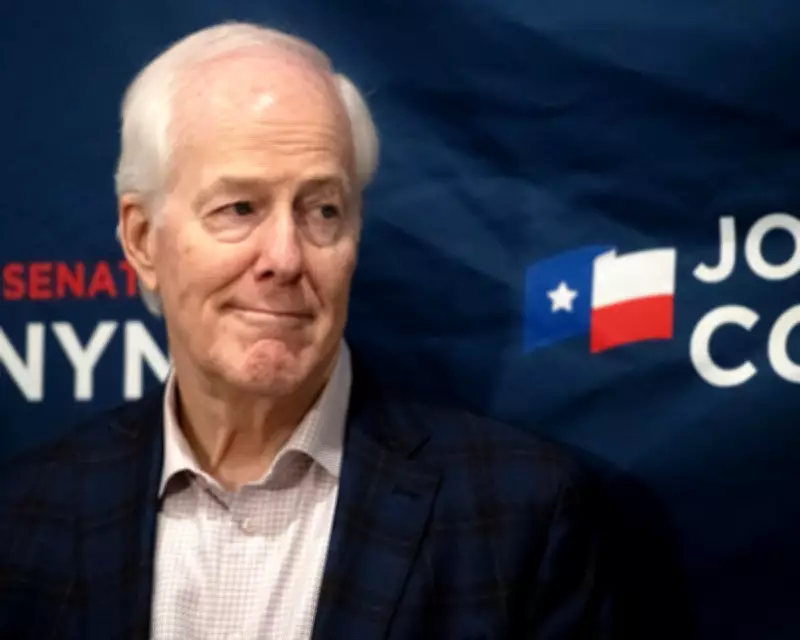
The defeat of Senator John Cornyn in the Texas Republican primary marks a significant milestone in the decline of the Republican Party. Once hailed as a "steady conservative institutionalist" by the New York Times, Cornyn's long-standing virtues became his ultimate liability. Despite spending a record $92 million—the highest sum ever by a candidate in a Senate primary—he was decisively beaten by Ken Paxton, a candidate with a history of allegations including bribery, abuse of office, and impeachment by the Republican-controlled Texas House. Paxton, endorsed by Donald Trump, defeated Cornyn by 28 points. Following the primary, the National Republican Senatorial Committee, which Cornyn once led, quickly removed any trace of his campaign, treating Paxton as the rightful successor to the Senate seat Cornyn held for 24 years. This Orwellian erasure underscores Trump's relentless effort to obliterate the remnants of the old party and replace it with a cult of personality.
The Rise and Fall of a Republican Stalwart
Cornyn's rejection is not an isolated incident; it represents the ongoing fragmentation of the Republican Party that Ronald Reagan built, which was painstakingly constructed in Texas by the Bushes and their operative Karl Rove. Cornyn entered the Senate in 2002, riding the Reagan wave that swept Democrats out of Texas. He became a key figure in the Bush operation, funneling funds from the oil and gas industry to fuel Mitch McConnell's dark money machine, which financed Republican candidates, dismantled campaign finance reform, and secured a conservative majority on the Supreme Court. Cornyn epitomized the Republican Party during the interregnum between Reagan and Trump, as it shifted from a conservative business-oriented party to a personality cult intent on establishing kleptocracy. Despite his loyalty to the old order, Cornyn could not escape the fatal flaw of his past.
Early Ties to Karl Rove and the Bush Machine
Cornyn first met Karl Rove in the early 1980s, when Rove was the most influential political consultant in Texas. Rove, known as the "boy genius" of the state's Republican Party, had been chosen as chair of the College Republicans by George H.W. Bush in 1973. By 1977, Rove became executive director of a political action committee run by James A. Baker, which formed the basis of Bush's 1980 presidential campaign. Rove had previously advised George W. Bush in his failed congressional campaign and William Clements, the first Republican governor of Texas in over a century. Rove built a political machine through his direct mail firm, electing dozens of Republicans statewide. He created a massive fundraising operation by promoting "tort reform" for corporate clients like insurance companies, the medical industry, and Philip Morris, battling trial lawyers who represented consumers in lawsuits.

Rove recruited Cornyn, then a 32-year-old lawyer, into his "tort reform" movement and secured his election as a state district judge in 1984. By 1988, Rove had won three seats on the Texas Supreme Court and recruited Cornyn to run for the court in 1990. In 1998, Rove endorsed Cornyn for state attorney general, helping raise over $6 million from corporate allies to defeat the incumbent Democrat who was pursuing tobacco companies. Cornyn rode a Republican wave that re-elected Governor George W. Bush, setting the stage for Bush's 2000 presidential campaign. As attorney general, Cornyn co-founded the national Republican Attorneys General Association, which raised millions for Republican attorney general campaigns nationwide. In 2002, Rove helped Cornyn become a U.S. senator, filling the seat vacated by Phil Gramm, another Rove client. Cornyn campaigned as a loyal member of "Team Bush."

Alignment with Mitch McConnell
In 2006, during Bush's second midterm, Republicans lost the Senate. As Bush's popularity waned, Cornyn found a new patron in Mitch McConnell, then Senate minority leader. In 2009, McConnell appointed Cornyn to lead the National Republican Senatorial Committee, where he raised over $100 million to help Republicans retake the Senate in 2010. Cornyn became a popular figure within the Senate Republican Conference, and McConnell made him whip in 2012. McConnell's primary goals were dismantling campaign finance reform and packing the federal courts. His fundraising strategy mirrored Rove's approach to "tort reform": a cycle of corporate money, elections, and judges—corporations funded Republicans, who approved judges favorable to corporations.
Cornyn preserved the system that emerged from the Supreme Court's Citizens United decision in 2010, which allowed unlimited and undisclosed corporate campaign contributions. In the Senate, he fought the Democrats' Disclose Act, which would have required donor transparency. Cornyn successfully blocked it by attaching riders to appropriations bills that prevented the Securities and Exchange Commission from enforcing disclosure rules on campaign donations. Over the years, Cornyn raised at least $415 million for Republican PACs, making him the top fundraiser after McConnell himself. However, Cornyn never built his own power base; instead, he integrated his efforts into McConnell's operation. Their networks were indistinguishable. Cornyn's operations were also closely linked to PACs run by Leonard Leo, chair of the Federalist Society, who selected conservative judges. Cornyn's former chief of staff, Monica Popp, headed a dark money group called the Conservative Majority Project, which distributed $1.5 million to Right Vote in 2024, a conservative non-profit mainly funded by Leo's Concord Fund.
Collision with Trump and the Fall
McConnell tolerated Trump during his first term as long as he appointed Federalist Society-approved judges. But after Trump's failed coup on January 6, McConnell—who was in physical danger during the Capitol assault—denounced Trump as "despicable," certified Joe Biden's 2020 election win, and dismissed Trump as politically finished. This is why McConnell ensured Republicans did not remove Trump from office in the post-January 6 impeachment. Trump retaliated with insults, calling McConnell a "broken down hack" and "Old Crow," and targeting McConnell's wife, Elaine Chao, as "Coco Chow." Cornyn, as McConnell's ally, became collateral damage. Trump's rage eventually engulfed Cornyn, whom he called "VERY disloyal to me, as President." Cornyn's original sin in Trump's eyes was certifying the 2020 election, though he voted to acquit Trump in the impeachment trial, following McConnell's lead.
Desperate to compensate, Cornyn posted a picture of himself reading The Art of the Deal, posed in front of a Trump-themed burger joint in Houston, and introduced a bill to rename Interstate Highway 47 as "Trump Interstate." This sycophancy backfired, provoking Trump's animosity. Trump endorsed Paxton as "a true MAGA Warrior who has ALWAYS delivered for Texas." Cornyn could not transfer his traditional obsequiousness to Trump, who refused to let him "go along to get along." Trump still saw McConnell, the Bushes, and Rove through Cornyn. Cornyn's rise and fall mirror the rise and fall of the Republican Party, which was once a political party. From the start, Cornyn was the man behind the man—dull, reliable, and invaluable. His record as a dutiful party man condemned him. Despite trying to adapt to Trump, his doom was to remain inescapably himself. Running against an opponent defending against real criminal allegations, Cornyn's unforgivable offense was being a Republican of his time, which he could never scrub away to become acceptable.