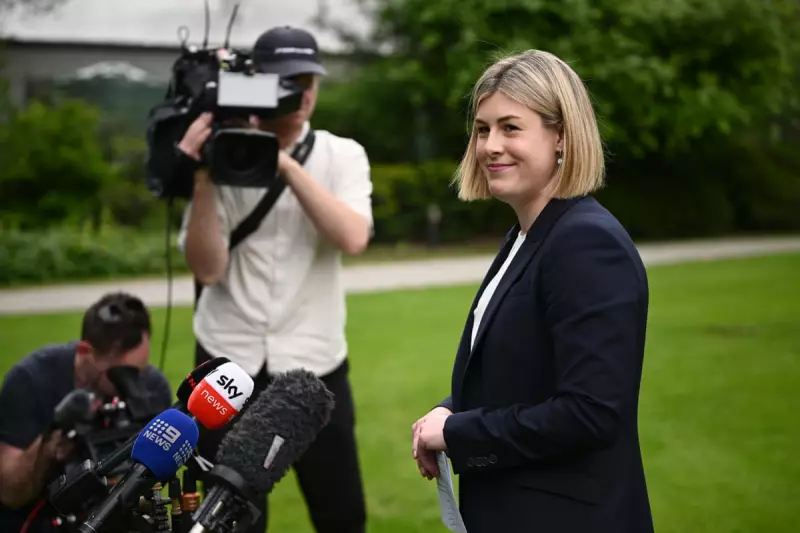
In a significant political shake-up that has captured Victoria's attention, Jess Wilson has been elected as the new leader of the state's Liberal Party opposition. The dramatic leadership change follows the resignation of former leader Matthew Guy after the party's devastating election performance.
A New Direction for Victorian Liberals
The Liberal partyroom meeting held on Monday culminated in Wilson's unanimous election, marking a pivotal moment for the conservative side of Victorian politics. Matthew Guy announced his immediate resignation from the leadership position, accepting responsibility for what he described as the party's "very bad" election result that failed to meet expectations.
Wilson, who represents the seat of Kew in Melbourne's inner-east, brings considerable political experience to her new role. Before entering parliament, she served as chief of staff to former federal treasurer Josh Frydenberg, giving her extensive insight into economic policy and federal-state relations. Her professional background also includes significant roles at the Business Council of Australia and Goldman Sachs.

Challenges and Opportunities Ahead
The new opposition leader faces substantial challenges in rebuilding the Liberal Party's presence across Victoria. The party suffered significant losses in traditional heartland seats, particularly in Melbourne's eastern suburbs, during the recent state election. Wilson must now work to restore voter confidence and develop compelling alternatives to the Andrews government's policies.
Political analysts are already speculating about Wilson's potential impact on the state's political landscape. Her moderate stance and economic expertise position her as a formidable opponent to Premier Daniel Andrews, though she faces the considerable task of uniting a fractured party and developing policies that resonate with Victoria's diverse electorate.
The leadership change comes at a critical juncture for Victorian politics, with the Labor government implementing ambitious infrastructure projects and navigating post-pandemic recovery. Wilson's elevation signals the Liberal Party's attempt to reset its political strategy and reconnect with voters who abandoned the party at the last election.
What This Means for Victoria's Political Future
Wilson's leadership represents a generational shift for the Victorian Liberals and potentially alters the dynamics of state politics. Her background in economic policy suggests she may focus heavily on financial accountability and service delivery in her critique of the government.
The Labor government, while currently enjoying a strong majority, will need to adjust its parliamentary strategy to counter Wilson's different approach compared to her predecessor. Political observers will be watching closely to see how the new opposition leader performs in question time and develops the party's policy platform ahead of the next election cycle.
As Victoria navigates complex challenges including healthcare reform, infrastructure delivery, and economic management, Wilson's leadership introduces new variables into the state's political equation. Her success or failure in revitalising the Liberal Party will have significant implications for the balance of power in Victorian politics for years to come.