
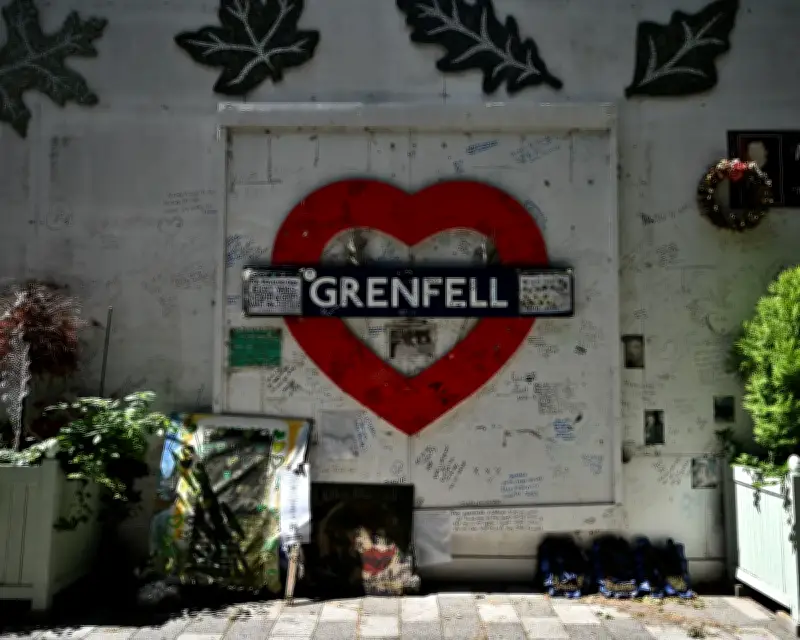
Almost nine years after the Grenfell Tower fire killed 72 people, including 18 children, a new report by the thinktank Common Wealth and the financial investigations group FIND has highlighted a stark imbalance in corporate accountability. The company behind the building's flammable cladding, Arconic, paid more compensation to its shareholders than to the victims of the disaster. Of Arconic's £86 million in Grenfell-related settlements, all but £1.5 million was covered by insurers, meaning the company paid only a fraction of the wider social cost. The multibillion-pound bill for making hundreds of other buildings safe has fallen largely on the state.
Arconic's Compensation and the Inquiry's Findings
The Grenfell Tower inquiry found that Arconic's product was the "primary cause" of the fire's rapid spread in June 2017. Despite this, the company's financial exposure was minimal. The report argues that the current system of corporate accountability in Britain is "rotten," as no one has been criminally charged over the causes of the fire nearly a decade later. The Metropolitan police are investigating 57 individuals and 20 organisations as criminal suspects, but no charges are expected before the fire's tenth anniversary.
In contrast, the report points to the Wang Fuk Court fire in Hong Kong, which killed 168 people in November 2025. Authorities there immediately treated it as a potential crime involving corporate actors. Within seven months, seven people and two firms faced manslaughter charges. While the report does not suggest Hong Kong as a model, it notes the uncomfortable contrast between nearly a decade without charges in Britain and seven months in the far east.
Proposed Legal Reforms: Failure to Prevent and Punitive Damages
The report proposes two legal changes that parliament could enact quickly to address these issues. The first is a "failure to prevent" law that would make companies responsible for having adequate systems to prevent foreseeable serious harm. The second is to adopt a "punitive damages" approach, which asks what a company should pay for its conduct rather than just compensating victims for their loss. Such an award against Arconic could have been used to meet the costs of remediation "at no public cost," the report says.
This approach is already possible in the United States. Some Grenfell families attempted to bring a case under US law, where damages can punish and deter corporate wrongdoing. Currently, Meta is accused in a California court of intentionally addicting children to Facebook and Instagram in pursuit of profit. Meta denies wrongdoing, but says litigation potentially exposes it to $1.4 trillion in penalties and changes to its products. The case illustrates how alleged social harm can be a company-sized risk.
Arconic's Legal Strategy and the Broader Problem
Arconic successfully argued that the Grenfell families' case should be heard in British courts, where civil compensation and criminal punishment are kept separate. This separation, the report argues, allows companies to pass the buck. The more entities involved in a disaster—manufacturers, certifiers, architects, contractors, and regulators—the easier it becomes for blame to disappear between them. The Covid pandemic also disrupted the Grenfell public inquiry, which involved hundreds of core participants, further delaying justice.
Lawmakers already have tools to hold companies accountable in other areas. The polluter pays principle exists in environmental law, recall obligations in product safety, and collective redress in competition law. The report questions why these legal principles, already used to force companies to account for economic and consumer harms, are not being extended to catastrophic social harms. Until they are, the law will remain better at protecting investors than the public from corporate wrongdoing.




