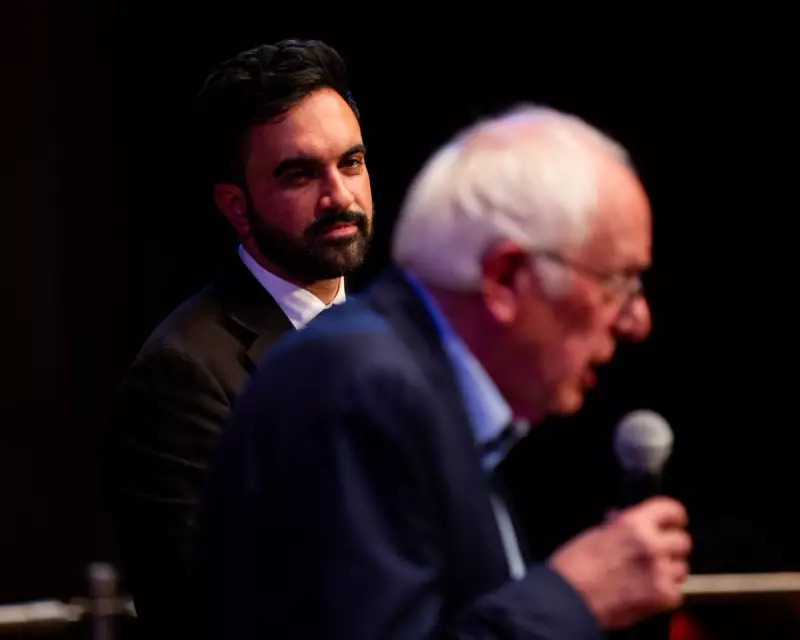
In a remarkable political transformation, the Democratic Party appears to be embracing the economic populism long championed by Bernie Sanders, signalling a fundamental shift in the party's direction since the November elections.
The Unlikely Conversion of James Carville
The most surprising development comes from James Carville, the 81-year-old architect of Clintonian centrism who has long been considered the bête noire of progressive Democrats. In a stunning New York Times editorial, Carville declared that the Democratic party must now run on the most populist economic platform since the Great Depression.
Carville's proposed programme includes raising the minimum wage to $20 per hour - significantly exceeding the previous progressive demand of $15 - alongside universal childcare, free university education, and major investments in public utilities. This represents a seismic shift from the centrist policies he previously championed.

Building Democratic Unity Around Affordability
Since the Democrats' sweeping victories on 4 November, party factions have found uncommon unity around addressing the cost-of-living crisis. Moderates, populists and socialists have all agreed that Democrats must campaign on affordability issues and pin the struggling economy on Donald Trump.
Simultaneously, party leaders across the ideological spectrum have quietly agreed to move away from divisive cultural issues and instead embrace common-sense appeals to American solidarity and equality. This convergence represents a significant departure from the internal conflicts that have plagued the party in recent years.
Learning from Historical Precedents
Progressives now face the challenge of resisting the temptation to reject centrist overtures out of hand. History offers a cautionary tale from the era of Franklin Delano Roosevelt, when the Socialist party under Norman Thomas criticised Roosevelt's New Deal rather than embracing his social-democratic turn.
The result was political irrelevance for figures who had inspired the great populist revival of the 1930s. Today's left must avoid repeating this mistake by working with centrist converts to craft visionary social policy while remaining open to revising their own positions when moderates make valid points.
The Path to Genuine Populism
For this populist turn to be meaningful, Democratic leaders must be willing to directly challenge the economic elite who have traditionally funded their campaigns. Many moderates flirting with populism have yet to explicitly identify Wall Street and Silicon Valley as villains in the contemporary economic order.
The statistics reveal the scale of the challenge: since Bill Clinton's presidency, America has lost approximately 7 million middle-income manufacturing jobs while gaining roughly 700 billionaires. Addressing this imbalance requires more than standard welfare state solutions.
A successful leftwing populism would need to de-globalise the economy, bring manufacturing back to the United States, reindustrialise the rustbelt, rein in the hyper-global banking sector, rebuild national infrastructure, and strengthen labour power. This comprehensive approach would represent a democratic reorganisation of the political economy away from the global rich and toward the domestic working class.
If moderate Democrats genuinely embrace this vision, they should be welcomed with open arms. With the working class increasingly alienated from the party, such an appeal might represent the Democrats' only chance of retaking Washington and implementing meaningful economic reform.