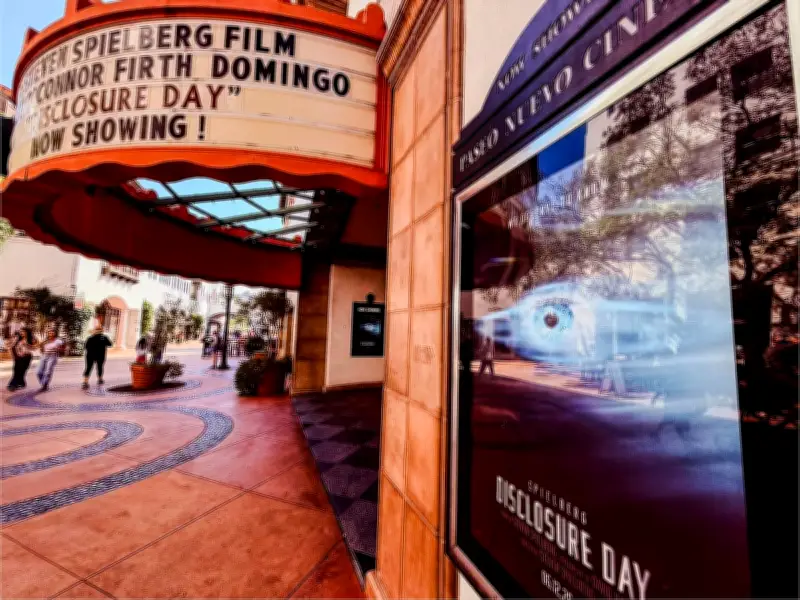
Despite the buzz surrounding Steven Spielberg's latest film, 'Disclosure Day,' the prospect of a real-life government admission about aliens on Earth remains highly unlikely, according to senior SETI astronomer Seth Shostak.
Public Belief vs. Scientific Reality
For decades, surveys have shown that a majority of Americans believe extraterrestrials exist in the cosmos, a view shared by many scientists, including Shostak. The reasoning is straightforward: either aliens exist, or there is something extraordinarily remarkable about life on Earth. However, many also suspect the U.S. government is hiding alien presence to prevent panic.
Shostak argues that while interstellar travel is theoretically possible, it is enormously difficult and costly. Cross-breeding with aliens is biologically impossible. Most scientists see no good evidence that extraterrestrials have visited Earth.
Why No Disclosure?
Shostak points out that if aliens were here, scientists and the public would be intensely interested, making secrecy unlikely. The fear of panic, often cited by conspiracy theorists, is overblown given that many already believe in alien presence without widespread unrest.
“There’s not going to be a disclosure day because there’s nothing to disclose. Yet,” Shostak writes. Real contact with aliens, he says, will most likely come from eavesdropping on their radio transmissions, a quest pursued by SETI.
The Real Disclosure Scenario
SETI scans the sky for radio signals from other star systems. While no signal has been found, improving technology increases the chances. A subcommittee of the International Astronautical Federation has a protocol for such a discovery: first confirm the signal with another telescope, then involve the scientific community openly.
“The real disclosure day will be when scientists receive the ultimate long-distance call,” Shostak says, adding it will happen at a press conference, not a secret government reveal.