
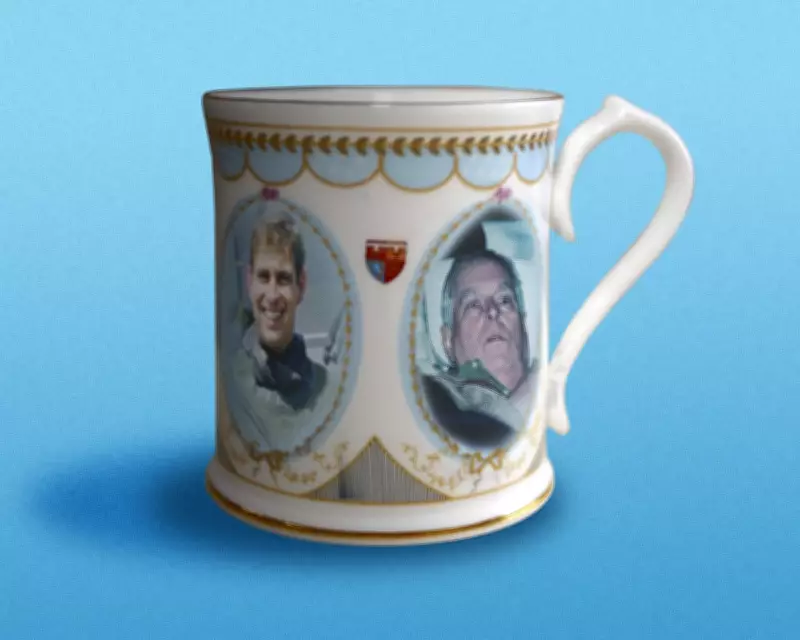
The Transformation of a Royal Face
The photograph has circulated globally: Prince Andrew, formerly known as the Duke of York, sitting slumped in the back of an unmarked vehicle outside Aylsham police station in Norfolk. His expression appears hollow, with tight lips and reddened eyes caught in the camera flash. This image stands in stark contrast to the once-celebrated "Randy Andy" persona, whose grinning face adorned commemorative china and represented national affection.
From Royal Icon to Public Property
Throughout history, royal faces have served as powerful symbols of lineage and authority. Prince Andrew's visage was once memorialized through endless reproduction, much like religious icons. As the warrior prince and helicopter pilot who served in the Falklands War, his image became integral to the royal brand. That strong jawline and broad forehead were read as markers of resolution and intelligence, while his full mouth suggested sensuality that might have concerned 18th-century physiognomists who believed facial features revealed character.
The democratization of photography in the late 19th century transformed how faces were perceived, shifting from symbols of lineage to expressions of individual personhood. The royal family participated in this shift, notably when Queen Victoria released a postmortem image of Prince Albert. However, the photograph of Andrew represents something unprecedented: a royal family member captured leaving a police station after arrest, his face trapped behind glass rather than presented in controlled portraiture.
The Car Window as Lens of History
Traditionally, glimpses through car windows offered proximity to royal glamour—the waves of Diana and Charles, the arrivals of William and Kate. Andrew's image breaks this pattern completely. Newspapers have drawn comparisons to Charles I, the last royal family member arrested before his 1649 execution. While Charles took care to appear composed on the scaffold, Andrew's claim during his infamous Newsnight interview that he couldn't sweat due to Falklands service presented his body as exceptional, unlike common bodies.
The photograph with Virginia Giuffre, showing Andrew grinning with his arm around her, came to symbolize the civil lawsuit against him. When this image first circulated in 2011, Andrew wrote to Jeffrey Epstein about rising above the situation together. Fifteen years later, his face reveals the consequences of that association.
The Public as Archivists and Classifiers
Jeffrey Epstein's extensive cataloguing of the wealthy, alongside documentation of victims, has created an archive now turning against power itself. The public has become active participants in this process, poring over millions of pages from released files, analyzing facial features through AI technology, and sharing debunked images. We have all become physiognomists and archivists, examining every face as both portrait and document.
Andrew once believed he controlled his image, approaching his Newsnight interview as another portrait sitting with Emily Maitlis as his modern Van Dyck. The resulting documentation, however, captured his downfall rather than his glory. His face now represents multiple contradictory identities: the Falklands hero, the grinning prince on china, the Newsnight interviewee with a sneer of disdain, and the man photographed with a young woman in the Epstein files.
This transformation from royal icon to symbol of disgrace reflects broader changes in how we perceive authority and lineage in the modern era. The face that once asserted ancient claims to power through bone structure and lineage now tells a story of public downfall, captured in a single photograph that will likely define Andrew's legacy for generations.




