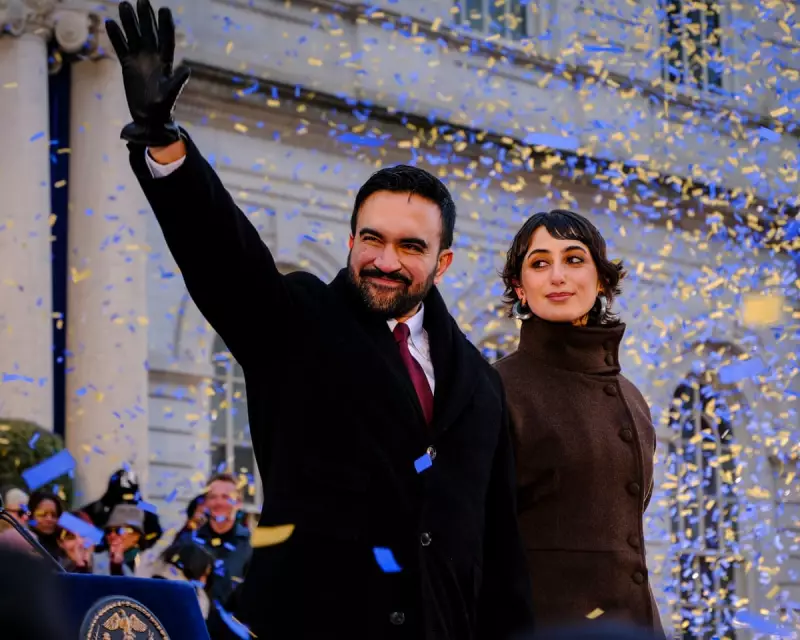
In a historic ceremony that defied political convention, Zohran Mamdani was sworn in as the 112th mayor of New York City on 1 January 2026. The inauguration, witnessed by thousands outside City Hall and broadcast live to a massive block party on a closed Manhattan street, signalled a dramatic shift in urban governance, centred on mass participation and hope over apathy.
A Festival of Politics, Not a Private Affair
Unlike the typically exclusive events marking such occasions, Mamdani’s inauguration was a public festival. Against a backdrop of clear blue skies and biting winds, tens of thousands gathered to watch the swearing-in on giant screens, embodying the mayor’s core belief in open, accessible politics. This was no accident; it was the culmination of a campaign built on novel methods of inclusion.
His journey began in November 2024 with a viral video engaging voters in Trump-leaning areas of Queens and the Bronx. It grew through city-wide scavenger hunts, football tournaments, and an unprecedented post-victory jobs portal that attracted 74,000 applications. In December, he held 15-minute public consultation slots for 12 hours straight. As Mamdani declared in his victory speech, politics is no longer “something that is done to us,” but “something that we do.”

Filling the Void: From Neoliberal Retreat to Active Government
Mamdani’s approach is a direct rejection of the neoliberal consensus that dominated Western politics for decades. That era, championed by figures like Ronald Reagan and echoed by Tony Blair’s discomfort with the political label, framed government as a reluctant necessity and fostered widespread depoliticisation. Political scientist Peter Mair described governing in this climate as “ruling the void.”
Mamdani’s project seeks to fill that void with active solidarity. His policy platform includes universal free childcare, free bus travel, and a rent freeze on stabilised apartments—all free from the stigma of means-testing. But the policy is only one pillar. The other, more challenging task is sustaining mass participation while governing. “I don’t think the campaign can end,” Mamdani has insisted, aiming to keep the movement that elected him actively involved.
A Blueprint Against Political Apathy
The inauguration itself felt like a campaign rally continued, featuring allies like Alexandria Ocasio-Cortez and Bernie Sanders, and chants of “tax the rich.” Volunteers were given prime seating, and a mayoral pamphlet thanked the 104,000-plus volunteers by name. In his closing speech, Mamdani heralded a “new era” of “big government” dedicated to fostering solidarity.
This stands in stark contrast to leaders like Keir Starmer, who has argued people want “a politics that treads a little lighter.” Mamdani’s success suggests the opposite: that after years of scandal and disappointment, a significant public yearning exists for more politics—a movement to believe in, work for, and socialise through. As Mamdani told the crowd, “It will be loud, it will be different.” On that cold January day, with his words echoing through the canyons of Manhattan, it was a promise that New York—and observers far beyond—were keen to hear.