Warwickshire's Teenage Council Leader Defends Controversial Tax Increase
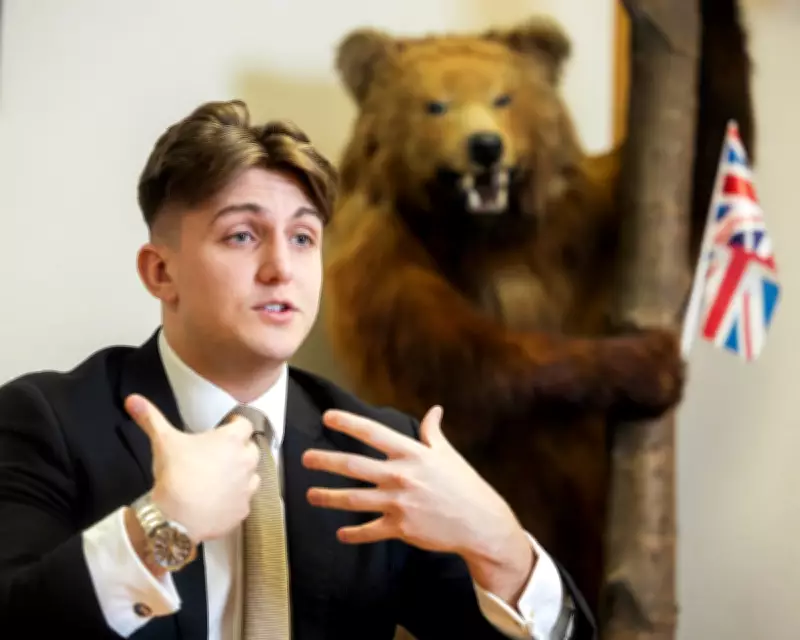
The 19-year-old leader of a Reform UK-controlled council in Warwickshire has publicly defended proposals for a 3.89% council tax increase, despite senior financial officers warning that anything less than the maximum 5% permitted by law would jeopardise the local authority's financial stability.
Budgetary Pressures and Political Promises
George Finch, who leads a minority administration at Warwickshire County Council, acknowledged the difficult position his party finds itself in after campaigning on promises of lower taxes. "It's not an ideal situation," Finch stated. "We want low tax, low spend and we were always committed to that. It's just that national pressures that the government is not solving [such as] Send home-school transport."
The young council leader insisted that "the people understand that taxes do have to go up now" while maintaining his personal opposition to tax increases. "I am dead against increasing taxes and I will do as much as I can to lower that bill and that burden," he added.

Financial Warnings and Administrative Challenges
Council officers delivered a stark warning to the administration in December, indicating that the proposed 3.89% increase represented a "riskier financial strategy" that threatened the medium-term sustainability of the local authority. Their report specified that balancing the budget would require additional cuts of £4.2 million for every 1% reduction from the maximum council tax rise.
Finch criticised what he described as bureaucratic resistance within the council structure. "I had to learn very quickly ... the elected members are not fully in control straight away," he revealed, adding that council workers had caused "a lot of blockage" following the 2025 local elections. "The shutters were coming down," Finch recalled. "They realised straight away that George isn't going anywhere, Reform ain't going anywhere so they had to start working with us."
Reform UK's Local Government Efficiency Drive
The situation in Warwickshire comes as Reform UK faces increased scrutiny over its tax policies, with at least four of the ten councils the party controls having proposed maximum 5% council tax rises earlier this year. This appears to contradict election promises to reduce taxes.
Finch outlined his administration's approach to finding savings, mentioning AI implementation and "transformation savings" though without providing specific details. The council has launched a "value for money" programme aiming to deliver £70-100 million in savings over four to five years.
However, the party's national Department of Local Government Efficiency (Dolge), modelled on Elon Musk's Department of Government Efficiency (Doge), has yet to visit Warwickshire. Meanwhile, at Kent County Council, Reform UK cabinet member Paul Chamberlain admitted they had not found the significant waste they anticipated. "We made some assumptions that we would come in here and find some of the craziness that Doge found in America ... and that was wrong, we didn't find any of that," Chamberlain told the Financial Times.
Broader Context of Local Government Finance
The debate in Warwickshire reflects wider challenges facing local authorities across England, with most councils expected to implement maximum council tax increases in April due to rising costs and growing demand for services. Councils repeatedly emphasise their dire financial situations as they struggle to meet legal requirements to balance their budgets.
Warwickshire councillors are scheduled to vote on the new budget proposal this Thursday, with the outcome likely to have significant implications for both local services and Reform UK's credibility on taxation issues.