
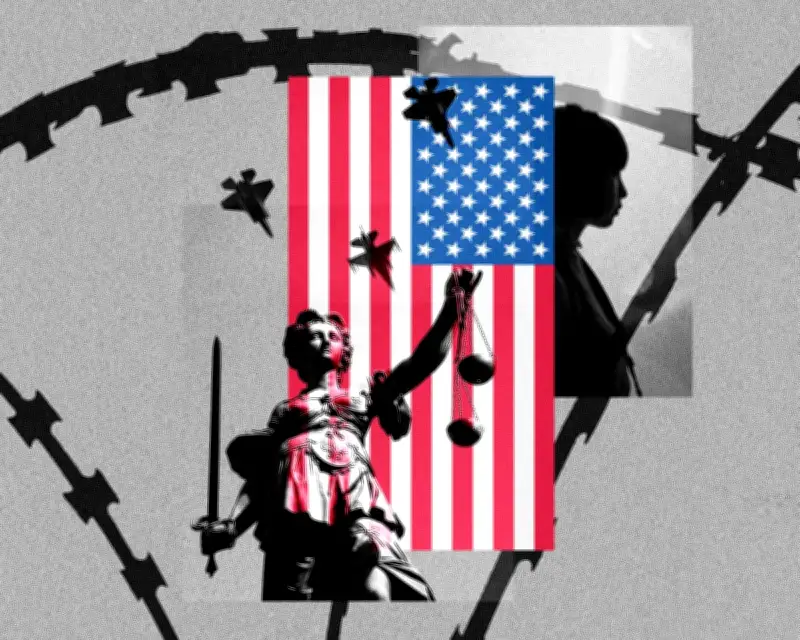
The United States military frequently tries its personnel accused of crimes in the UK through courts martial, bypassing the British legal system, under an obscure 1951 agreement. This practice has come under increasing scrutiny, particularly in cases involving sexual assault, paedophilia, and violent attacks against British victims.
Scope of US military presence and crimes
More than 12,000 US personnel are stationed across at least 15 bases and facilities in the UK, primarily in England, with the exception of Lossiemouth in Scotland. The Guardian has identified a wide range of convictions of US service members, including sexual assaults, paedophilia, indecent exposure, violent attacks, drink-driving, speeding, and driving uninsured vehicles. A significant number of these crimes involved British victims and occurred off base.
The court martial system
Courts martial are military trials held on base behind heavily guarded fences, inaccessible to the public. Judges, prosecutors, and defence lawyers are legally trained but employed by the military, and juries consist of armed forces members. The Uniform Code of Military Justice governs US forces and covers offences such as disobeying orders, desertion, war crimes, drug use, sexual violence, and paedophilia. Some offences, like infidelity or gambling with lower ranks, are also punishable. A US air force spokesperson said its proceedings "are fair, transparent and thorough."
Legal basis: the 1951 Status of Forces agreement
The 1951 Status of Forces agreement between the US and UK determines jurisdiction. The US prosecutes its personnel for offences committed while on duty, against another US service member, US property, or a dependent. In other cases, UK authorities technically have first option. However, the US often requests that cases be relinquished, and the UK must give "sympathetic" consideration. According to a US air force expert, "Oftentimes the UK will turn it back over to the US military and allow us to prosecute it." The Pentagon prefers to prosecute its own to maintain discipline, as commanders want "consistent, standardised punishments" to send a deterrent message.
UK exceptions: the Mikayla Hayes case
British authorities sometimes insist on prosecution. In August 2022, US mechanic Mikayla Hayes, based at Lakenheath, struck and killed motorcyclist Matthew Day while driving off base. The US military sought jurisdiction, but the Crown Prosecution Service successfully challenged the certificate. Hayes was tried at Norwich Crown Court and acquitted of causing death by careless driving. The UK does not keep statistics on such refusals.




