
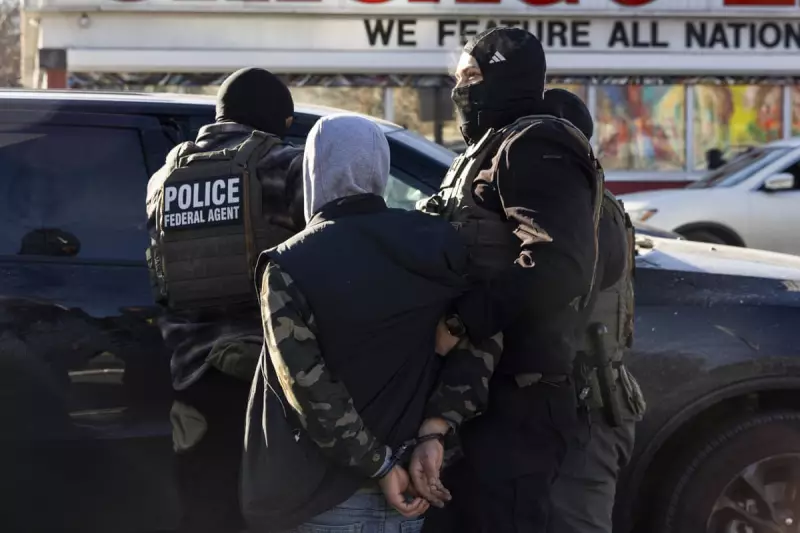
In an unprecedented escalation of tensions over immigration policy, city and state leaders across the United States are threatening to arrest federal immigration agents accused of misconduct, challenging long-held assumptions of federal impunity.
A Growing Chorus of Defiance
The stark new reality was crystallised last week when Rochelle Bilal, the Sheriff of Philadelphia, issued a blunt warning to Immigration and Customs Enforcement (ICE) agents. "If any of them want to come in this city and commit a crime, you will not be able to hide," she declared, adding, "You don't want this smoke, 'cause we will bring it to you."
She is far from alone. In June 2025, Boston's Mayor, Michelle Wu, signed an executive order mandating regular Freedom of Information Act requests to the Department of Homeland Security (DHS) to track immigration arrests. The rhetoric reached a peak last week when Minneapolis Mayor Jacob Frey told ICE to "get the fuck out of Minneapolis."
This shift moves beyond traditional non-cooperation policies. Municipal authorities are now positioning state law enforcement as the primary check on alleged federal civil rights violations, a role once unthinkable.
The Vacuum of Federal Accountability
This radical change stems from a perceived vacuum in federal accountability. The Trump administration has signalled a reluctance to prosecute federal agents for abuses, a stance originating with former President Donald Trump's 2025 exhortation for law enforcement to "do whatever the hell they want."
This position was reinforced by Stephen Miller, a senior White House adviser and architect of Trump's immigration agenda. On Fox News, Miller asserted federal agents have immunity, stating, "To all ICE officers: you have federal immunity in the conduct of your duties, and anybody who lays a hand on you... is committing a felony." His comments were reposted by the official DHS X account.
The administration's handling of the fatal shooting of Renee Nicole Good by an ICE officer in Minneapolis last week prompted the resignation of at least four senior leaders from the Department of Justice's civil rights division and six federal prosecutors in Minnesota.
With the prospect of federal prosecution dim and potential presidential pardons looming, state and local prosecution has emerged as the sole remaining legal remedy.
Legal Groundwork and Gathering Evidence
Legal experts confirm states can prosecute federal officials for state crimes, provided the agents are not acting within the lawful scope of their duties. "The supremacy clause doesn't protect agents when they are not acting within the scope of their duties, behave in an egregious or unwarranted manner, or violate federal law," explained Bryna Godar, a staff attorney at the University of Wisconsin Law School.
In response, state prosecutors have begun actively building cases. In October 2025, as ICE conducted operations on New York's Canal Street, State Attorney General Letitia James launched an online portal to collect evidence of federal misconduct. The following day, State Senator Julia Salazar called for arrests, stating ICE officers who assault New Yorkers must be prosecuted by local authorities.
Similarly, Illinois Governor JB Pritzker established an accountability commission to document federal officers' activities during the controversial "Midway Blitz" operation. Following the Minneapolis shooting, former Chicago Mayor Lori Lightfoot is leading an effort to document abuses for future prosecution.
"Open up a grand jury investigation on the shootings, the killings and the assaults that are very well documented," Lightfoot urged. "My hope is that by accumulating this body of evidence, it will be inescapable."
Legislative Action and Impending Showdown
California has taken the most direct legislative step. Two new laws, the No Secret Police Act and the No Vigilantes Act, which took effect on 1 January 2026, require federal officers to identify themselves and prohibit them from wearing masks that conceal their identity. The laws also permit local police to arrest non-compliant federal agents.
The Trump administration has sued to block the laws, arguing they endanger agents who face threats from cartels and doxxing. In a court hearing on Wednesday, federal Judge Christina Snyder considered a request for a preliminary injunction.
California's legal team countered that the federal position would mean "federal agents could commit crimes and violate Californians' constitutional rights with impunity, accountable to no one."
Despite the heated rhetoric, a direct street-level confrontation between state police and ICE agents is considered unlikely. Cristine Soto DeBerry of the Prosecutors Alliance suggested a more methodical approach: "If I were a police officer, I think that my preference would be to document it... and allow the prosecuting agency... to decide if there's enough evidence."
Nevertheless, the landscape of immigration enforcement and federal authority is being fundamentally redrawn, as cities from Philadelphia to San Francisco prepare to hold federal power to a local account.




