
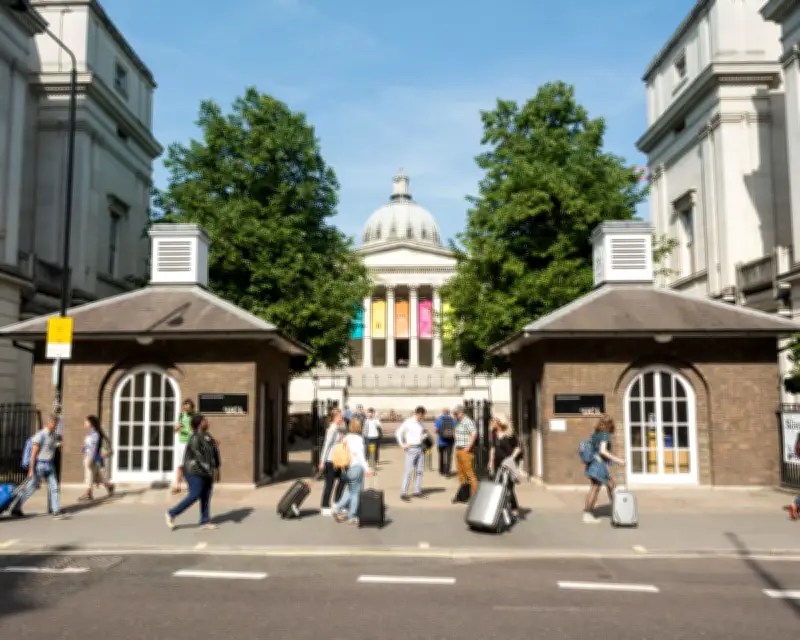
Most days, Mariam, a 19-year-old University College London student, spends hours simply waiting on campus. She finishes lectures by mid-morning but has career events or society meetings in the evening. The three-hour round trip to her family home makes travelling back and forth impractical, so she waits. By the time events start, she is often too exhausted to stay long.
Living at home because she cannot afford London’s rents, Mariam says she is “definitely suffering from not having the best social life”. She adds: “But living at home will also affect my future because I’m missing out on those career opportunities – the spontaneous, after-work coffees, introductions and events – that those who live out take for granted.”
Growing trend of living at home
Mariam, not her real name, is part of a growing group of students living at home rather than moving away to university. A report published this week by the Resolution Foundation found that 52% of prospective undergraduates from England’s poorest neighbourhoods expect to live at home while studying, compared with 18% from the least deprived areas. The foundation’s annual intergenerational audit highlighted rising rents and living costs as increasingly shaping university choices.
James Davies, an undergraduate at the University of Leicester, sees positives in living at home. He says: “I don’t think I’ve sacrificed too much. The people I know who moved away for university needed to do paid work outside of lectures and so didn’t have time to study.”
Impact on opportunities
David Willetts, president of the Resolution Foundation, stated that where students choose to live can shape not just their university experience but the opportunities and networks that influence the rest of their lives. “Our report shows that living with parents emerges from financial constraints rather than being a free choice, evenly spread across the income distribution,” he said.
Carl Cullinane, director of research and policy at the Sutton Trust, said: “Young people from disadvantaged backgrounds are increasingly having to limit their options for higher education studies because of worries about costs.” Research from the Centre for Longitudinal Studies supports this, showing 37% of prospective students planning to live at home express a preference for a Russell Group university, compared with 56% of those planning to move away.
Funding system under scrutiny
Rose Stephenson, director of policy and strategy at the Higher Education Policy Institute (Hepi), criticised the funding system that enables students living away from home outside London to borrow £10,830 a year for living costs, compared with £9,118 for those living with their parents, despite average annual student rents exceeding £7,500. “We have a funding system that assumes students can rely on family support, a housing market that makes moving out unaffordable, and policymakers still talking as if the traditional residential university experience is the norm,” she said.
Alex Stanley, vice-president for the National Union of Students, said that “while moving away from home is not a prerequisite for having a valuable university experience, given that there are geographical restrictions on what courses are available, everyone must have the option to move out to go to university”.
Different perspectives
Lucy Haire, director of sector engagement at the UPP Foundation, who is due to publish a report on this issue next month, warned against losing sight of the benefits of residential university life, arguing that “for many students, the opportunity to move away to study remains transformative”.
However, Nick Hillman, director of Hepi, cautioned against assuming that living at home is necessarily a disadvantage. “For some students, staying at home can mean lower debt, stronger family support and more time to focus on their studies,” he said. “The key question is whether students are able to access high-quality education and succeed once they are there. If living at home helps make that possible for more people, then it is not obviously a problem that needs fixing.”




