
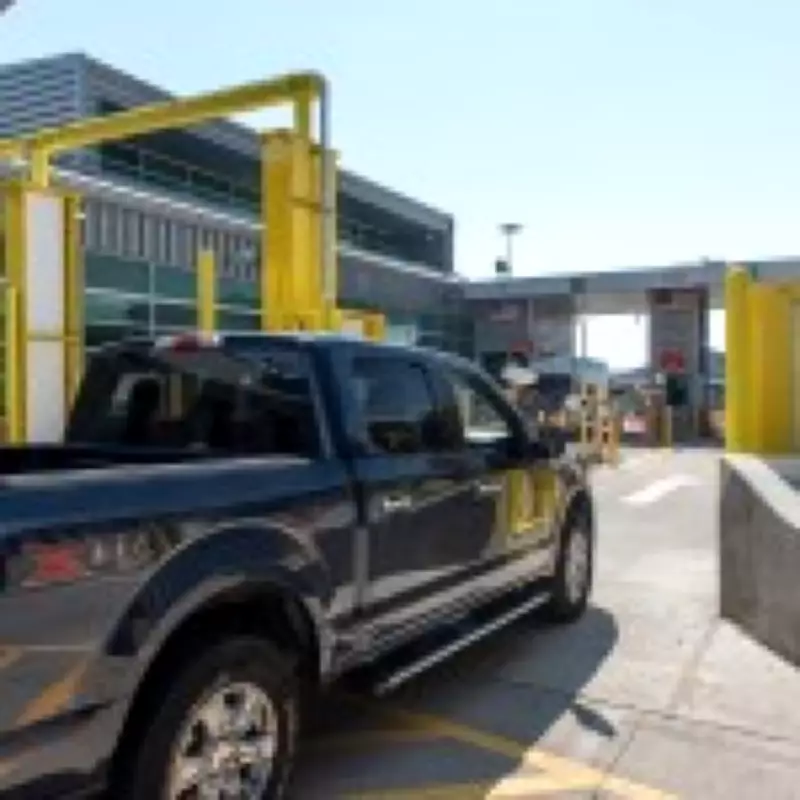
Trump Administration Announces Closure of Historic US-Canada Border Crossing
The United States government, under the direction of former President Donald Trump, has confirmed the impending closure of a historic border crossing between the United States and Canada. The nine-mile passageway linking Coutts, Alberta, and Sweet Grass, Montana, will be shut to Canadian traffic effective July 1, 2026, as part of a security enhancement initiative.
Generations of Free Movement Coming to an End
Border Road, situated in Montana but maintained for decades by the County of Warner, Alberta, has served as a vital conduit for locals on both sides of the international boundary. For approximately eighty years, residents have freely walked, cycled, and even ridden horses across this informal crossing, fostering close-knit community ties that transcend national borders.
Ross Ford, an Alberta resident, expressed his dismay to CTV News, stating, "We've enjoyed free access to the road for about 80 years, way before I was born. We've always been very close to our neighbors. Of course, they live in Montana and that won't change, but we have this new barrier."
Local Backlash and Security Justifications
The announcement has provoked significant backlash from affected communities. Rogert Horgus, a long-time friend of Ford living near Sweet Grass, Montana, described the closure as "ridiculous," noting, "I hate to see it because the Canadians have taken such good care of us and the road, with grading and all of that. When we grew up, I wouldn't be surprised if some weeks every day we'd run across and play. Ride bicycles, ride horses, go-karts."
Horgus added that while border patrol officials cited an increase in illegal traffic as justification, he has not personally witnessed such activity. He lamented that the border will now effectively "be in the ditch," symbolizing a tangible division between previously interconnected communities.
Social media reactions have echoed this sentiment, with one Canadian resident recalling, "I remember many family trips down to Montana as a kid, and honestly I don't think I realised we even crossed a border. But the US pettiness knows no bounds."
Canadian Response and Alternative Plans
In response to the closure, Alberta Transportation Minister Devin Dreeshen revealed plans to construct a parallel road on the Canadian side of the border, with construction slated to begin in April. Dreeshen explained to the Canadian Press, "We were informed by Homeland Security that they were making sure that this and other areas of US soil at the border were going to be enforced. We obviously went through the process to make sure we were able to expedite this [road], working with the County of Warner to make sure local access for Albertans [was available] on the Canadian side of the border."
He emphasized the enduring cross-border relationships, stating, "Regardless of the line on the map, you'll have farmers on both sides of the border, you'll have family friends on both sides of the border. I think obviously that will continue."
Historical Context and Border Incidents
The US-Canada border spans over 5,000 miles, making it the longest international border globally. While the Coutts-Sweet Grass crossing has facilitated informal movement for generations, it has not been without incident. In 2016, Homeland Security reported that two teenagers distracted by playing Pokemon Go inadvertently wandered across the border into the United States, resulting in their apprehension before being reunited with their mother on the Canadian side.
This closure marks a significant shift in border policy, reflecting broader security concerns while disrupting a century-old tradition of neighborly exchange. The move underscores the complex interplay between national security imperatives and local community dynamics in border regions.




