Switzerland to Vote on Far-Right Proposal to Cap Population at 10 Million
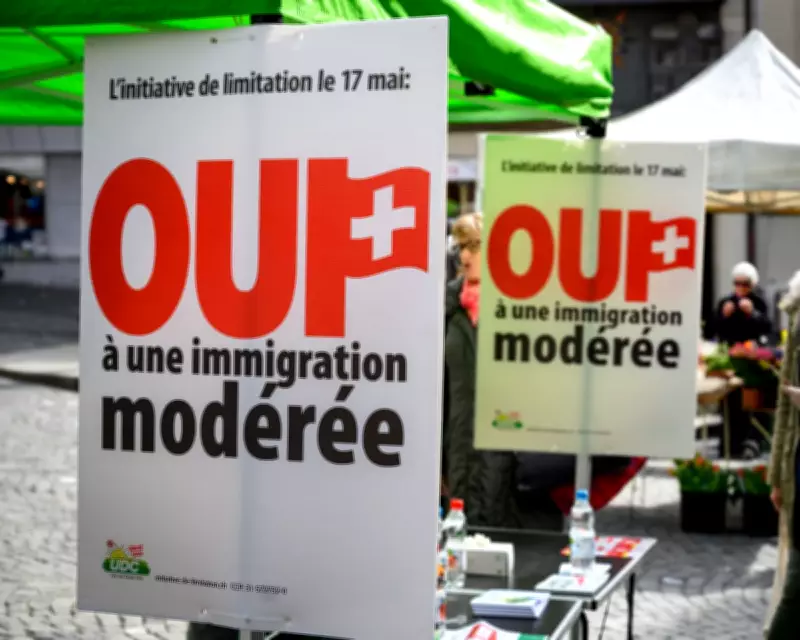
Switzerland is set to hold a pivotal referendum this summer on a controversial initiative from the far-right Swiss People's party (SVP) that aims to limit the country's population to 10 million. This proposal, strongly opposed by parliament, businesses, and financial services, could threaten key agreements with the European Union and potentially cripple the Swiss economy, according to critics.
Referendum Details and Population Restrictions
The government announced on Wednesday that the referendum on the SVP's "No to a 10 million Switzerland" initiative will take place on June 10. If passed, this measure would oblige the Swiss government and parliament to take action if the permanent population, currently at 9.1 million, exceeds 9.5 million. This would involve denying entry to newcomers, including asylum seekers and families of foreign residents.
Should the population reach the 10 million threshold, further restrictions would be implemented. If numbers do not decline, the government would be required to withdraw from the free-movement agreement with the EU, which is Switzerland's largest export market. This move could have severe repercussions for trade and economic stability.
Background on Population Growth and Political Context
Over the past decade, Switzerland's population has grown approximately five times faster than the average in surrounding EU member states, driven by economic success that attracts both low-skilled workers and highly paid corporate expatriates. Government figures indicate that about 27% of Swiss residents are not citizens.
The SVP, Switzerland's largest political party since 1999, argues that this "population explosion" is inflating rents and straining public infrastructure and services to breaking point. The party has a long history of campaigning against immigration, often using provocative imagery and highlighting crimes by foreigners. However, previous radical proposals, such as a 2016 plan to automatically deport immigrants for minor offences and a 2020 initiative to end free movement with the EU, have generally not succeeded.
Direct Democracy and Public Opinion
Switzerland's system of direct democracy allows citizens to propose popular initiatives, which go to a plebiscite if they gather 100,000 signatures within 18 months. While the SVP frequently uses this tool, only about 10% of such initiatives pass. A poll in December revealed that 48% of voters support the "No to a 10 million Switzerland" initiative, reflecting deep divisions over the country's openness in a rapidly changing world.
Economic and International Implications
Opponents of the proposal, including multinational corporations like Roche, UBS, and Nestlé, warn that it could jeopardize bilateral agreements with the EU, including a recent deal on single market access that underpins much of Switzerland's prosperity. Economiesuisse, a leading business lobby, has labeled it the "chaos initiative," cautioning that many Swiss companies rely on EU and other European workers. Without these workers, companies may be forced to relocate abroad, leading to reduced tax revenue and diminished public services.
Rival political parties emphasize that maintaining a close relationship with Europe is essential for Switzerland, as about half of its exports go to the EU. Employers' associations also note that population growth is expected to continue mainly through natural increases and longer life expectancy, rather than immigration alone.