
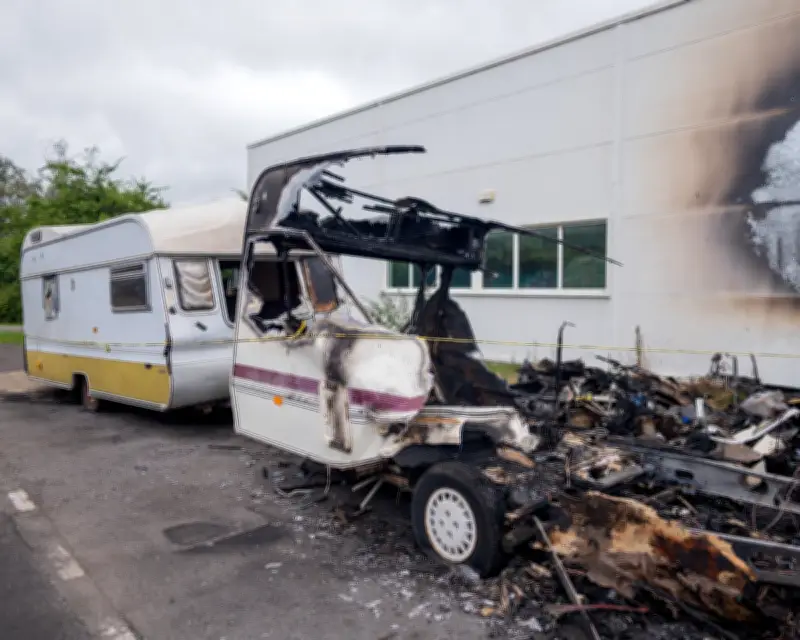
A suspected arson attack on caravans in Glastonbury has heightened tensions over the growing number of people living in vehicles, with two people arrested and the community left divided.
Explosion and fire rock caravan community
Jan Johnston, 71, was inside the van she calls home when she heard a loud explosion. "I heard this massive boom," she said. "I came out and there was thick, black, billowing smoke. It was like a bomb had gone off." The fire, which occurred on Saturday night, damaged three caravans just metres from her vehicle. Fire crews from Glastonbury, Wells, and Street attended. No one was inside the gutted caravans.
Johnston, a teacher who has been coming to Glastonbury for 47 years, said the incident has changed her view of the town. "I'm a bit of a pilgrim and it's always been a mellow kind of place but I'm not staying any more. I'm packing up. I've got family on the Isle of Wight and I'm heading there."
Arrests and police investigation
Avon and Somerset police said two people – a man in his 40s and a woman in her 20s – were arrested on suspicion of arson, arson with intent to endanger life, and assault of an emergency worker. They have been released on conditional police bail while the investigation continues.
John, 62, who lives in a nearby caravan, described the attack as a "hate crime." He said, "If the wind had been blowing the other way, more vans could have gone up and people could have been killed. Horrendous." John said he did not choose to live in a caravan but was forced into it after Brexit, when he returned from working as a carer in Europe and could not find permanent housing.
Housing crisis fuels roadside living
The number of people living in caravans and vehicles around Glastonbury has risen sharply. In February, there were 131 such dwellings; by the end of May, the count had reached 157. The issue has become a pressing political topic. Liberal Democrat MP Sarah Dyke raised it in the House of Commons, noting that affordable housing availability in Somerset had plummeted and rents had risen, forcing people into vans.
Hazel, who lives in a nearby caravan with her dog Okami, said she would prefer a conventional home. "I have had trauma in my life and feel very vulnerable," she said. "I'd like a flat or house, even a room but they just aren't available."
Community divisions and intolerance
Not all residents are sympathetic. One local, who asked not to be named, said they were glad nobody was hurt but added, "If it makes them move away, then so be it. Some are nice and friendly, work and pay their taxes. But too many of them are trouble-causers and make the place look a mess."
Somerset council deputy leader Liz Leyshon, who was born in Glastonbury, said the town had long been a place of pilgrimage but noted a general dip in open-mindedness. "People have become intolerant. You see that when you stand for election," she said.
Efforts to create regulated sites
Glastonbury has secured £23.6m in funding for regeneration projects, including a project to help roadside dwellers. Work began on a regulated site in the area where the fire happened but was halted due to flooding. A second site has been earmarked, but it will have fewer than 20 spots. Leyshon said the council is working with Bristol to adopt "meanwhile sites" – plots of land awaiting development – as a temporary solution.
The housing shortage in Somerset is acute, with 13,000 households on the "homefinder" list for social housing. Chris Black, who once allowed artists and performers to live at his Zig Zag factory building in vans until enforcement action was taken, said local authorities are hamstrung by bureaucracy. "Glastonbury has long been a place to offer sanctuary to all sort of people. It's a shame if that gets lost," he said.
Caravan dwellers call for peaceful coexistence
In another part of town, caravans are parked near the River Brue. Signs in windows remind passersby that people live there. One reads: "This caravan is our home of joy. Please respect our space." A herbalist who lives in one of the vans and asked not to be named said, "There are a lot of gentle, interesting people here. Most are the best sort – resourceful and able to live lightly. To be fair, most Glastonbury people accept us. It's only a few that don't. Everyone should find a way to live together peacefully."




