
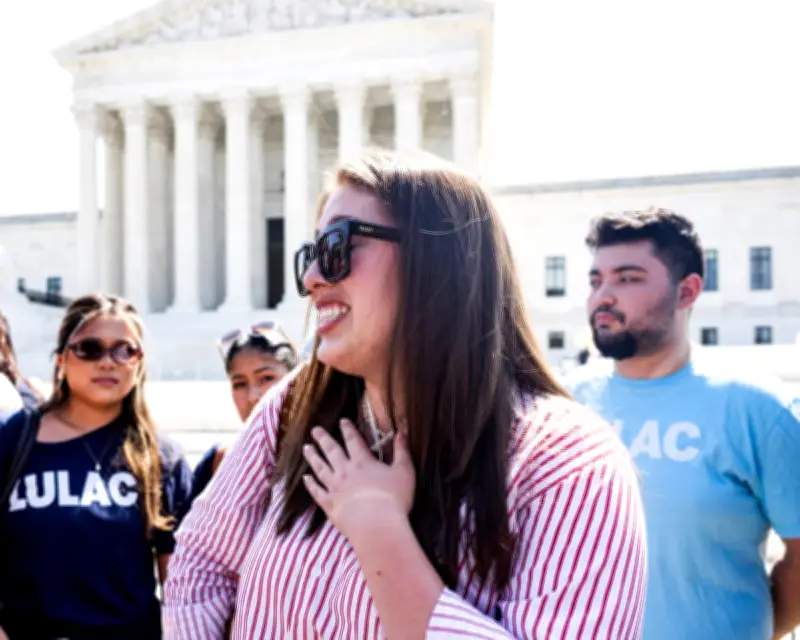
The US Supreme Court dealt a significant blow to former President Donald Trump's anti-immigration policies by upholding birthright citizenship in a 6-3 decision. The ruling affirmed that nearly all people born in the United States are entitled to citizenship, rebuking Trump's efforts to restrict the long-standing constitutional principle.
Ruling Based on 14th Amendment
The justices ruled that the Trump administration violated a provision of the 14th Amendment, which was affirmed by the Supreme Court 128 years ago. The opinion stated: "Children born in the United States to parents unlawfully or temporarily present are 'subject to the jurisdiction' of the United States and are citizens at birth under the Fourteenth Amendment's Citizenship Clause."
The NAACP, a civil rights group dedicated to advancing the rights of Black people, called the decision a "powerful affirmation of the constitution and the enduring promise of equality it represents." Voto Latino, a non-profit pushing for Latino voting power, said that "the court drew a permanent line in the sand – defeating a radical attempt to divide our families and strip away any doubt that our community belongs here."
Trump's Response and Legislative Push
President Trump reacted to the decision by calling it "too bad," but appeared undeterred in his quest to end birthright citizenship. Instead of pursuing a constitutional amendment, Trump is urging Congress to pass new legislation that would create exceptions to birthright citizenship for children born to parents without permanent legal status in the US. He wrote on Truth Social: "Congress should start TODAY to work on ending expensive and unfair to our Country, Birthright Citizenship." However, any such legislation would face an uphill battle, needing to overcome the 60-vote filibuster in the Senate.
Supreme Court Rules on Transgender Athletes
In another significant ruling, the Supreme Court decided that schools can determine eligibility for women's and girls' sports teams based on biological sex, effectively upholding bans on transgender women and girls from participating in female sports. The ruling centered on cases involving Lindsay Hecox, a college student in Idaho, and Becky Pepper-Jackson, a 15-year-old high school student from West Virginia. The court found that West Virginia and Idaho did not violate Title IX, which bars educational programs receiving federal funding from discriminating based on sex.
The court's three liberal justices dissented, arguing that the bans violate the Constitution's equal protection clause. This far-reaching decision is expected to pave the way for similar bans across the United States.
Campaign Spending and Gun Rights Decisions
The Supreme Court also struck down limits on campaign spending in federal elections by political parties. In a 6-3 decision along ideological lines, the court held that the law's "limits on political parties' coordinated expenditures violate the First Amendment." Additionally, the court declined to consider the legality of laws restricting people aged 18 to 20 from purchasing or using firearms, but agreed to consider whether bans on semiautomatic rifles, often called assault weapons, violate the Second Amendment.




