Oregon Shop Owner's Violent ICE Detention Sparks Landmark Legal Victory
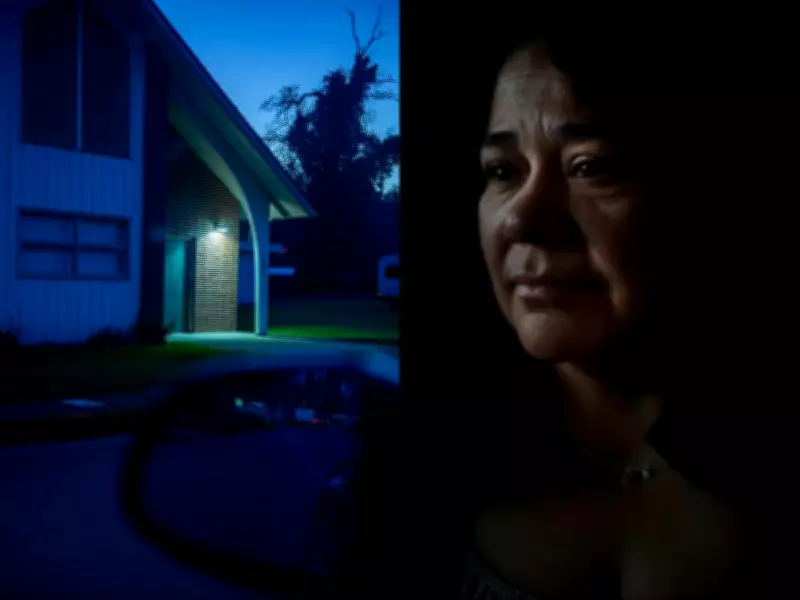
In a chilling incident that has reverberated across Oregon, Juanita Avila, a 47-year-old legal permanent resident and respected shop owner, was violently detained by Immigration and Customs Enforcement (ICE) agents despite having her green card physically present in her pocket. The November 2025 arrest in Cottage Grove, Oregon, became the catalyst for a groundbreaking class-action lawsuit that has now secured a major victory for immigrant rights across the state.
A Mother's Terrifying Ordeal
The morning of November 5th began with a panicked phone call that would change Juanita Avila's life forever. Awakened around 5:30 AM by a friend reporting that ICE had arrested a relative, Juanita and her 19-year-old daughter Emely drove separately to search for the abandoned vehicle. As Juanita returned home, flashing lights appeared behind her vehicle near a Cottage Grove motel.
"I pulled over thinking it was a traffic stop," Juanita recalled in a recent interview. "But these men in unmarked cars approached without visible badges and immediately asked where I was born." When she questioned why she was being stopped, officers provided no warrant or justification before reaching through her window, forcibly removing her from the vehicle, and pinning her facedown on the pavement.
The scene turned more harrowing when Emely arrived to find her mother being restrained by masked officers. "Oh my fucking God. That's my mom!" she screamed, immediately beginning to record the incident. Despite Emely's repeated explanations that her mother possessed legal documentation, officers continued their aggressive tactics, eventually handcuffing Juanita and placing her in their vehicle.
The Legal Battle That Changed Oregon
Juanita's arrest became a central component of a class-action lawsuit filed by the Innovation Law Lab, an Oregon-based immigrants' rights organization. The legal challenge targeted what attorneys described as ICE's "arrest first, justify later" tactics, which they argued systematically violated constitutional rights and federal law through warrantless detentions.
The lawsuit revealed disturbing details about ICE operations in Oregon, including:
- Testimony about "Operation Black Rose" targeting specific communities
- Alleged daily arrest quotas requiring teams to detain eight individuals per day
- Use of a DHS app called "Elite" to identify areas with immigrant populations
- Widespread racial profiling and chaotic arrest practices
In February, U.S. District Judge Mustafa Kasubhai issued a preliminary injunction broadly halting ICE's warrantless arrests in Oregon. The judge declared that ICE's conduct had been "brutal and violent" and systematically violated both federal law and individual constitutional rights.
Community Impact and Personal Trauma
The November ICE operation in Cottage Grove resulted in nine arrests, sending shockwaves through the immigrant community regardless of legal status. Abelio Carrillo Chales, an organizer with the Rural Organizing Project, witnessed the aftermath firsthand.
"People were shocked and horrified because Juanita is well-known and has been here for so long," Carrillo explained. "Children stayed home from school, parents skipped work, and families struggled with basic necessities like groceries."
For Juanita's family, the trauma extended far beyond the 30-minute detention. Her 12-year-old son with autism developed severe anxiety about attending school, while Emely required medication for depression and PTSD. "My voice was trembling and I thought if I was arrested, who is going to help my mom?" Emely recalled of the incident.
A Shop Owner's Journey
Juanita's path to Cottage Grove began in Guatemala, where she was born in 1978. After immigrating to Los Angeles at age 14 and surviving exploitative working conditions, she eventually found stability in rural Oregon. She took over Juanita's Latina Store in 2016, transforming the former bank vault into a community hub offering Latin American goods and money transfer services for immigrants.
Her green card obtained in 2017 allowed her to expand her community work, including assisting local police with interpretation and helping neighbors facing deportation during the Trump administration. "They wanted any excuse for them to get deported," Juanita remembered of one federal building encounter. "It was horrible."
Moving Forward with Caution
While the federal injunction represents a significant victory, uncertainty remains about ICE compliance. Similar orders in Colorado and Washington D.C. have faced allegations of violations, and attorneys note only anecdotal reports of reduced ICE activity in Oregon since the ruling.
Victor Cruz Gamez, the lead plaintiff in the case who was wrongfully detained for three weeks, expressed cautious optimism. "I am so relieved... There is still hope," he said, noting that people could now feel more comfortable leaving their homes for essential needs.
For Juanita and her family, healing continues alongside vigilance. "My therapist said, you better get up. Go back to work. Show them you're not defeated," Juanita shared. Though she remains more reserved than before her arrest, she continues operating her store while supporting others affected by ICE operations, bringing food to traumatized children and assisting farmworkers who had been hiding in the woods.
The case has established Oregon as only the third jurisdiction with specific protections against warrantless ICE arrests, setting an important precedent for immigrant rights advocates nationwide. As Emely reflected on the legal victory, she acknowledged its significance while questioning practical implementation: "It's the only way my family is going to get justice."