
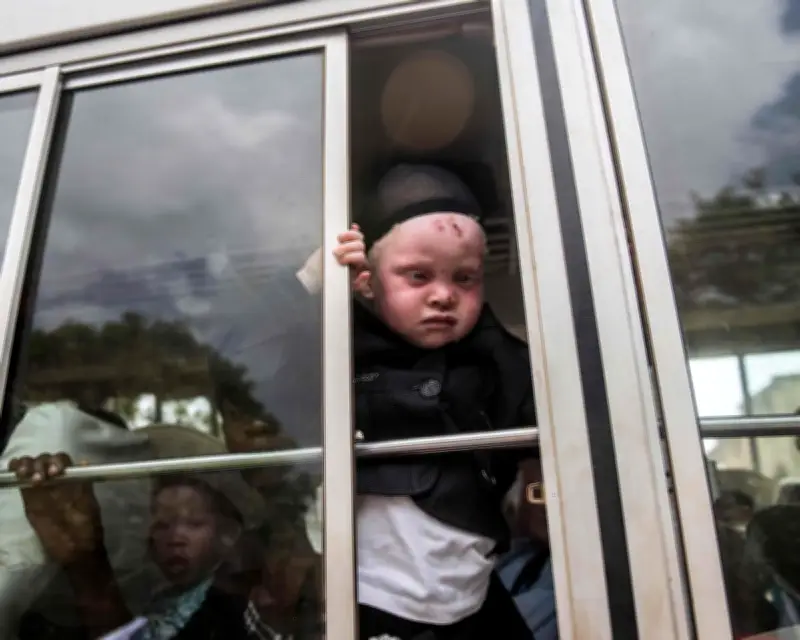
Ladidi Shaibu, a 35-year-old Nigerian woman with albinism, is being deported to Uganda after her asylum claim was denied under the Trump administration's immigration crackdown, despite her siblings having been granted asylum. Shaibu entered the US via the Mexico border three years ago and registered as an asylum seeker. Her brother had already been granted asylum, and her sister's case was soon to be successful. However, in March, she was informed that her claim would not be heard and that she would be deported to Uganda, a country deemed safe by the US Department of Homeland Security.
Fear of persecution in Uganda
Shaibu expressed devastation and shock at the judge's decision. 'All the evidence was there – my siblings were attacked in Nigeria. In Uganda the same thing happens, they take people for [witchcraft] rituals and everything. I don't know what else they needed for me to show them that I have a legitimate case,' she said. Albinism is an inherited genetic condition that reduces melanin pigment in the skin, hair, and eyes. In sub-Saharan Africa, the prevalence is the highest worldwide, affecting more than one in 4,000 people in some countries, according to the World Health Organization. People with albinism in Nigeria and Uganda face severe threats, including ritual killings, rape, and mutilation, driven by harmful superstitions that their body parts bring wealth, political success, and good luck.
Legal and advocacy perspectives
Shaibu's lawyer, Ravindar Arora, who also represented her siblings, called the decision 'ridiculous'. 'Having worked as an immigration lawyer in the US for 15 years, I've got a good sense of what is a winnable asylum claim and what's not. This should have been a slam dunk,' he said. Arora added that the Trump administration's immigration crackdown has been playing havoc with people's lives. 'It's insane. Trump's first term was not great … attorney generals were plucking out cases, writing their own decisions and overturning decades of precedent in the process. That was bad enough. This is easily 10 times worse.' Ikponwosa Ero, director of advocacy at Under the Same Sun, a charity helping people with albinism, noted that the rise of anti-immigrant rhetoric and far-right movements in the US and Europe is leading to more asylum claims for people with albinism being denied. '[These cases were successful] up until the last couple of years, with the changes in administrations worldwide where people are looking more inward. Before that, we had an estimate of an over-90% success rate. But with the changes in administrations and political approaches [that's no longer the case],' she said.
Asylum cooperative agreements
Under the Trump administration, the US has entered into several new asylum cooperative agreements (ACAs), allowing governments to transfer asylum seekers to third countries rather than adjudicating their claims domestically. Under these arrangements, people may be removed to a 'safe third country', even if they have no ties to that nation. One exception is if someone would be persecuted or tortured in the third country. Arora submitted evidence in Shaibu's case showing that people with albinism are not safe in Uganda. 'We even had an expert witness testify, who is from Uganda and who lives with albinism. The judge tried to turn that around on us and said she was living in Uganda, so it must be safe,' he said.
Uganda's own admission of risk
The Ugandan government's action plan for persons with albinism 2020-2025 states they are 'a vulnerable group that faces multiple and intersecting forms of discrimination and human rights violations'. It adds: 'They have been subjected to discrimination, banishment, cutting of body parts and amputation of limbs, torture, and murder due to … unfounded beliefs [in witchcraft].' Arora believes Shaibu has a strong case and will appeal if rejected at the next stage, the Board of Immigration Appeals. Shaibu, who has married and had a child since arriving in the US, said: 'I don't even know what to think. I was really hopeful and then my [asylum request] was denied. Still, I remain hopeful that I will be able to pursue my goals and live a normal life here.'




