
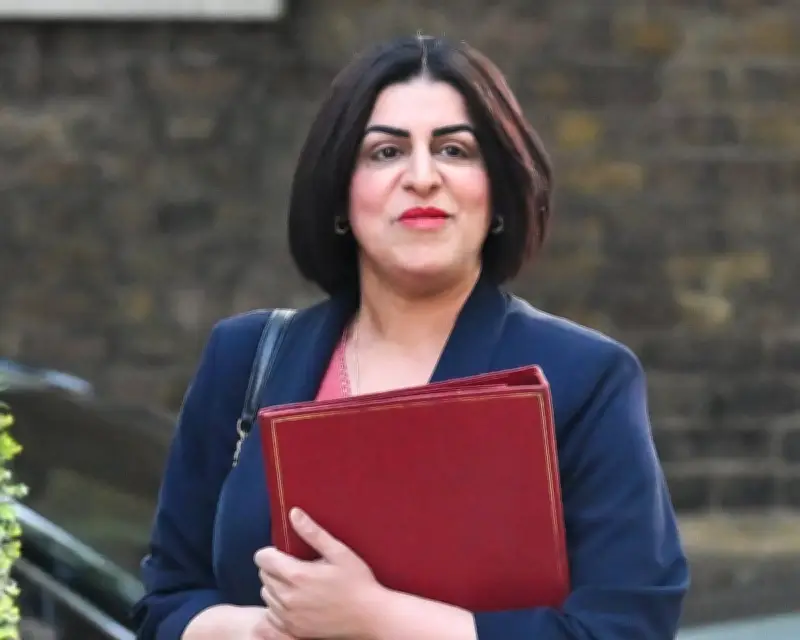
Home secretary Shabana Mahmood will next week introduce legislation that includes new safe and legal routes for refugees, seeking to shore up support from the progressive left of the Labour party. The bill, which is expected to pass before Andy Burnham becomes prime minister on 20 July, also tightens limits on human rights and modern slavery claims.
Key provisions of the immigration bill
The bill will open two safe and legal routes from autumn: a community sponsorship scheme allowing groups to identify refugees, and a university student scheme. Applications will begin within months, with refugees arriving next year. A third employer-sponsored route will launch next year. Mahmood has said the routes will initially allow hundreds of refugees annually, with a goal of reaching thousands per year, according to a Labour source.
Other measures include removing modern slavery protections for foreign nationals who have committed crimes with a sentence, rejecting last-minute modern slavery claims, and limiting family life immigration claims to parents, spouses, or children under 18 except in exceptional circumstances. The bill also introduces a test to make deporting foreign national offenders in the public interest, and requires family reunion applications to be brought by a UK-based sponsor. Additionally, every trafficked and exploited child will receive a dedicated independent guardian.
Criticism from Labour peers and charities
Labour peer Alf Dubs, who fled Nazi persecution as a child via the Kindertransport, called for Burnham to remove Mahmood from the Home Office and scrap her policies of “performative cruelty.” He said the proposed changes would leave children in his position “out in the cold” and unable to seek sanctuary. Dubs urged a Burnham-led government to champion “human rights, compassion, fairness and equality” while controlling borders.
Jo Cobley, chief executive of Safe Passage International, expressed concern that the bill was being pushed through before a new prime minister is confirmed. Madeleine Sumption, director of the Migration Observatory at Oxford University, noted the sponsorship scheme could attract groups but raised questions about whether faith groups could select refugees based on religion.
Political context and statistics
Analysis of immigration statistics shows a 50% drop in refugees arriving via safe and legal routes in the first quarter of 2026 compared to 2025, with just over 3,600 people granted protection through resettlement or family reunification. Refugee family reunion was paused by Mahmood in September 2025 and has no reopening date. Critics argue that families fleeing war have almost no safe legal way to reach the UK, increasing dangerous journeys.
Mahmood has also softened some hardline plans, such as reassessing a proposal to make migrants wait 10 years instead of five for indefinite leave to remain, and exempting care workers from changes. She was involved in a row with Keir Starmer over immigration minister Mike Tapp, asking for his sacking after he briefed the Times on proposals, but No 10 declined.
Outlook
Burnham’s camp indicated Mahmood is likely to stay in the Home Office, though cabinet roles are not finalized. Burnham backs the broad thrust of her plans but has reservations about retrospective changes to indefinite leave to remain. The bill is set to be introduced on Tuesday, before Burnham takes office.




