
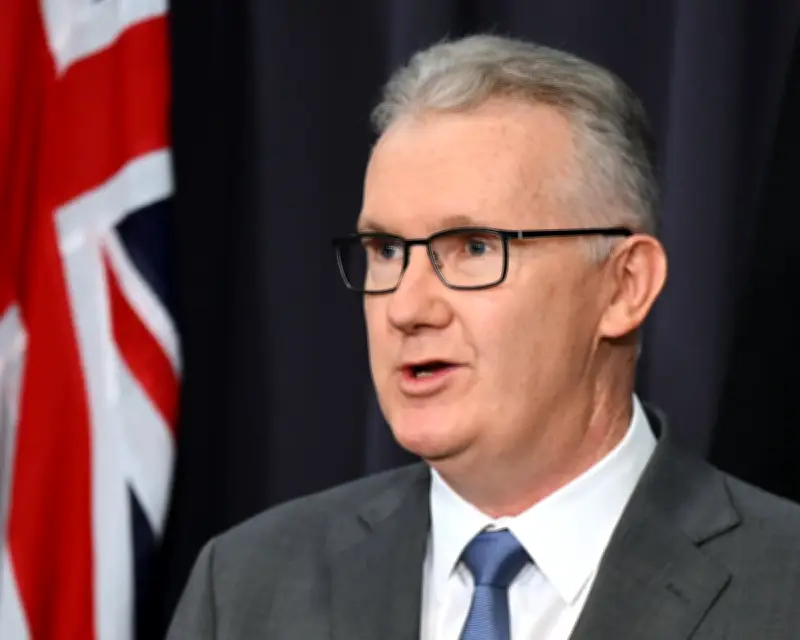
The Australian home affairs minister, Tony Burke, has confirmed that the government will issue a return permit to the last Australian woman linked to the Islamic State group who has been detained in a Syrian refugee camp. The decision follows legal advice that a criminal exclusion order can no longer be enforced.
Woman to face unprecedented security monitoring
The woman, understood to be former Sydney resident Hodan Abby, will be subject to an unprecedented level of security monitoring upon her return to Australia, including constant surveillance and regular reporting requirements. She is the final member of a group of Australian women and children who traveled to the Middle East years ago to join husbands and fathers fighting with the Islamic State terror group.
Burke told ABC radio on Thursday that the travel permit is the final stage of the temporary exclusion order process governing Abby's movements. The original block on her return was based on advice from the Australian Security Intelligence Organisation (Asio), but the government now says it lacks legal authority to prevent her return.
Legal limits and conditions
“The temporary exclusion order applies until a [return] permit is issued. And when a permit is requested, a permit lawfully has to be issued,” Burke said. “I’ve been working through with my department, my agencies, Australian federal police and Asio, and with the lawyers to see every possible condition we can put on that permit. We received the final advice yesterday that we can no longer have an exclusion condition any longer for her.”
The government has not specified when Abby will return. She was previously blocked from boarding a flight from Damascus in May. Under the permit conditions, she will be monitored at home, work, or study, and must give 24 hours' notice before using any communications device, including mobile phones or public pay phones.
Political criticism and security readiness
“There will be a very high level of scrutiny and surveillance,” Burke said. “That’s the absolute legal limit we’ve been able to go to and our agencies are ready.” The return is expected to spark renewed political criticism of the Labor government's handling of the group, which has been a months-long saga. The women and children spent over a decade in the Middle East, first under Islamic State rule and then in squalid detention camps after the caliphate's collapse. Some children were born in the camps and have never lived normal lives in Australia.
Members of the group have already faced criminal charges after returning to Australia, including for alleged enslavement, joining a prescribed terror group, and crimes against humanity. Coalition frontbencher James Paterson accused the government of making excuses, stating, “This is a government which frankly just hasn’t had its heart in protecting Australia from this dangerous cohort of people. The government should have used every single lever at its power to keep these people offshore and they have failed to do so.”
Asio director-general Mike Burgess confirmed the agency's involvement, saying, “I’m satisfied that my organisation is ready for the return. When there are Australians who have been overseas in places like Syria and Iraq who represent security concerns, we assess them. We know the level of the risk and anyone who’s considered a high or medium risk gets my agency’s full attention.”




