
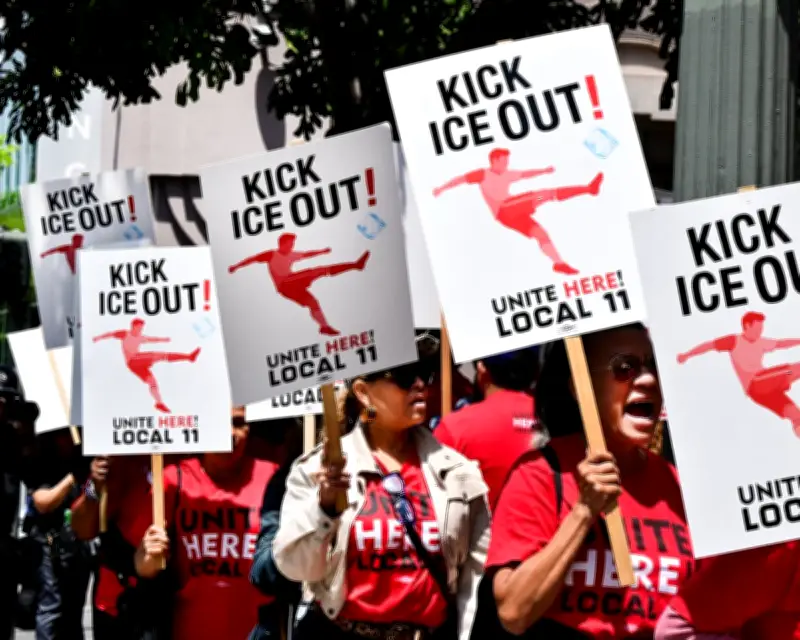
A federal judge in Los Angeles has rejected the Trump administration's legal challenge to the city's sanctuary policy, dealing a significant blow to the president's efforts to force local law enforcement to cooperate with federal immigration authorities.
Ruling upholds LA's 'Special Order 40'
U.S. District Judge John F. Walter ruled on Tuesday that Los Angeles' so-called Special Order 40, which prohibits police from initiating contact with individuals solely to inquire about their immigration status, does not violate federal law. The decision blocks the administration's attempt to withhold federal grants from the city as punishment for its sanctuary status.
"The court finds that the city's policy does not conflict with federal immigration law," Judge Walter wrote in his 34-page opinion. "The federal government cannot compel state and local officials to enforce federal immigration laws."
Background of the legal battle
The Trump administration filed the lawsuit in 2019, arguing that Los Angeles' sanctuary policy violated the Immigration and Nationality Act and the U.S. Constitution's Supremacy Clause. The Justice Department sought to invalidate Special Order 40, which has been in effect since 1979, and to cut off certain federal law enforcement grants to the city.
Los Angeles City Attorney Mike Feuer, who defended the policy in court, said the ruling affirms the city's commitment to community trust. "This decision is a victory for public safety and for the rule of law," Feuer said in a statement. "Our sanctuary policy ensures that victims and witnesses of crime can come forward without fear of deportation."
Impact on other sanctuary cities
The ruling is likely to have implications for similar legal battles across the country. Several other jurisdictions, including California, Oregon, and New York, have adopted sanctuary policies that limit cooperation with federal immigration enforcement. The Trump administration has targeted these policies with lawsuits and threats to withhold funding, but courts have largely sided with local governments.
According to the Immigrant Legal Resource Center, as of 2020, 11 states and hundreds of cities and counties have enacted sanctuary policies. The judge's decision reinforces the principle that local police are not required to act as federal immigration agents.
Administration's response and next steps
The Justice Department expressed disappointment with the ruling and is considering an appeal. "The Department of Justice disagrees with the court's interpretation of federal law and will evaluate all options to ensure that federal immigration laws are enforced," a spokesperson said.
Meanwhile, Los Angeles Mayor Eric Garcetti hailed the decision as a reaffirmation of the city's values. "We will not be forced to choose between protecting our communities and following the law," Garcetti said. "Sanctuary policies make our city safer by building trust between law enforcement and the people they serve."
Broader context of immigration enforcement
The legal fight over sanctuary cities is part of a broader national debate over immigration enforcement. The Trump administration has made cracking down on illegal immigration a central priority, including efforts to expand detention and deportation. Critics argue that these policies undermine local policing and violate constitutional protections.
Judge Walter's ruling noted that the federal government cannot commandeer state and local resources to enforce federal law, citing the anti-commandeering doctrine established by the U.S. Supreme Court. The decision also highlighted that Special Order 40 does not prevent federal immigration agents from operating in Los Angeles, but simply limits the role of local police.




