Federal Immigration Crackdown Transforms Daily Life in Twin Cities
In December, the Trump administration launched Operation Metro Surge, deploying a reported 3,000 federal immigration agents to Minnesota with the stated goal of targeting undocumented immigrants who have criminal records. However, over the past two months, agents have detained thousands of individuals, regardless of their legal status, including U.S. citizens who were pulled from their cars, homes, and workplaces. This aggressive enforcement has resulted in the deaths of two Minneapolis residents and U.S. citizens, Renee Good and Alex Pretti, who were monitoring Immigration and Customs Enforcement activities at the time.
Community Networks Rise in Response
The presence of federal agents, characterized by abrupt and often aggressive interactions, has left the Twin Cities of Minneapolis and St. Paul on edge. Protests have become a regular part of the metro area's daily rhythm, alongside community networks that patrol neighborhoods and document agents' interactions. Many residents are now sheltering at home, fearful of detention based on their appearance, which has disrupted daily routines, reduced errands and social visits, and increased reliance on neighbors for support.
Brittany Kubricky of St. Paul exemplifies this shift. While picking up her daughter from school, she now also transports two of her daughter's schoolmates whose mother has been sheltering at home for weeks to avoid potential encounters with immigration agents. Kubricky has raised over $40,000 in recent months, distributing funds for rental assistance and basic needs through a network of strangers and social media connections. "I haven't really ever done something like this before," Kubricky said. "This is just something I tried, and it happens to be working."
Economic Impact and Business Struggles
The economic toll of the crackdown is severe, particularly for immigrant-owned businesses. On Lake Street in south Minneapolis, a five-mile corridor with many such establishments, the effects are stark. Taqueria Los Ocampo has temporarily closed, citing safety concerns, while the Lake Street Council estimates a $46 million loss for December and January across 1,000 immigrant-owned businesses. This figure reflects not only missed sales but also lost wages as families avoid shopping trips.
Panaderia San Miguel, a bakery with over 15 years in the neighborhood, closed for three weeks in January to protect employees. Upon reopening, they implemented new measures like deliveries and arranged rides for staff. Vanessa Rubio, whose family owns the bakery, noted that community watch groups and customer demand influenced their decision to resume operations. "There was a need for our bread," Rubio said.
At Hmong Village, a large indoor market in St. Paul serving Southeast Asian communities, vendors report sales at about half their usual rate. Lee Vang, a produce vendor, highlighted the sharp decline, while customer Joe Chanthhee mentioned that relatives have stopped making weekend trips altogether.
Volunteer Efforts and Mutual Aid Expand
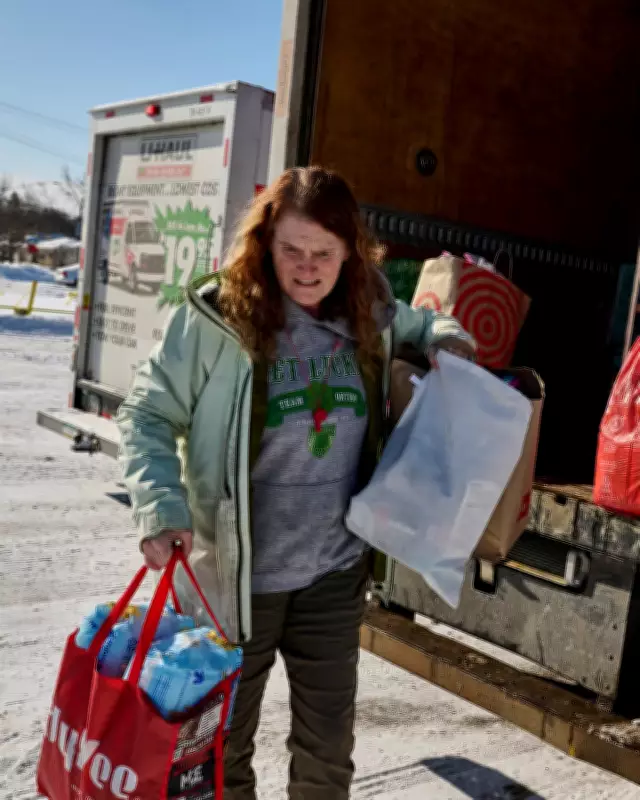
Community Aid Network MN has seen a surge in demand, serving roughly 575 families in the final week of January, nearly double its November numbers. Volunteers like Tom Kachelmacher have increased their hours from 10 to over 30 per week, with donations and volunteer slots filled through April. The organization has even paused donations temporarily after reaching capacity.
For many families, mutual aid has become a weekly necessity. Z, who requested anonymity for safety, has been sheltering at home for about a month, relying on friends for groceries and art supplies. "All you see online are protests," Z said. "I can't go out and protest, but I feel the anger. I'm like, what can I do?" Despite job losses and deportation in her family, she finds solace in small moments, such as watching YouTube videos to decompress.
Ongoing Protests and Community Resilience
Protests continue to address the broader impacts of immigration raids, including calls for ICE to leave Minnesota and demands for a rent moratorium. School districts, like in Fridley, have implemented patrols during drop-offs to ensure safety. As daily life remains interrupted, the Twin Cities navigate a new normal defined by fear, solidarity, and resilience in the face of federal enforcement.