Federal Immigration Enforcement: Examining the Real Risks to Deportation Officers
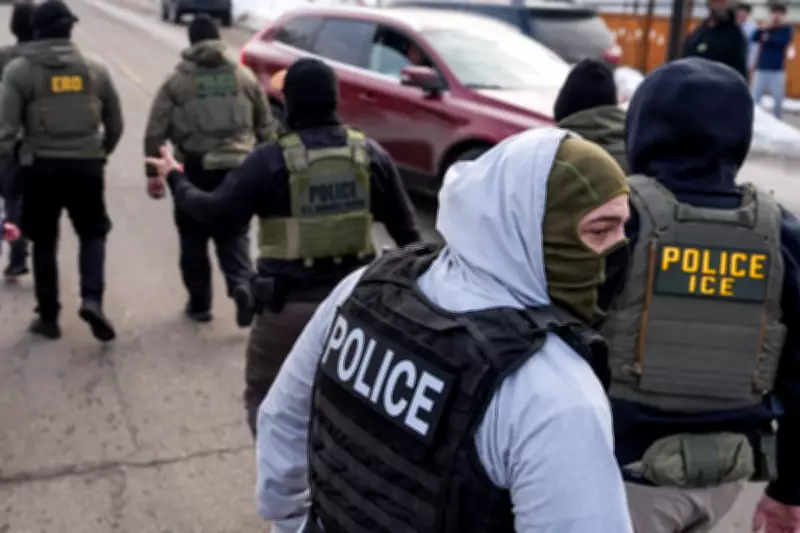
Federal agents conducted immigration enforcement operations in Minneapolis in February, amid heightened political rhetoric about dangers facing officers. A comprehensive Guardian review of agency data and Department of Homeland Security (DHS) records reveals a stark contrast between official claims and historical evidence regarding violent deaths in the line of duty.
No Violent Deaths Since ICE Formation in 2003
Since Donald Trump returned to the presidency, homeland security officials have consistently argued that deportation officers face unprecedented threats. However, the analysis shows that no deportation officer has died a violent death in the line of duty since U.S. Immigration and Customs Enforcement (ICE) was first created in 2003. Of the 15 officers who died while working for Enforcement and Removal Operations, the ICE branch responsible for detaining unauthorized migrants within the U.S., all but two succumbed to Covid-19.
One deportation officer, Brian Beliso, died of a heart attack in 2020 during a foot chase. The other non-Covid death, Lorenzo Roberto Gomez, occurred in 2003 due to heat stress during a training exercise in El Paso, Texas, leading to kidney failure. This data challenges assertions from the Trump administration about escalating violence targeting these officers.
Historical Context and Comparative Risks
Nearly 200 law enforcement officers were feloniously killed between 2021 and 2023, according to an FBI report, with over 79,000 assaults in 2023 alone. Federal agencies like the FBI and DEA, which enforce criminal laws, have seen several officers killed over the last two decades. In contrast, only four ICE officers have died violent deaths, all from the Homeland Security Investigations (HSI) division, which targets criminals and did not historically handle routine immigration arrests until the second Trump administration.
None of these HSI investigators' deaths occurred during routine immigration arrests. For example, James Holdman Jr died from a negligent rifle discharge in 2021, while agent Jaime Jorge Zapata was killed by cartel members in Mexico during undercover work. Looking back to ICE's predecessor, the Immigration and Naturalization Service (INS), only one person in a role analogous to today's deportation officer died from violence: INS security officer George Joyce was stabbed by a detainee in 1949.
Political Rhetoric Versus On-the-Ground Reality
The White House has repeatedly glorified immigration officers as heroes facing dangers from criminals and "deranged leftists." Homeland Security Secretary Kristi Noem recently testified before the House judiciary committee, stating, "I want to address the dangerous environment that our ICE officers face on the streets today. They are facing a serious and escalating threat as a result of deliberate mischaracterizations of their heroic work."
DHS spokesperson Tricia McLaughlin claimed in January that agents faced a 1,300% increase in assaults and a 3,200% increase in vehicular attacks. However, the DHS declined to provide underlying data to support these figures when requested by the Guardian. McLaughlin cited nearly two dozen specific incidents of violence, but a review found that 10 involved clashes with protesters—a new phenomenon under Trump's deployment of deportation officers to blue cities for at-large arrests.
Shift in Enforcement Strategies and Outcomes
Former homeland security attorney Spencer Reynolds noted, "The reality is that the admin has decided to thrust federal law enforcement, ICE and the U.S. border patrol into city streets across the country, and they have escalated conflict with people they've interacted with in these cities." This shift has led to incidents like protesters biting immigration officers in Minneapolis, where border patrol agents shot and killed Alex Pretti last month, sparking immediate protests.
Only six of the DHS-cited incidents directly involved deportation officers making immigration arrests, with just four resulting in officer injuries. For instance, Walter Leonel Perez Rodriguez, a Salvadoran migrant, struck an officer with a metal coffee mug during an arrest. Policy analyst Alex Nowrasteh of the Cato Institute explained that deportation officers have a lower risk profile because they target individuals accused of civil immigration violations, often in jail settings, rather than criminal suspects. "You're dealing with a safer population," he said.
Broader Implications and Detention Facility Deaths
While the Trump administration's mass deportation campaign has expanded targets to include asylum seekers and families, using increased funding, the data suggests minimal violent resistance. However, thirty-two people died in ICE-run immigrant detention facilities last year, the highest number in two decades, highlighting other critical issues within the immigration system. This analysis underscores the need for evidence-based policy discussions, separating political narratives from factual risks to officers and migrants alike.