
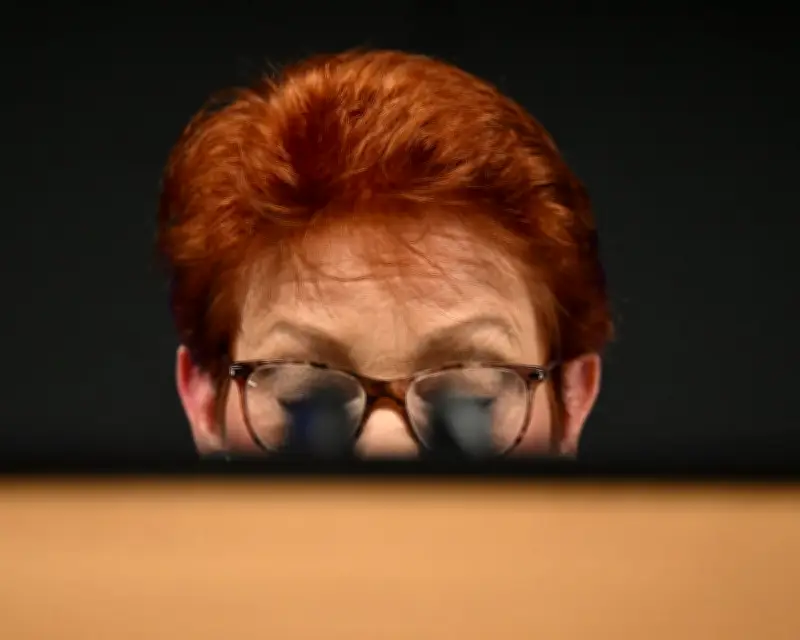
As a Muslim, it is encouraging to hear Pauline Hanson quote from a book. If there’s one thing we need, it’s more reading, writes Aftab Malik.
A Surprising Turn
I must admit that Senator Pauline Hanson surprised me this week. But not for the reasons you might think.
After years of hearing the senator speak about Muslims, Islam, mosques, immigration and national identity, I never imagined I would see the day when she would stand up and quote from a book. Yet in her latest remarks, she drew on British writer Ed Husain and his memoir, The Islamist, citing his account of joining – and later leaving – Hizb ut-Tahrir in Britain as evidence for her concerns about Islam in Australia.
As a Muslim, I could not help but think of the very first words revealed in the Holy Qur’an to the prophet Muhammad: “Read, in the name of your Lord who created.” The first command in Islam was not fight, conquer or dominate. It was simply: read.
Encouraging Reading
If Hanson has developed an interest in books and learning, then I find myself in the unusual position of wanting to encourage it. I would be more than happy to recommend a reading list on Islam, Muslim history and Muslim Australians. Indeed, I have curated such a reading list on my website.
Because if there is one thing the current debate desperately needs, it is not more slogans: it is more reading.
Agreeing on Facts
Perhaps more surprisingly, I also find myself in agreement with Hanson on another point. She often says we should deal with the facts. On that point, at least, we agree.
The difficulty is that when the conversation turns to Islam and Muslims in Australia, facts are often the first casualty. Terms such as “radical Islam”, “hate preachers” and threats to “western civilisation” carry rhetorical force but little analytical precision. Their effect is not to inform but to frame – to construct a narrative in which Islam appears uniquely prone to extremism and Muslim Australians become a permanent source of cultural anxiety.
The Power of Framing
This is not new. As I observed in my report A National Response to Islamophobia, framing matters. It shapes how we interpret events, assign responsibility and ultimately treat one another. When public commentary selectively highlights crimes committed by individuals claiming Islamic justification while ignoring the overwhelming reality of peaceful Muslim life, a conclusion is quietly suggested: that the problem lies not with individuals but with Islam itself.
Yet this conclusion is not supported by evidence. Those who commit acts of terrorism are not representatives of a faith tradition; they are criminals. Their actions violate the moral and ethical teachings they claim to defend. Ed Husain would agree with this, as he argues in his second book, The House of Islam.
Muslim Australians Reject Extremism
The overwhelming majority of Muslim Australians reject extremism just as strongly as every other Australian. What is often overlooked is that individuals drawn to violent extremism are shaped by a range of factors including social isolation, personal grievances and political circumstances. Their actions cannot reasonably be used to define an entire religious community of nearly one million people.
Despite this, such incidents continue to be used to justify broad suspicion of Muslim Australians. This brings us to the broader political environment in which these narratives are not only circulated but normalised. For years, scholars have argued that Islamophobia has become politically useful. Since 9/11, cycles of fear and moral panic have repeatedly been mobilised around questions of immigration, security and national identity.
Real Consequences
The consequences are not abstract. Muslim Australians experience verbal abuse, workplace discrimination, social exclusion and hostility because of assumptions made about their faith. Women who wear visible religious dress are disproportionately targeted. Mosques and Islamic institutions regularly face threats and vandalism. To dismiss these experiences as exaggerated or fictitious is to ignore the documented reality of many Australians.
I have warned before that rhetoric has consequences. When elected representatives repeatedly portray a minority community as a threat, they contribute to a climate in which hostility, discrimination and even violence become easier to justify.
Freedom of Speech and Responsibility
Freedom of speech is a cornerstone of democratic society. Hanson is entitled to criticise Islam, Muslims or any religious belief system. But freedom of speech should not be confused with freedom from responsibility. When public figures repeatedly portray an entire community as a threat, scrutiny of that rhetoric is both legitimate and necessary.
None of this means Islam should be beyond criticism. Robust debate is healthy and essential. However, criticism should be grounded in knowledge rather than stereotypes, evidence rather than fear and facts rather than political convenience.
The Challenge Ahead
The challenge before Australia is not whether we can discuss extremism, integration or national security. We can and we should. The challenge is whether we can do so without repeatedly treating an entire faith community as a suspect population.
If Hanson truly wishes to deal with the facts, then the invitation stands. Read more. Ask questions. Meet ordinary Muslim Australians. Visit a mosque. She may not agree with everything she finds. But she may discover that Muslims are not the caricature that politics has taught her to fear. And that would be a good place for all of us to begin.
Aftab Malik is Australia’s special envoy to combat Islamophobia




