
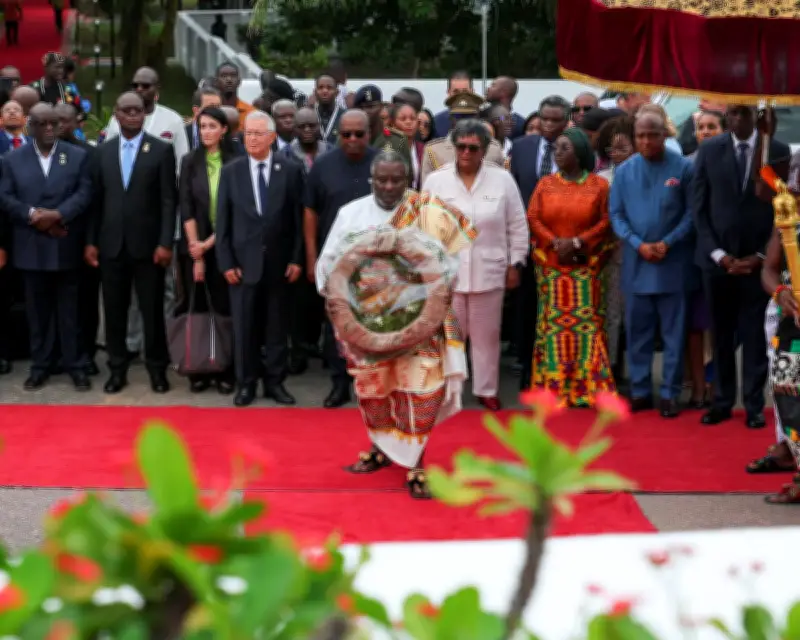
The Caribbean Community Reparations Commission (CRC) has launched an updated manifesto for slavery reparations, outlining the "moral, ethical and legal case for reparations" for the enslavement of African people. The document, presented at the recent reparations conference in Accra, Ghana, strengthens the existing Caribbean Community (Caricom) 10-point plan and responds to feedback from the public, organisations, and political leaders.
Key updates in the manifesto
The manifesto retains core demands such as a "full and formal apology" from Britain and other former colonial powers but includes several notable updates. These include strengthened legal arguments, a greater focus on the disproportionate impact of enslavement on girls and women, and a new emphasis on climate justice, which the document asserts is "inextricably linked" to slavery reparations. The manifesto also addresses the Indigenous peoples who were in the Caribbean before European arrival and suffered genocide, as well as those brought from Asia after abolition who faced extreme exploitation.
According to Prof Sir Hilary Beckles, chair of the CRC, the manifesto is not about "extraction of resources from the colonising countries" but rather an opportunity for humanity to "reset" and "purge itself of the politics of racism." He stated: "Our position was always clear … yes, we are doing this because we believe that there has to be justice for this crime committed. But we were always clear that this is really about the future of humanity."
Gender-based violence and the black female womb
One of the most significant changes is a specific call for compensation for "gender-based violence and assault on family." The manifesto references data indicating that women made up approximately 30% of the estimated 20 million Africans forcibly transported across the Atlantic, and at least 1.2 million enslaved women experienced sexual violence. Beckles explained: "A child at birth took the status of slavery from the mother. Only a black woman could give birth to a slave child … the black female womb was the incubator of slavery." He added that women were considered "perfect property" because each child they bore was a "profit": "By the time [the first] child was 12 years old, the child was worth more than the mother. So the first child she gave was, in fact, the repayment of the capital investment. And each subsequent child was pure profit."
Compensation and legal arguments
The manifesto demands "monetary compensation as reparations from enslaving nations, monarchies, churches, institutions, corporations and families, for loss of life and uncompensated labour, loss of liberty, personal injury, mental pain and anguish and gender-based violence." Beckles noted that enslaved people at emancipation asked for compensation but were denied: "The British parliament told us you cannot get compensation because you should see your freedom as compensation." The document also stresses that crimes against humanity "are not subject to a statute of limitations," meaning legal proceedings can still be initiated regardless of time passed. Beckles said: "Chattel slavery, the gravest crime, [the] United Nations have declared, and we have a legal right to have a programme of action … We are now into phase two, which is the programme of reparatory action."
Impact and next steps
The updated manifesto has been approved by a subcommittee of Caribbean leaders chaired by Barbados Prime Minister Mia Mottley. The document emphasizes that it will evolve with new evidence and "is not meant to determine the details of a negotiating strategy but rather represents a collective vision for an approach to the pursuit of reparatory justice." Beckles concluded: "We shall be seeking all legal avenues available to strengthen the negotiations around reparatory justice."




