
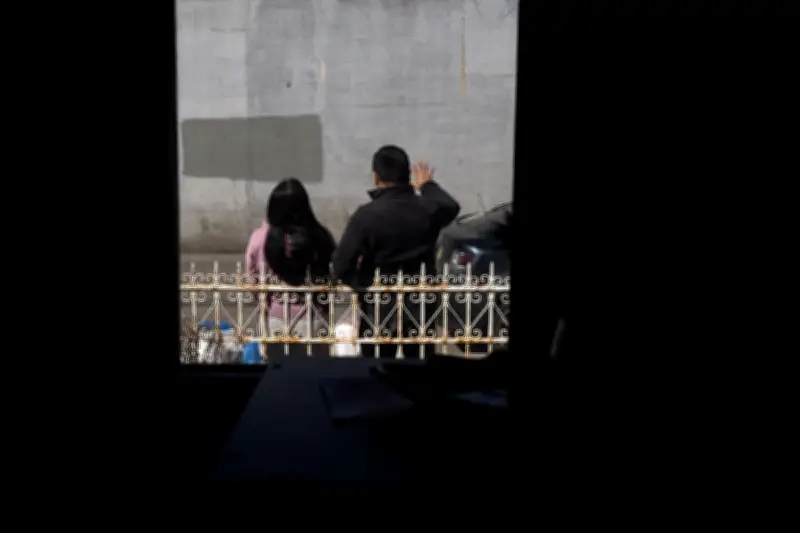
Federal agents have arrested hundreds of immigrants off New York and New Jersey streets in recent months in a stealth enforcement campaign that disproportionately targeted people from Latin American countries, according to an investigation by the City Reporter based on a review of more than 1,200 lawsuits.
Disproportionate Impact on Latino Communities
More than 93% of the people grabbed off area streets who filed suit were from Latin American countries, although Latinos make up only 66% of immigrants without legal status in the region. The arrests have rattled Latino neighborhoods, as people disappear in moments as mundane as buying milk, walking their dog, taking out the trash or picking up their children from soccer practice.
Street arrests are different from other types of immigration enforcement in that they unfold in minutes, often on quiet residential streets and out of public view. Many immigrants who had no expectation of being detained were targeted at the sole discretion of agents in the field. In some accounts of the arrests, Immigration and Customs Enforcement (ICE) agents said they stopped people because they looked similar to someone they had a warrant for, then realized they had a different subject, but apprehended the person anyway.
Violent Encounters and Racial Epithets
The surprise encounters often left immigrants stunned, as they feared they were being kidnapped. Some ran in terror from the masked agents. Other encounters turned violent as officers deployed Taser guns and smashed car windows. Agents at times shouted racial epithets, for example, allegedly calling one immigrant a “maldito Mexicano” – “fucking Mexican” – during the arrest, according to one lawsuit filed this January in federal court.
The 430 ICE street arrests identified by the City Reporter from lawsuits filed over a five-month period were clustered in predominantly Latino communities across the region, from Passaic and Plainfield in New Jersey to Brentwood and Hempstead on Long Island. Within New York City, there were 81 ICE street arrests. The Corona neighborhood in Queens had the highest number of street arrests by ICE officers of any New York City neighborhood.
Legal Challenges and Judicial Criticism
Such street arrests were rare in New York City before Donald Trump’s second term. As they ramped up in recent months, lawyers have sued the administration, arguing the arrests violate the US constitution, and federal judges have increasingly criticized ICE’s tactics as illegal. The City Reporter’s findings come as a federal judge has now barred most ICE arrests at immigration courthouses in New York City, but the White House “border czar”, Tom Homan, has threatened to “flood the zone” with federal immigration officers.
Since the vast majority of the arrests in the New York area have gone unreported and federal immigration data does not distinguish street arrests from others, the City Reporter reviewed every emergency lawsuit filed by immigrants challenging the legality of their detention in three federal courts from 15 October 2025 to 15 March 2026. Known as habeas corpus petitions, the lawsuits have skyrocketed in response to the second Trump administration’s enforcement campaign. Many of them offer rich details about the arrests, including the locations, circumstances and demographics of people arrested.
Data Confirms Racial Profiling, Advocates Say
“The data confirms what all New Yorkers know, which is that ICE engages in racial profiling when carrying out street arrests,” said Elora Mukherjee, a law professor at Columbia University and the director of the school’s Immigrants’ Rights Clinic, in response to the City Reporter’s findings. In a statement, the Department of Homeland Security (DHS) said: “Allegations that DHS law enforcement engages in ‘racial profiling’ are disgusting, reckless and categorically FALSE. What makes someone a target for immigration enforcement is if they are illegally in the US – NOT their skin color, race or ethnicity.”
Not every immigrant who is arrested files a habeas petition; only about one in 10 did so during these five months. The actual number of street arrests is likely much higher than what is captured in the database created from this research.
Personal Stories of Fear and Trauma
As word has spread through some Latino neighborhoods – where ICE agents have been observed showing up again and again – many prepare for the worst. Sisters plead with brothers to share their locations with them, day laborers avoid work and men write the numbers of emergency contacts in Sharpie marker on their arms. On an afternoon last December, ICE agents surrounded Juan and arrested him while he was watching a game of dominoes on Staten Island. At the time, he had lived in the US for nearly two decades and had just visited with his two children, who are both US citizens.
“You never know. You could just be heading to the store and get arrested right around the corner,” Juan, who was released after filing a habeas petition, told the City Reporter in Spanish. Like all immigrants quoted in this article, he is not identified by his full name out of fear of retaliation in their ongoing immigration proceedings. “The truth is, I walk around in fear,” Juan said.
Pattern of Arrests Without Probable Cause
Florencio’s detention is part of a pattern across the region, where ICE agents stopped and arrested people in majority-Latino neighborhoods based on their appearance while they claimed to be looking for other people, according to internal ICE records. In court filings and interviews, lawyers said that such arrests violate constitutional protections from unreasonable search and seizure and that agents often don’t have enough evidence to make the arrests at all.
“As soon as someone is not free to leave, that’s a seizure, and there’s no basis for the seizure in most of these cases,” said Paige Austin, an attorney for Make the Road, an immigrant advocacy organization that has handled dozens of habeas petitions in the last year. Instead, they’re making assumptions based on appearance, what jobs they work and where they live, she said. “It’s just pure racial profiling.”
In ICE’s account of his arrest, agents said they’d first approached Florencio because he had “the same build and likeness” as a person they were trying to arrest that day. The agency claimed that Florencio voluntarily admitted he had crossed the US-Mexico border illegally before they tried to arrest him. But in an interview with the City Reporter and in his court filing, Florencio disputed that account, saying he was already handcuffed when agents drove him to a nearby parking lot, where they rifled through his wallet, took his phone and snapped a photo of his face.
Widespread Use of Force
Diego’s arrest was one of 29 incidents that the City Reporter identified across the region in which federal agents are accused in court records of using force while making a street arrest. According to ICE policy, agents may use force only as a last resort. Excessive use of force is prohibited. But agents, who are often masked, have, variously, allegedly bloodied men, drawn firearms, zapped people with stun guns, smashed car windows and forcibly dragged people out of their vehicles, according to accounts in the habeas petitions.
“There’s absolutely no need for the force except to terrorize people,” said Stephanie Cordero, a lawyer with Latino Justice who has represented immigrants in habeas proceedings. One of her clients had a gun held to his head and was hit by an ICE agent’s vehicle as he was arrested outside a Home Depot store on Long Island, the petition alleges. All of the claims of violence reviewed by the City Reporter involved a Latino person.
“ICE law enforcement officers are trained to use the minimum amount of force necessary to resolve dangerous situations to prioritize the safety of the detainees, the public and our officers,” the DHS said in a statement, adding that its officers regularly receive use-of-force training.
Legal and Legislative Responses
At least five states, including New Jersey, have passed legislation that entitles individuals to monetary damages if federal agents violate their constitutional rights. In New York, a similar law was included as part of the state budget this month. It will allow people to sue retroactively over alleged offenses, going back to January 2025. In New York City, one ICE supervisor, Brenden Cuni, was named in multiple lawsuits in which immigrants said they were beaten up and shot with stun guns. He is the only agent to be named in the habeas petitions reviewed by the City Reporter.
“They feel so empowered to just do whatever they want,” said John Leschak, an immigration attorney in New Jersey. He has filed four habeas lawsuits on behalf of clients who have been arrested after ICE agents smashed their car windows.
Community Efforts and Ongoing Fear
On a wintry Friday night in Port Richmond, Staten Island, advocates from Make the Road hosted a meeting to address the recent ICE arrests in the predominantly Latino community. The turnout was smaller than expected, as many immigrants remained worried about agents lurking in unmarked cars. An organizer passed around a stack of wallet-sized red cards printed with the fourth amendment, which is designed to protect against unreasonable search and seizure, and the fifth amendment, aimed at guaranteeing several essential rights in both criminal and civil cases.
“Probable cause technically can’t be based on someone’s race or how someone speaks, but we know they use it for racial profiling,” said the lead organizer, Luba Cortés, speaking in Spanish, who urged participants not to volunteer information about themselves if confronted by immigration agents.
Even for those who are able to get out of ICE detention through a habeas petition, it’s only a temporary reprieve. After their release, they remain in deportation proceedings and must navigate the byzantine and heavily backed-up immigration court system. “They have all the power. They have all the authority,” Fidelina told the City Reporter. “It doesn’t matter to them how many families they destroy.”




