
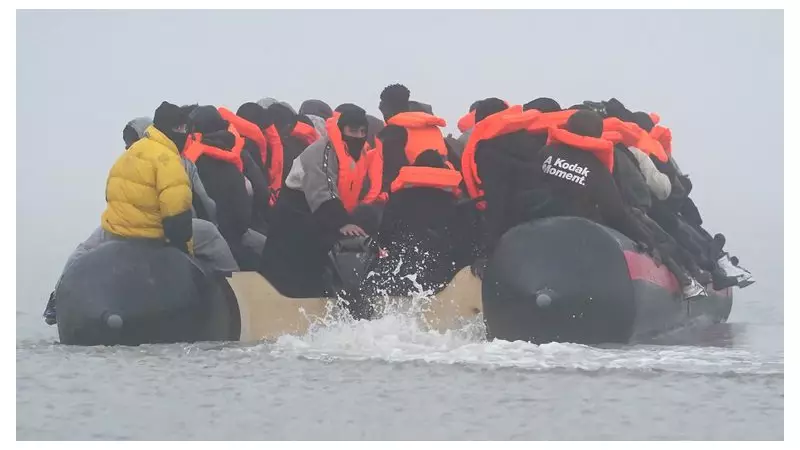
The number of migrants crossing the English Channel in small boats reached the second-highest annual total on record in 2025, delivering a significant political blow to Sir Keir Starmer's government. Official figures confirm that 41,472 people made the perilous journey last year, a number surpassed only by the 2022 peak of 45,774.
A Pledge Under Pressure
This result places immense strain on the Labour administration, which entered office in July 2024 with a repeated vow to "smash the gangs" orchestrating the crossings and drastically reduce the numbers. Since that election, nearly 65,000 individuals have arrived via this route. The final crossing of 2025 was recorded on 22 December, with none attempted on New Year's Eve.
While the 2025 total is 9% lower than the 2022 record, it represents a 13% increase from the 36,816 crossings in 2024 and a sharp 41% rise from the 2023 figure of 29,437. The first half of the year saw a record 19,982 arrivals, though the pace slowed markedly in the final two months, including a 28-day period with no landings between 15 November and 12 December.
Government Measures and Mounting Criticism
In response, the government has pursued a multi-pronged strategy. This includes a landmark agreement with France, which began intercepting boats in the Channel and operates a "one in, one out" returns deal. As of mid-December, 193 migrants had been sent back to France under this scheme, with 195 arriving in the UK. However, the policy has been labelled "no deterrent at all" by Shadow Home Secretary Chris Philp, after cases emerged of removed migrants returning.
Legislatively, the Border Security, Asylum and Immigration Act became law in December, granting counter-terror style powers to tackle smuggling gangs. Home Secretary Shabana Mahmood has also announced plans for what she calls "the most significant changes to our asylum system in modern times," including making refugee status temporary with a 20-year wait for permanent settlement.
Political and Humanitarian Challenges
The government's approach faces criticism from all sides. Some Labour MPs have branded the measures "shameful," while Tory leader Kemi Badenoch argues they do not go far enough and insists leaving the European Convention on Human Rights (ECHR) is necessary. The government has ruled out quitting the ECHR, instead seeking reforms to how it is interpreted in UK law.
The human cost remains stark. Charities estimate at least 36 people died attempting the crossing in 2025, including an eight-year-old girl and her mother who were crushed on a boat in May. The average number of people per boat has also risen steadily, reaching 62 in 2025, up from 53 in 2024.
Enver Solomon, chief executive of the Refugee Council, stated: "No-one risks their life on a flimsy boat in the Channel except out of desperation to be safe." He urged for safe, legal routes alongside enforcement. As the political debate intensifies, the 2025 figures underscore the enduring complexity of a crisis that continues to define the UK's immigration policy.




