
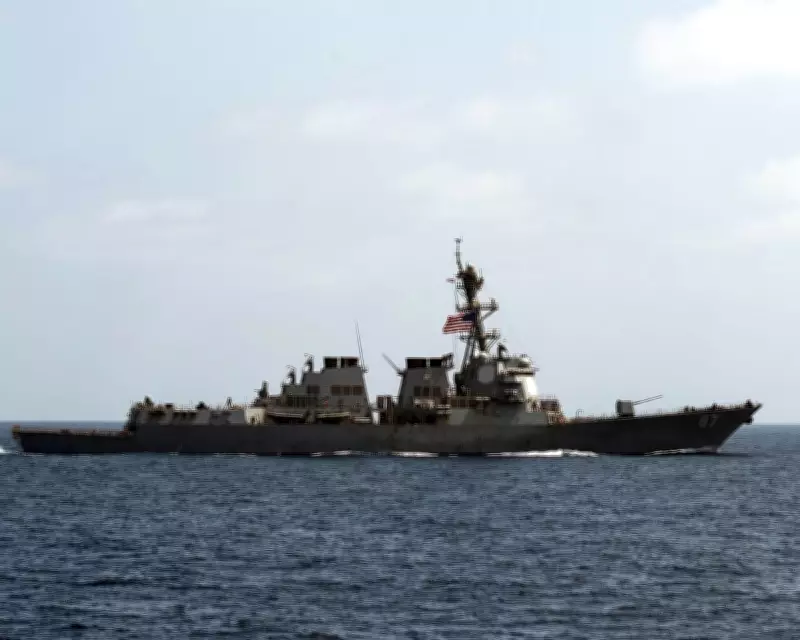
The United States and Iran exchanged fire late Thursday in the most serious test yet of their month-long ceasefire. The skirmish threw into question the viability of the shaky truce that had largely held for the previous month.
Conflicting Accounts of the Incident
Each side claimed the other shot first. US Central Command said its forces intercepted “unprovoked Iranian attacks” and responded with “self-defense strikes.” Iranian officials countered that US vessels were attacked after the US “violated” the ceasefire by targeting two ships at the Strait of Hormuz and attacking civilian areas.
The USS Mason, a US Navy destroyer, was one of three vessels attacked by Iran, according to US military officials. The incident occurred just as Pakistani officials had announced that the US and Iran were close to a peace deal.
Trump’s Response
In an interview with ABC News, President Donald Trump referred to the US strikes as “just a love tap” and said the ceasefire remained in effect. Later, in a Truth Social post, he claimed “no damage done to the three Destroyers, but great damage done to the Iranian attackers.” He described the downing of Iranian drones with a vivid metaphor: “They dropped ever so beautifully down to the Ocean, very much like a butterfly dropping to its grave!”
Trump capped his post with a warning to Iran, vowing that “just like we knocked them out again today, we’ll knock them out a lot harder, and a lot more violently, in the future, if they don’t get their Deal signed, FAST!”
Broader Implications
The exchange of fire threatens to derail diplomatic efforts and has raised concerns about regional stability. Meanwhile, experts warn that Trump’s Iran war may stymie climate gains by boosting big oil profits, which could be used to expand oil and gas operations and fund political lobbying against climate action.
In other related developments, a refusal by Saudi Arabia to allow the US to use its bases and airspace for a military escort operation called “Project Freedom” led Trump to shelve the plan. The US trade court also ruled against Trump’s 10% global tariffs, finding them unjustified under a 1970s trade law.
Other News
- Secretary of State Marco Rubio stoked speculation about a 2028 presidential run by releasing a campaign-style video.
- Authorities are racing to trace passengers from a cruise ship at the center of a deadly hantavirus outbreak.
- The FBI said Director Kash Patel followed ethical guidelines after a report alleged he distributed customized bourbon as gifts.
- The Southern Poverty Law Center pleaded not guilty to charges of fraud and money laundering.
- Emory University faces a lawsuit from tenured professors over its handling of 2024 Gaza protest protests.




